Updated on February 4, 2026
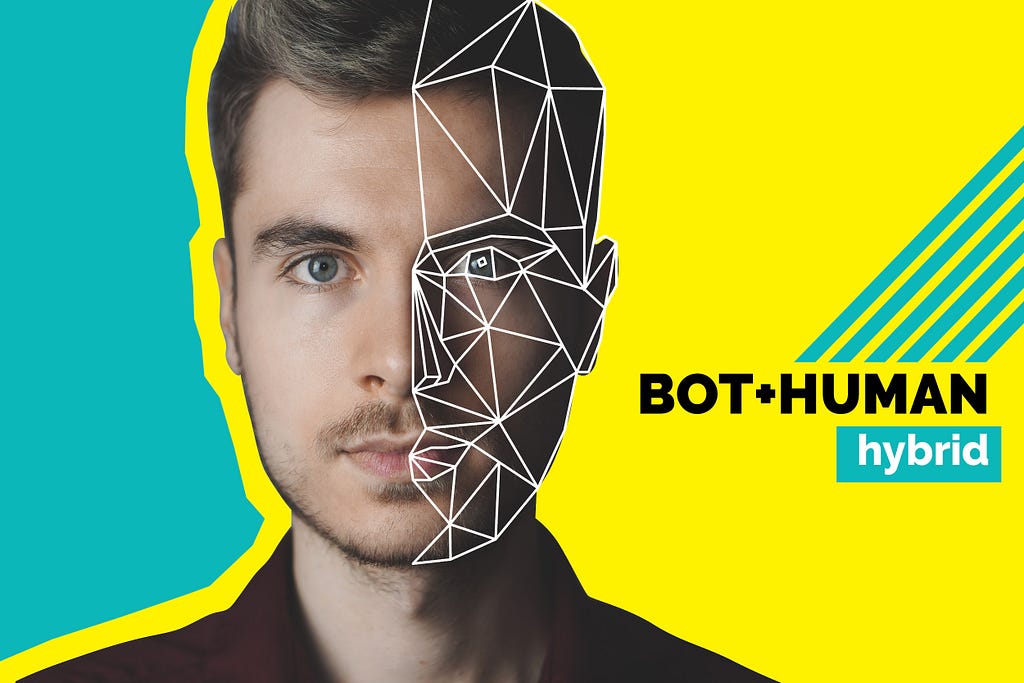
Customer support has come a long way from the days of endless hold music and frustrating phone menus. Today, we’re seeing something remarkable happen in the customer service world. The combination of artificial intelligence and human expertise is creating a support experience that’s faster, smarter, and surprisingly more personal than ever before.
Think about the last time you reached out to a company for help. You probably wanted an answer immediately, right? You’re not alone. Research shows that 90% of customers now expect instant responses when they have questions. At the same time, 73% of us still want to know there’s a real person overseeing the AI systems helping us. This interesting contradiction is shaping how companies approach customer service today.
The solution isn’t choosing between robots and humans. It’s about finding the sweet spot where technology handles what it does best while people focus on what makes us uniquely human. This hybrid approach is transforming customer support from a necessary expense into something that actually sets companies apart.
Why Traditional Customer Support Just Doesn’t Cut It Anymore
Let’s be honest about the old way of doing things. Traditional customer support models are struggling, and the numbers tell a pretty clear story. Companies are losing somewhere between $75 billion and $1.6 trillion every year because of poor customer service.
The problems run deep. Customer expectations have shot up dramatically in recent years, with a 63% increase just between 2023 and 2024. People want help right now, not in an hour or even in five minutes. Meanwhile, support teams are stretched thin trying to be available around the clock. Agent burnout is real, and it’s getting worse. And here’s the kicker: 73% of customers have actually switched to a competitor after experiencing multiple poor customer service interactions.
Then there’s the whole social media aspect. Customers expect to reach you on their channel of choice, whether that’s live chat, email, Twitter, WhatsApp, or whatever messaging app they prefer. Keeping up with all these channels while maintaining consistent quality? That’s practically impossible with traditional staffing models.
The Numbers Behind the AI Revolution
The shift toward AI-powered customer service isn’t just hype. The market for AI customer service has grown exponentially, reaching over $12 billion in 2024 and projected to hit nearly $48 billion by 2030. That’s explosive growth, and it’s happening because the technology actually works.
Here’s what’s really interesting: 92% of companies have already adopted AI for customer experience in some form. Current data suggests that 95% of all customer interactions now involve AI support in some way. But before you worry about robots taking over, consider this: 80% of customers who’ve interacted with AI chatbots report having positive experiences.
The business benefits are compelling too. Companies using AI-powered automation see their operational costs drop by 25 to 45%. Support agents using AI tools save over two hours every day on average. And get this: some companies have seen first response times improve by 74% within just the first year of implementing AI.
By 2026, Gartner predicts that conversational AI will reduce contact center labor costs by $80 billion globally. That’s not a distant future prediction anymore; that’s happening right now.
How the Hybrid Model Actually Works
The beauty of the hybrid approach is in how it divides the work. AI doesn’t replace humans; it handles the routine stuff so people can focus on what really matters.
What AI Does Best
AI chatbots are incredible at handling the repetitive questions that make up most customer inquiries. They can answer FAQs instantly, help customers track their orders, schedule appointments, reset passwords, and collect basic information like names, email addresses, and the nature of someone’s problem. They do all this while being available 24/7 without ever getting tired or frustrated.
The real magic is in the scale. A well-designed AI system can handle dozens or even hundreds of conversations simultaneously without breaking a sweat. Studies show that AI can automate up to 80% of routine tasks and customer inquiries, with some organizations reporting that 75% of customer inquiries can now be resolved by AI tools without human intervention.
Where Humans Shine
But AI still can’t match human judgment and empathy. That’s where your support team comes in. People are essential for complex problem-solving that requires creative thinking. They’re irreplaceable when emotions run high and customers need someone who truly understands their frustration. High-value customer relationships need that personal touch that only humans can provide.
Human agents also handle the gray areas, the situations that don’t fit neatly into your policies or procedures. They navigate cultural nuances and read between the lines in ways that AI simply can’t. Research backs this up: 67% of customers want AI assistants to show creativity, empathy, and friendliness. Those are fundamentally human traits, and that’s why 75% of customer experience leaders see AI as a force for amplifying human intelligence, not replacing it.
AI as Your Agent’s Best Friend
Here’s where things get really interesting. AI isn’t just handling customer conversations on its own. It’s also acting as a copilot for human agents, making them dramatically more effective.
When your agent picks up a complex case, AI can instantly pull up the customer’s entire history and suggest relevant help articles. It can offer response templates that the agent can personalize. It monitors customer sentiment in real time, flagging when someone’s getting frustrated so the agent can adjust their approach. It even routes tickets to the right specialist based on the complexity and the agent’s expertise.
This augmentation approach is delivering real results. 80% of employees say AI has already helped improve the quality of their work, and 83% say AI’s capacity for decision-making is a major highlight of adoption. Agents appreciate having AI handle the boring stuff so they can focus on meaningful problem-solving and relationship building.
The Real Benefits You’ll Actually See
Speed That Actually Matters
Remember how 90% of customers expect instant responses? AI makes that possible. Chatbots respond instantly to every query, even at 3 AM on a holiday weekend. They never make customers wait in a queue for simple questions.
Take Klarna, for example. Their AI assistant handled 2.3 million conversations in its first month. That’s the equivalent of 700 full-time agents. Even more impressive, they cut the average interaction time from 11 minutes down to just 2 minutes. Similarly, Bank of America’s Erica has handled 2 billion interactions and resolves 98% of customer queries within 44 seconds, with clients engaging 56 million times per month.
Personal Connections at Scale
One of the surprises about the hybrid model is how it actually makes customer engagement more personal, not less. When AI handles the information gathering and routine tasks, human agents have more time and energy to build real relationships with customers who need it.
Customers today expect seamless experiences across every channel they use. They want to start a conversation on your website, continue it via email, and finish on their phone without having to repeat themselves. The hybrid model makes this possible. AI tracks context across channels while humans step in at the moments that matter most.
Cost Savings That Don’t Sacrifice Quality
Let’s talk money. Companies using well-implemented AI customer service see an average return of $3.50 for every $1 invested. Top-performing organizations achieve up to 8 times returns on their AI investments. That’s not a tradeoff; it’s a win on both fronts.
The cost reduction is real. NIB Health Insurance saved $22 million through AI-driven digital assistants, reducing customer service costs by 60%. The scalability is perhaps the biggest advantage. When you have a seasonal surge or your company grows rapidly, you don’t need to hire and train dozens of new agents. The AI handles the volume increase while your human team focuses on the high-value interactions.
Turning Support Into Sales
Here’s something many companies miss: your support channel is also a sales opportunity. When AI chatbots interact with customers, they’re gathering valuable information about needs, preferences, and pain points. This data is gold for your marketing and sales teams.
E-commerce companies see particularly strong results, with AI chatbots improving conversion rates by up to 30%. The hybrid model excels at this because AI can qualify leads and gather context before seamlessly handing off to a sales specialist who can close the deal.
Data You Can Actually Use
AI-powered analytics give you visibility into your customer support that you’ve never had before. Every interaction generates data. You can see customer satisfaction scores in real time. You can identify trending issues before they blow up. You can track first response time, resolution rates, and customer effort scores with precision.
More importantly, you can use this data to improve. You can coach agents based on what actually works. You can forecast support volume and plan your staffing accordingly. You can spot problems in your product or service that customers are encountering repeatedly. It’s like having a crystal ball for your customer experience.
How Different Industries Are Making It Work
The hybrid model isn’t one-size-fits-all. Different industries are finding creative ways to blend AI and human support based on their unique challenges.
Telecommunications Leading the Pack
Telecom companies are crushing it with AI, achieving 95% adoption rates. They use AI for call routing, analyzing usage patterns, basic troubleshooting, and explaining service plans. When customers have complex network issues or want to discuss retention offers, that’s when human experts take over. The division of labor makes perfect sense.
Banking Gets Personal Again
Banks and financial institutions are at 92% adoption, using AI for fraud detection, balance inquiries, loan applications, and account management. One major multinational bank cut wait times for common questions by 94% within six months of deploying AI. What’s remarkable is that 92% of their representatives reported higher job satisfaction. Why? Because they weren’t stuck answering the same basic questions all day.
Retail’s Personalization Power
Retailers use AI to recommend products, track orders, process returns, and provide post-purchase support. The retail AI market is growing from $9.4 billion in 2024 to an expected $85.1 billion by 2032. Companies implementing AI have seen dramatic improvements, with 94% of retail companies saying it has helped decrease costs.
Healthcare’s Human Touch
Healthcare providers use AI for appointment scheduling, prescription management, symptom checking, and patient education. AI eliminates hold times and handles 95% of routine patient inquiries. This reduces staff burnout by lightening the administrative load by two to three hours per employee. That time goes back to patient care where it belongs.
Making It Work: Lessons from the Trenches
If you’re thinking about implementing a hybrid model, here are the things that actually matter based on what’s working for successful companies.
Get the Handoffs Right
The transition from bot to human agent needs to be seamless. When AI realizes it’s out of its depth, the handoff should take seconds, not minutes. The human agent should receive full context about the conversation so the customer doesn’t have to repeat themselves. Nothing kills the hybrid advantage faster than a clunky handoff experience.
Be Honest About the AI
Over 90% of businesses and consumers agree that companies should disclose when AI is being used in customer care. Don’t try to trick people into thinking they’re talking to a human when they’re not. Customers appreciate honesty. Tell them they’re chatting with an AI assistant and that a human expert is available if needed. Transparency builds trust.
Train Your Team Properly
Here’s a troubling stat: 72% of customer experience leaders claim they’ve provided adequate AI training, but only 45% of agents say they’ve received any training at all. Even worse, just 21% are satisfied with the training they got. This gap is a problem.
Your agents need comprehensive, ongoing training that helps them see AI as a powerful assistant rather than a threat to their jobs. Show them how AI makes their work easier and more rewarding. Help them develop the skills they’ll need in this new hybrid environment, like complex problem solving and emotional intelligence.
Build a Learning Loop
Every time a human agent solves a problem that AI couldn’t handle, that’s valuable data. Feed it back into the system. Make your AI smarter over time. This creates a virtuous cycle where automation rates improve while quality stays high or even increases.
Monitor your analytics religiously. Track what’s improving for both the AI and human touchpoints. Look for patterns in where the AI struggles. Use that insight to either improve the AI or refine your escalation criteria.
Find Your Sweet Spot
Not everything should be automated. Start by looking at your ticket volume and complexity distribution. Automate the predictable, high-volume stuff like password resets, order status checks, and account verification. Keep humans involved with angry customers, complex troubleshooting, and relationship building.
The right balance depends on your specific business and customers. Test, measure, and adjust. Some companies find that 80% automation is perfect. Others work better at 60%. There’s no universal answer, just the right answer for your situation.
What’s Coming Next in 2026 and Beyond
The hybrid model continues to evolve, and the developments happening right now are fascinating.
Generative AI is changing the game. 80% of customer service and support organizations are now integrating generative AI technologies to enhance customer experiences. This means more natural conversations and AI that can actually think creatively about solutions.
Emotional intelligence in AI is getting better too. According to recent studies, 56% of customers now believe bots can have natural conversations. As the technology improves, the line between AI and human interactions continues to blur.
The nature of support jobs is shifting. Instead of executing routine tasks, support professionals are managing AI systems, solving complex problems, and building deep customer relationships. It’s an evolution, not a replacement. Currently, 82% of senior leaders invested in AI for customer service in 2024, and 87% plan to invest in 2026.
Support is becoming more proactive. AI is shifting from just responding to questions to actually anticipating customer needs and addressing issues before they become problems. Imagine getting a message that your shipment is delayed before you even notice, along with a discount code for the inconvenience. That’s the direction we’re headed.
Interestingly, 52% of organizations are actively planning to scale AI to departments like customer success, marketing, and sales in 2026. The success in customer support is driving adoption across entire organizations.
The Bottom Line
The future of customer support isn’t about choosing between AI and humans. It’s about strategically combining both to create experiences that are faster, more efficient, and surprisingly more human than what we’ve had before.
Companies that master this balance will win customer loyalty in an increasingly competitive market. With the vast majority of interactions now involving AI in some capacity, the question isn’t whether to adopt hybrid support. It’s how quickly you can get it right.
The hybrid approach delivers speed and efficiency through AI automation. It preserves empathy and relationship building through human expertise. It provides 24/7 availability without burning out your team. It cuts costs significantly while improving satisfaction. And it scales effortlessly as your business grows.
This isn’t just about technology. It’s a fundamental reimagining of customer service that puts both efficiency and empathy at the center. The companies that embrace this model today will be the customer experience leaders of tomorrow.
Ready to Get Started?
The evolution toward hybrid AI and human customer support is accelerating fast. Companies that wait too long will face higher costs, steeper learning curves, and customers who are already used to better AI experiences from their competitors.
Start by analyzing your current support tickets. Look at the volume and complexity distribution. Identify which inquiries follow predictable patterns that AI can handle and which ones need human judgment and empathy. Then implement a phased approach. Start small, learn from what works, adjust what doesn’t, and gradually optimize your hybrid model over time.
The future of customer support is already here. It’s intelligent, it’s empathetic, and it’s hybrid. The only question is whether you’ll lead the change or struggle to catch up.
Are you considering chatbots for your business? Download the Complete Beginner’s Guide to Chatbots for a more detailed explanation on chatbots’ capabilities, industry use-cases and a step-by-step guide on how to build one.

Harsh Zavery is the SEO Manager at Kommunicate, where he drives organic growth through strategic content and search optimization. With deep expertise in conversational AI and customer support automation, Harsh helps businesses discover smarter, scalable solutions for customer engagement.