Updated on November 13, 2025
Customers have always wanted customer service representatives to solve their problems. But today, the expectation has evolved to include speed. 72% customers expect immediate answers whenever they connect with customer support.
This statistic is also reflected by customer service representatives, with 82% reporting higher customer expectations, and 86% reporting that customers are asking for more than ever before.
This means that your customer service teams have to balance speed and quality of service every day.
Maintaining this balance is difficult:
- Faster replies are often shallower and templated responses
- Slower replies are more likely to solve a problem, but they leave customers impatient
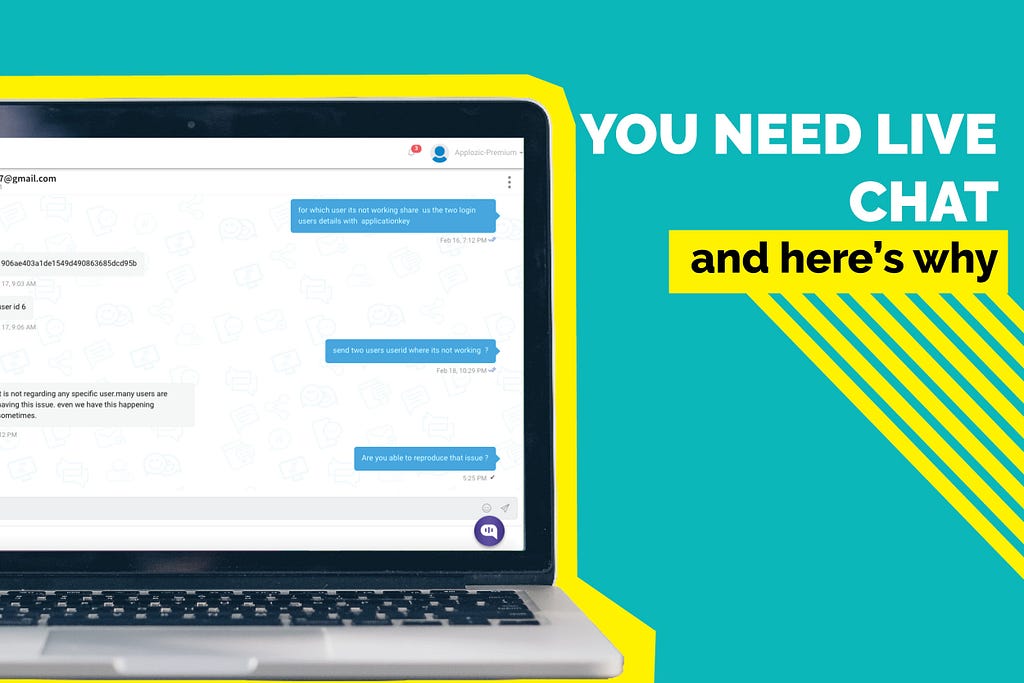
This is where live chat for websites can help. It’s real-time interaction; live chat helps customer service representatives manage several customers at one time, with a high level of detail, transparency, and personalization.
In this article, we’re going to talk about why startups and enterprises alike are adopting live chat for their businesses. We’re going to cover:
- Improved Customer Experience and Satisfaction
- Increased Sales and Conversions
- Cost Efficiency and Agent Productivity
- Competitive Advantage and Customer Loyalty
- Versatility and Integration
- What are the Best Practices for Implementing Live Chat?
- Conclusion
1. Improved Customer Experience and Satisfaction
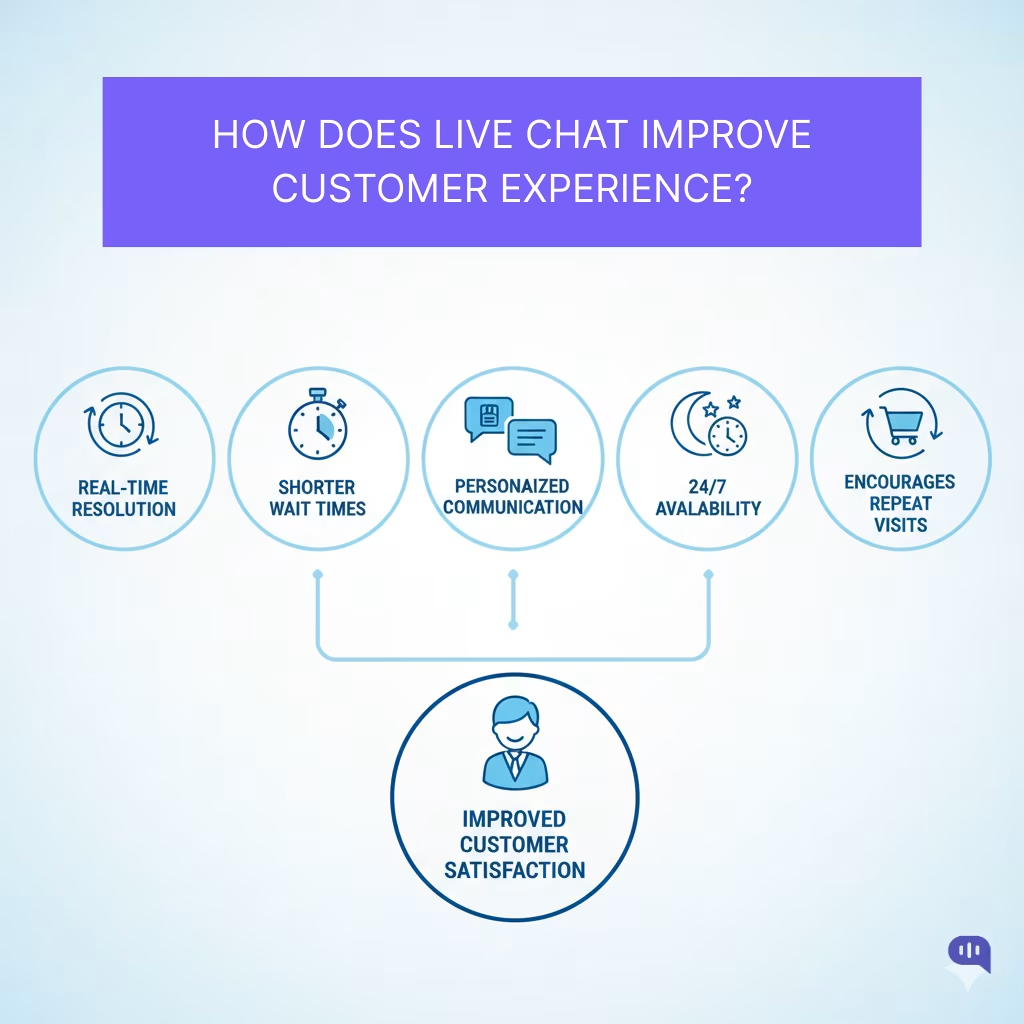
The first benefit of introducing a website live chat into your business is the lift in customer experience and satisfaction. We have been providing live chat software to businesses for over 5 years, and have seen this across all kinds of companies. Let’s look at some factors that contribute to this:
1. Real-Time Issue Resolution
Live chat makes it possible to resolve issues instantly. For example, TelOne adopted Kommunicate’s AI chatbots and live chat to manage multilingual customer inquiries in real time. This reduced their first-response time from hours to minutes, leading to faster resolutions and significantly improved CSAT scores.
2. Shorter Wait Times
Two-thirds of consumers expect an answer within 10 minutes on live chat.
Kommunicate’s integration with Moodle at Oklahoma City Community College (OCCC) demonstrates this: their AI chatbot, Professor Turing, provided instant answers to student FAQs about courses, deadlines, and IT issues, reducing wait times from days to seconds.
3. Personalized & Transparent Communication
Live chat allows agents to provide personalized, contextual responses while maintaining a transparent conversation trail. Also, tools like tags and notes (usually available on web chat dashboards) help your representatives communicate with each other and provide assistance more efficiently.
4. 24/7 Availability
We’re not going to harp on this for too long. By combining AI chatbots with live chat, businesses can ensure 24/7 coverage. OCCC’s “Professor Turing” handled thousands of student queries after hours, ensuring consistent availability even when staff were offline.
5. Encourages Repeat Visits
A frictionless support experience encourages customers to come back. We’ve seen this happen with multiple customers, especially at service-focused companies like DKSH and Day Translations.
While customer satisfaction and experience are two of the best advantages of live chat, it also helps in improving sales and conversions.
2. Increase Sales and Conversions
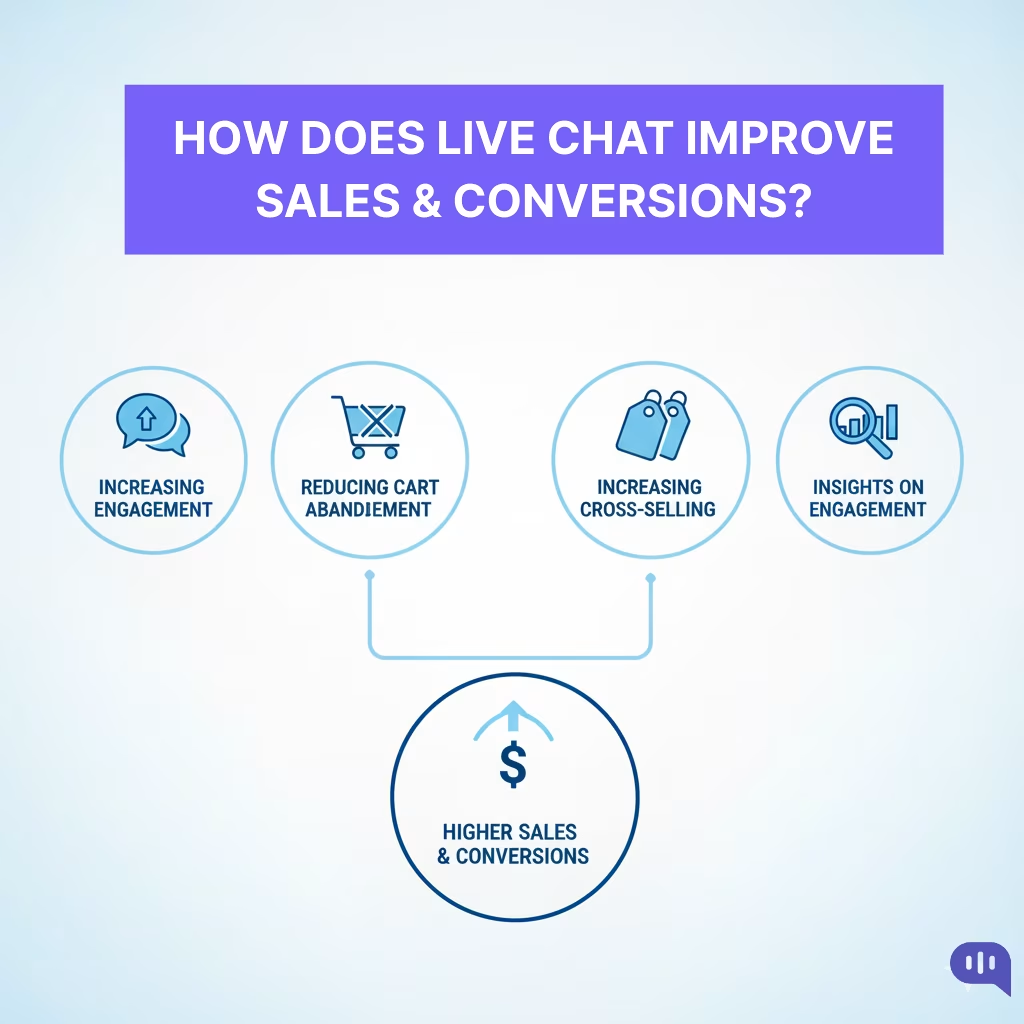
Another significant advantage of adding live chat to your website is its direct impact on sales and conversions. Customers who receive instant support at critical moments are far more likely to complete their purchase. Here are some of the ways live chat drives revenue growth:
1. Boosting Conversions
Live chat enables customers to confidently make purchase decisions by giving them the correct information at the right time. For example, Day Translations used Kommunicate’s AI chatbot and live chat setup to handle customer queries across multiple languages. The combination of real-time answers and multilingual support led to more conversions, as customers were no longer dropping off when faced with language or support barriers.
2. Reducing Cart Abandonment
Many customers abandon their shopping carts due to confusion, unanswered questions, or a lack of trust. Live chat helps by addressing concerns instantly. In fact, studies show that 44% of online shoppers say having questions answered during purchase is one of the most important features a website can offer. With Kommunicate, e-commerce businesses like Epic Sports have intercepted these moments, recovered lost sales, and reduced cart abandonment rates significantly.
3. Increasing Opportunities for Cross-Selling and Upselling
Live chat agents can do more than just solve problems — they can recommend relevant products or services during the conversation. This creates natural upsell and cross-sell opportunities. For instance, at DKSH, Kommunicate’s hybrid bot + human support model enabled reps to suggest complementary services to customers, increasing order values and driving incremental revenue.
4. Actionable Engagement Data from Visitors
Live chat tools collect valuable insights such as frequently asked questions, visitor demographics, and browsing behavior. This data not only helps in improving support but also informs sales and marketing strategies. OCCC’s “Professor Turing” chatbot provided detailed analytics on student queries, enabling the institution to optimize its digital processes and anticipate what students would ask next.
If your business only provides email or phone support, live chat might quickly improve conversions. Additionally, it will help in optimizing costs and productivity.
3. Cost Efficiency and Agent Productivity
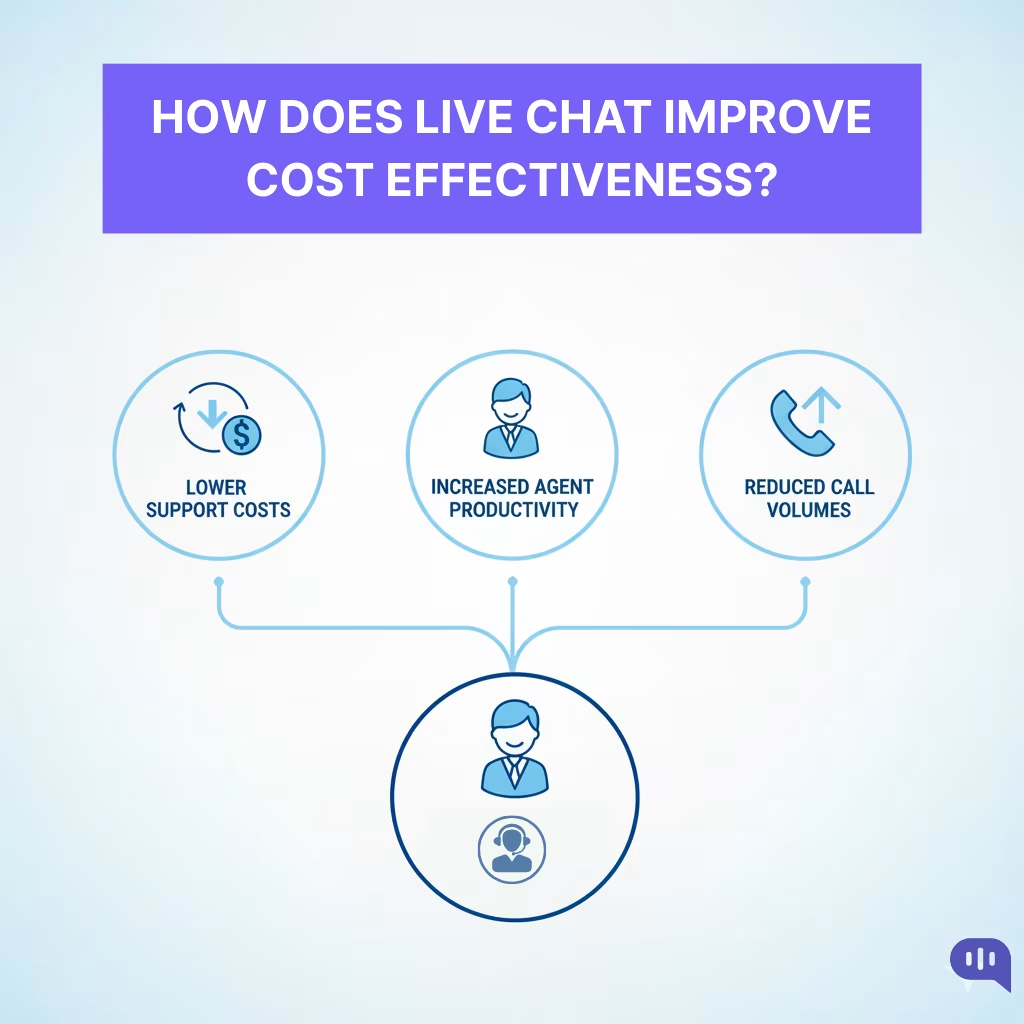
Live chat isn’t just about happier customers and more sales; it also delivers measurable savings and boosts agent productivity. It allows your teams to serve more customers with fewer resources and creates a scalable model for support. Here are some of the key efficiency benefits:
1. Low Support Costs
Unlike phone calls, where an agent can only handle one customer at a time, live chat allows support reps to manage multiple conversations simultaneously. This reduces staffing requirements and overall support costs. For instance, TelOne reduced its hold times by focusing on its live chat channel for support.
2. Increased Agent Efficiency
With the right live chat dashboard, agents can juggle multiple conversations, leverage canned responses, and use AI-powered suggestions to reply faster. Several clients have benefited from this hybrid model, where AI bots handle routine queries and escalate complex issues to human agents. Their support team became more efficient while handling a growing volume of multilingual requests.
3. Reduced Call Volumes
In a rather fun survey by the customer experience expert Shep Hyken, people found that 42% of customers would rather clean their toilet than attend to customer service.
It is stressful for customer service representatives, too. They’re tasked with handling one call at a time while maintaining metrics around response times and customer satisfaction.
Live chats route this to another platform where collaboration and transfers are more seamless. This increases customer satisfaction and improves customer service representative productivity.
Cost optimization pops up on their list of reasons whenever someone suggests live chat as a customer support channel. However, one of the significant benefits is customer loyalty.
4. Competitive Advantage and Customer Loyalty
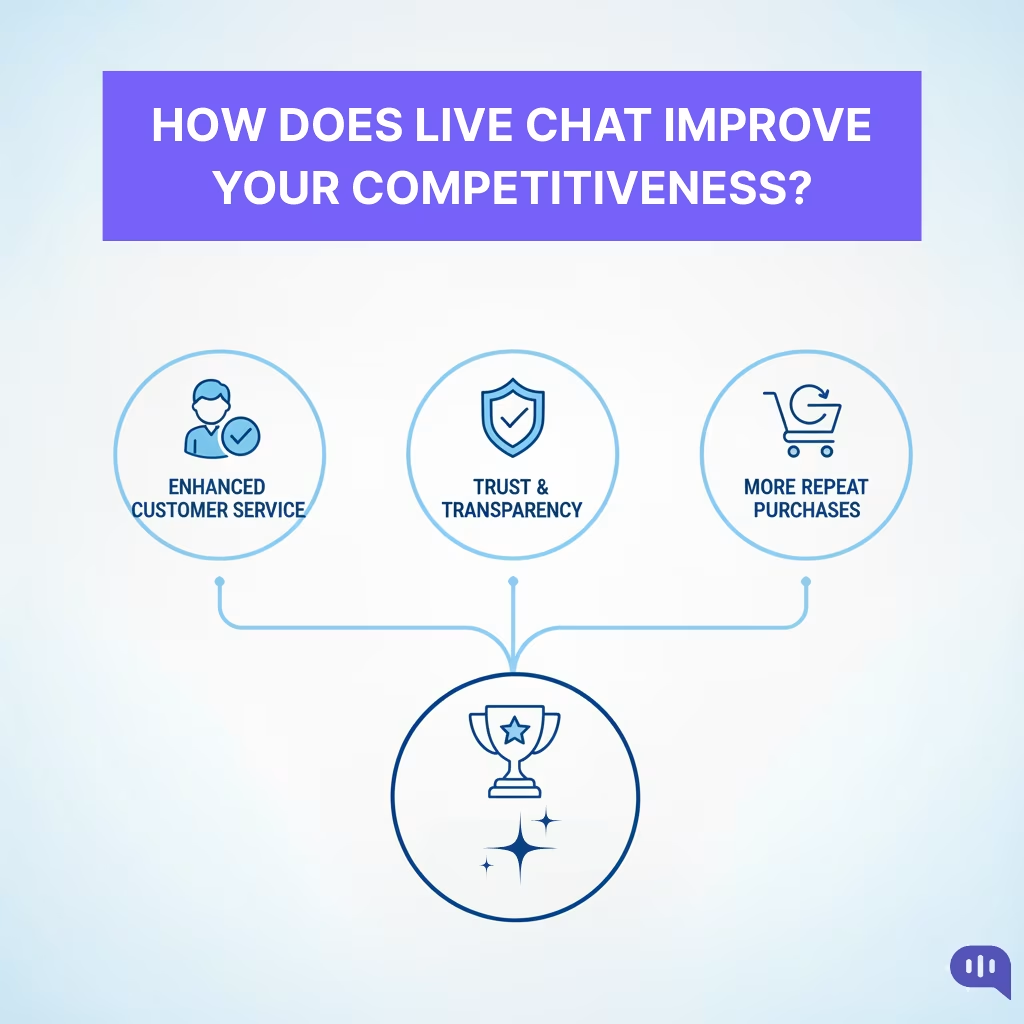
While live chat drives efficiency and reduces costs, one of its largest long-term benefits is how it strengthens customer loyalty. In competitive markets where products and pricing are often similar, the quality of customer experience becomes the true differentiator. Live chat helps your business stand out by delivering faster, more transparent, and more human interactions.
1. Enhanced Customer Service
Live chat goes beyond problem-solving; it enhances the overall service experience. Customers appreciate being able to reach a business instantly and get accurate answers. It improves service quality and responsiveness, making the support process a key differentiator for retaining clients.
2. Builds Trust and Transparency
Transparent, quick communication helps customers feel confident that your business values their time. Unlike email, which can feel slow and one-sided, live chat creates a conversational record that customers can revisit anytime.
3. Encourages Repeat Purchases
Satisfied customers are far more likely to return and recommend your business to others. Live chat and AI agents created repeat engagement by answering queries consistently and accurately, leading to stronger trust in the business. In a commercial setting, this translates into higher retention, referrals, and customer lifetime value.
Finally, live chat is also easier to integrate with different tools across your business.
5. Versatility & Integrations

One of the most underrated benefits of live chat is its adaptability. Whether you’re a startup, a mid-sized business, or an enterprise with global operations, live chat can flex to fit your needs. Beyond flexibility, it also integrates with the tools you already use, making it a cornerstone of a modern customer support strategy.
1. Fits Various Industries and Business Sizes
Live chat isn’t limited to e-commerce — it benefits sectors as diverse as education, telecom, healthcare, SaaS, and B2B services. For example, TelOne, a telecom provider, used Kommunicate’s WhatsApp integration to reduce call volumes, while OCCC leveraged the Moodle integration to provide 24/7 student support. These use cases highlight how live chat adapts equally well to service-focused businesses, enterprises, and academic institutions.
2. Integrates with CRM and Analytics Tools
Modern live chat tools don’t operate in isolation. They sync with CRMs, ticketing systems, and analytics dashboards. This ensures every conversation is tracked, every lead is nurtured, and every customer record is up to date. With Kommunicate, businesses can integrate live chat with platforms like HubSpot, Salesforce, and Zendesk, ensuring that agents always have context when engaging with customers.
3. Supports Omni-Channel Strategies
Customers don’t stick to one channel, and your support shouldn’t either. Live chat works seamlessly alongside email, phone, and social media, creating a unified support ecosystem. Kommunicate takes this a step further with its WhatsApp Shared Inbox, which lets businesses handle website live chats and WhatsApp messages from the same dashboard. This integration ensures customers get consistent, high-quality support no matter which channel they choose.
What are the Best Practices for Implementing Live Chat?
Simply adding a live chat widget to your website isn’t enough. To truly maximize the value of live chat, businesses need to follow certain best practices that ensure faster responses, better experiences, and higher ROI. Here are some actionable tips:
1. Choose the Right Live Chat Solution
Every business has unique needs. Before selecting a tool, evaluate features like AI automation, chatbot handoffs, CRM integrations, and scalability. For example, companies like Day Translations relied on Kommunicate’s multilingual AI chatbot capabilities to meet their diverse customer needs. The right solution should fit seamlessly into your existing stack.
2. Train Agents for Chat Etiquette
Live chat is fast and conversational, which makes tone and accuracy even more important. Agents must be trained in chat etiquette — writing clearly, avoiding jargon, and using a professional yet empathetic tone. With Kommunicate, managers can monitor chats and provide coaching through built-in agent dashboards, ensuring teams stay consistent.
3. Use AI and Automation Wisely
AI chatbots are excellent for handling FAQs, order updates, or appointment scheduling. However, complex or sensitive issues should escalate to a human agent. A hybrid approach, like the one OCCC’s Professor Turing chatbot follows, allows bots to provide 24/7 coverage while routing advanced queries to staff. This balance delivers efficiency without compromising quality.
4. Measure Performance Regularly
Tracking KPIs ensures your live chat strategy stays effective. Metrics like First Response Time (FRT), Customer Satisfaction Score (CSAT), and Conversion Rates provide valuable insights into what’s working and what needs improvement. Kommunicate’s AI Insights dashboard helps businesses monitor these metrics in real time, allowing for continuous optimization.
This four-step plan has improved the customer support processes for thousands of businesses globally. It’s a tried-and-tested plan that we implement for all our customers.
Conclusion
TL;DR: Check out this infographic on why you need to embrace chat:

Live chat offers countless benefits, and you can find much more than this over at Website Builder. As a business, one of the most important things you should consider is keeping the customer happy, and live chat offers the perfect solution for you to achieve this.
This article is written by Josh Wardini. Josh is Editorial Contributor and Community Manager at websitebuilder.org. With a preliminary background in communication and expertise in community development, Josh works day-to-day to reshape the human resource management of digitally based companies. When his focus trails outside of community engagement, Josh enjoys the indulgences of writing amidst the nature conservation of Portland, Oregon.
At Kommunicate, we are envisioning a world-beating customer support solution to empower the new era of customer support. We would love to have you on board to have a first-hand experience of Kommunicate. You can signup here and start delighting your customers right away.