Updated on April 6, 2026
Over the past year, AI agents have taken over the world. With luminaries like Andrej Karpathy (the former head of Tesla) declaring, “I think 2025-2035 is the decade of agents… you’ll spin up organizations of Operators for long-running tasks of your choice.”
AI agents have already evolved to encompass a lot of real-world use cases. They are no longer limited to chat windows or simple scripts. They sense the world, decide what to do, and act.
This article will organize real-life examples of AI agents by how they perceive, reason, and learn, moving from simple reflexes to multi-agent swarms and enterprise-grade systems. Each section will explain the agent type in plain language and then ground it with practical use cases you can point to today.
We’ll cover:
- Simple-Reflex Agents
- Model-Based Reflex Agents
- Goal-Based Agents
- Utility-Based Agents
- Learning Agents
- Reasoning and Hierarchical Agents
- Robotic Agents
- Virtual and Conversational Agents
- Multi-Agent Systems and Swarm Intelligence
- Enterprise and Domain-Specific Agents
- Autonomous and Physical-System Agents
- Conclusion
Simple-Reflex Agents
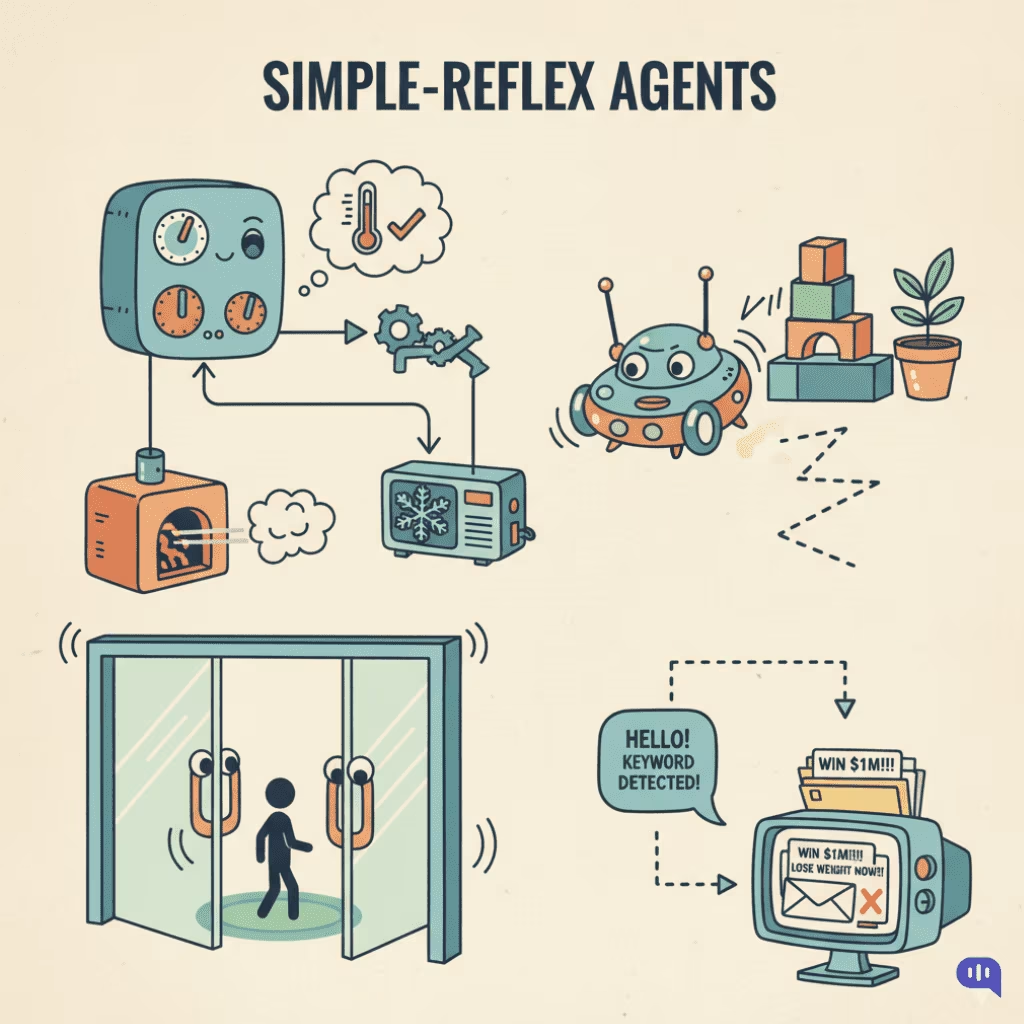
Simple-Reflex Agents act only on sensor inputs using fixed conditions. These AI agents are fast, reliable in stable environments, and easy to prove correct. However, they’re not suited for complex tasks and require more context.
1. Thermostats that keep a room at a set temperature
Basic home thermostats compare the current temperature to a setpoint and immediately switch heating/cooling on or off. You can check out this list to see some of the agents that are available on the market.
2. Automatic doors using motion/pressure sensors
Store and office doors open when a motion or pressure sensor fires, then close once no motion is detected (pure stimulus → response). They often use basic motion or pressure sensors to operate.
3. Early robotic vacuums bumping off obstacles.
First-gen Roombas used bump and light-touch sensors: the robot turns and keeps going when the bumper hits an obstacle. To see what the inside of a Roomba looks like, you can check out this quick explainer.
4. Pattern-matching chatbots and spam filters
Regex-based chatbots send canned replies when they detect specific keywords and phrases, and simple email rules route messages when patterns match. This is used in many cases, including spam filters for email clients.
Model-Based Reflex Agents
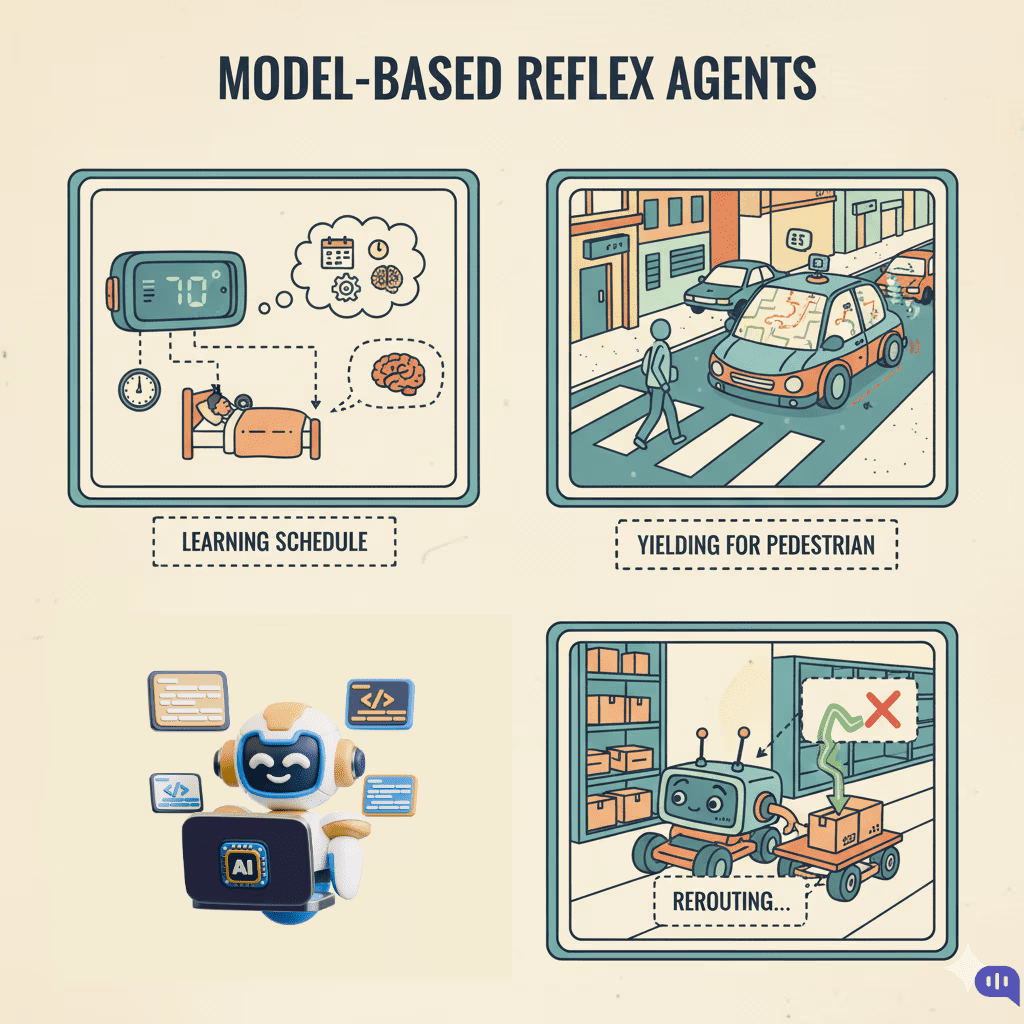
Model-Based Reflex Agents maintain a simple internal model of the world so they can react even when parts of the environment are hidden or ambiguous. They’re still rule-driven like simple reflex agents, but use state/history (e.g., time of day, learned maps, user patterns) to choose better actions in partially observable settings.
1. Smart home security monitoring for unusual activity
These systems fuse inputs (motion, cameras, schedules) and compare them to a learned “normal” pattern—e.g., motion at 3 a.m. when nobody should be home—then trigger alerts. See this overview of model-based agents and smart-home examples. Example guide
2. Autonomous vehicles’ navigation layer
AVs track road rules and maintain an internal state for nearby objects and pedestrians; if someone approaches a crosswalk, the car slows/yields based on its model even before entry. Research on AV-pedestrian interaction models illustrates this behavior.
3. Warehouse robots that reroute around obstacles
Modern Autonomous Guided Vehicles and Autonomous Mobile Robots build or maintain maps of aisles and shelving. When a path is blocked, they localize on that map and re-plan instead of unthinkingly reversing.
4. Smart thermostats that remember past settings
Learning thermostats record your temperature changes across time and build a schedule; the internal model (time-of-day, occupancy patterns) drives future set-points automatically. Google’s Nest learns user preferences by remembering the schedules you input into its systems.
Goal-Based Agents
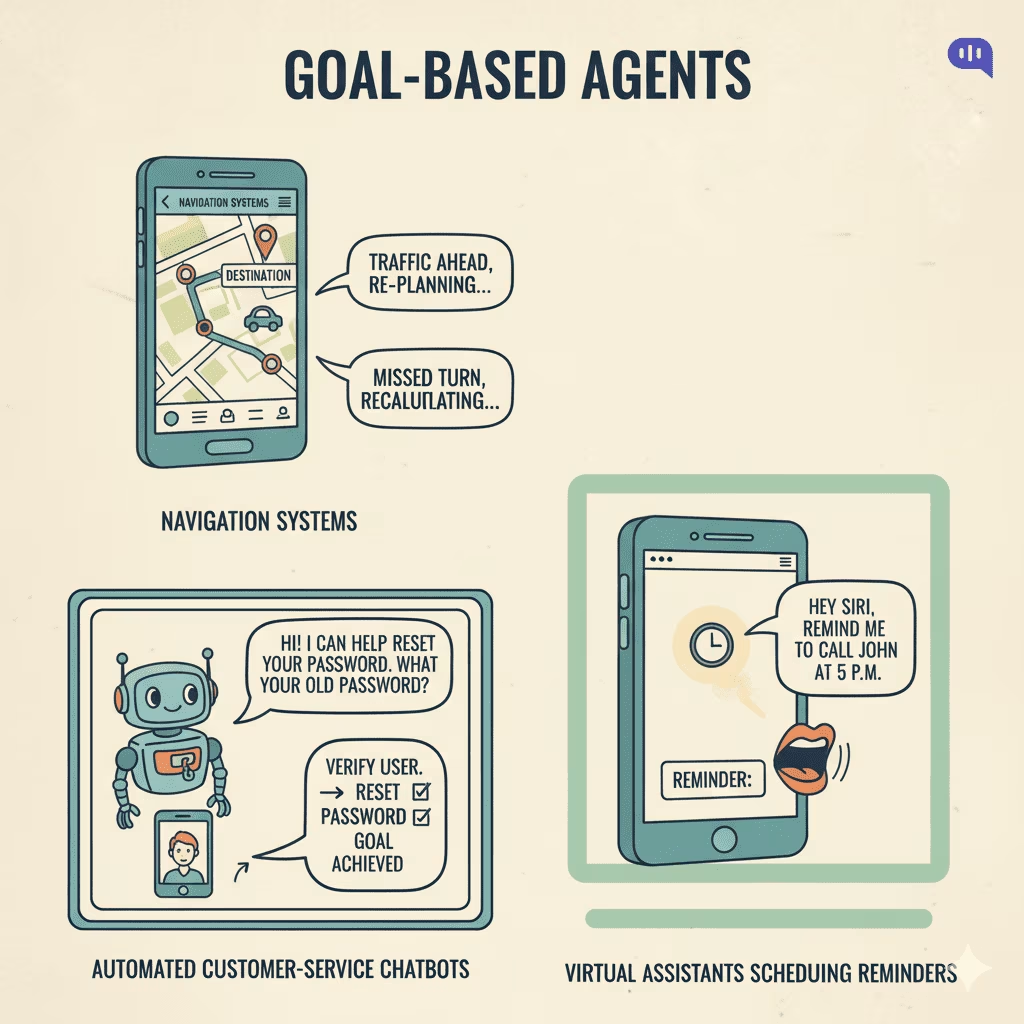
Goal-Based Agents plan actions to reach an explicit goal (e.g., “arrive at destination” or “reset password successfully”). They evaluate future consequences and choose steps that move them closer to the goal, often using search and re-planning.
1. Navigation systems like Apple Maps
GPS apps treat the destination as the goal, compute a route, and re-plan automatically when traffic changes or you miss a turn. The following early video from Google showcases how it works in real-time.
2. Automated customer-service chatbots
Task-oriented bots work through decision steps until the goal (like “reset my password”) is achieved. You can use the intents and entities features in our Kompose bot builder to build these agents for your business.
3. Virtual assistants scheduling reminders
When you say “Remind me to call John at 5 p.m.,” the assistant interprets the goal, creates a timed reminder, and then triggers it at the specified time. Apple’s Siri and Amazon’s Alexa fall into this category.
Utility-Based Agents
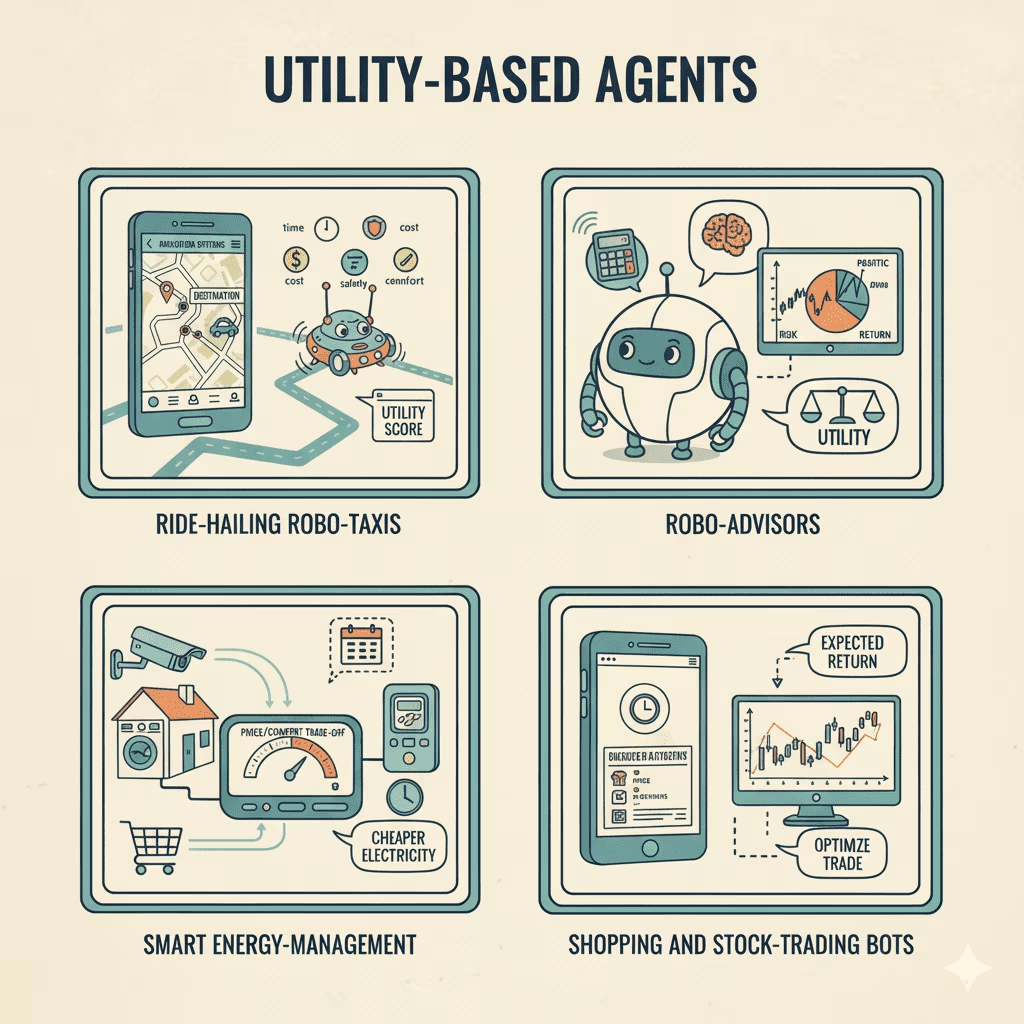
Utility-Based Agents weigh possible actions using a utility function and pick the option with the highest overall “score.” They balance multiple objectives like time, cost, comfort, safety, or risk, which makes them better suited for complex trade-offs than rule-only or single-goal agents.
1. Ride-hailing robo-taxis choosing routes and passengers
Autonomous ride-hail services evaluate route length, traffic, pickup time, and service constraints to decide which trip to accept and how to navigate. Waymo is a good example of a service like this.
2. Robo-advisors balancing risk and return
Digital advisors estimate the expected return and risk of portfolios and then select the mix that maximizes investor utility given risk tolerance, often using mean-variance optimization. Wealthfront uses robo-advisors to improve investors’ returns.
3. Smart energy-management systems
Home energy managers schedule appliances when electricity is cheaper while respecting comfort and occupancy, effectively maximizing a cost–comfort utility. A recent paper from Nature surveys dynamic appliance scheduling with real-time pricing and a review of residential scheduling systems.
4. Shopping and stock-trading bots
Shopping bots score options using price, reviews, and availability to recommend the “best buy,” while trading bots optimize orders against risk and expected return.
Learning Agents
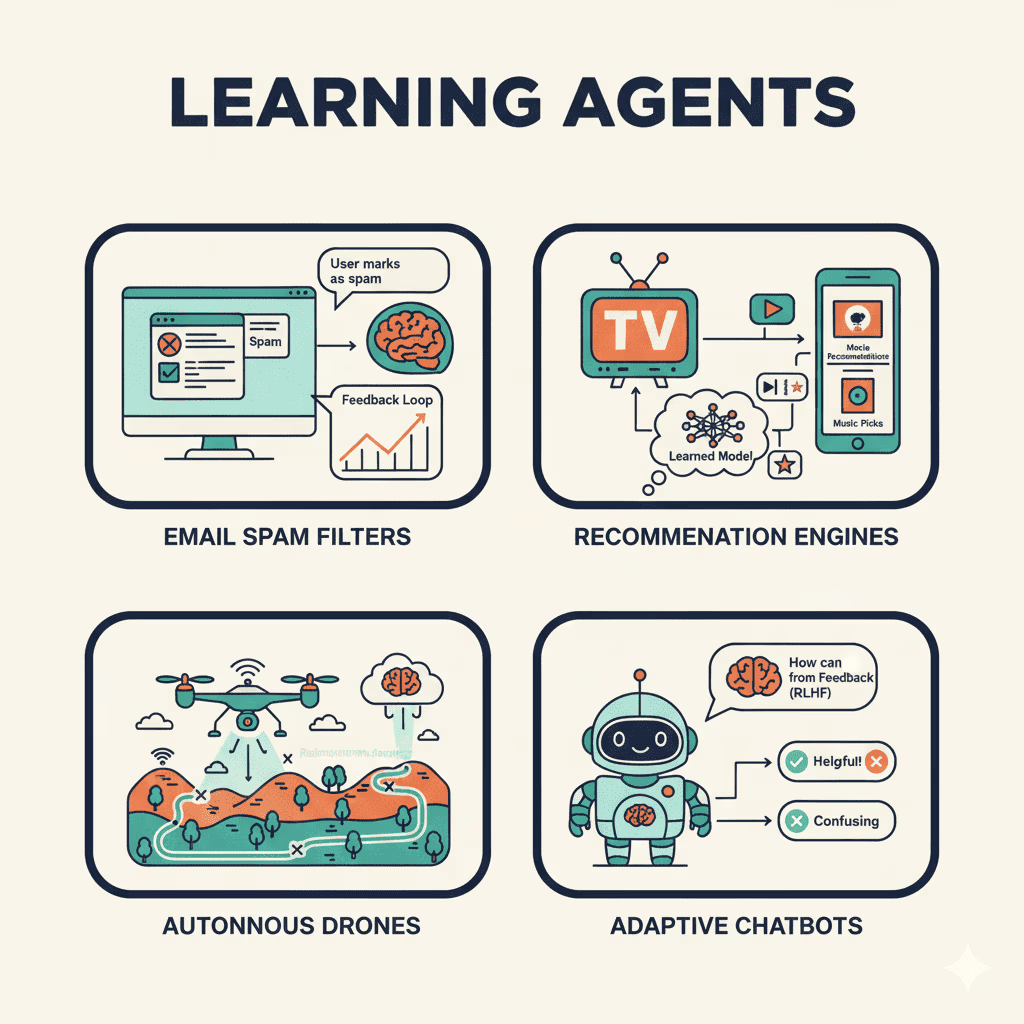
Learning Agents improve their behavior from data and feedback, updating models to perform better with each interaction. Unlike rule-based systems, they use supervised learning, reinforcement learning, and RLHF to reduce errors and personalize outcomes over time.
1. Email spam filters that improve over time
Modern spam filters learn from what users mark as spam/not-spam and from broader sender-reputation signals, so detection accuracy steadily increases with feedback. Gmail’s spam filter works with this method.
2. Recommendation engines (Netflix/Spotify)
Streaming platforms study viewing/listening history, skips, ratings, and context (time of day, device) to learn what keeps you engaged and refine future suggestions. Netflix, YouTube, and Spotify all use recommendation engines to provide recommendations to users.
3. Autonomous drones learning flight strategies
Drones use reinforcement learning to optimize path planning and obstacle avoidance under wind, terrain, and sensor uncertainty. A lot of UAVs use localized path planning to optimize their paths.
4. Adaptive chatbots
Customer-service chatbots increasingly learn from user interactions and human feedback (RLHF), improving response quality and escalation decisions. Kommunicate’s AI agents collect customer feedback to improve their responses over time.
Reasoning and Hierarchical Agents
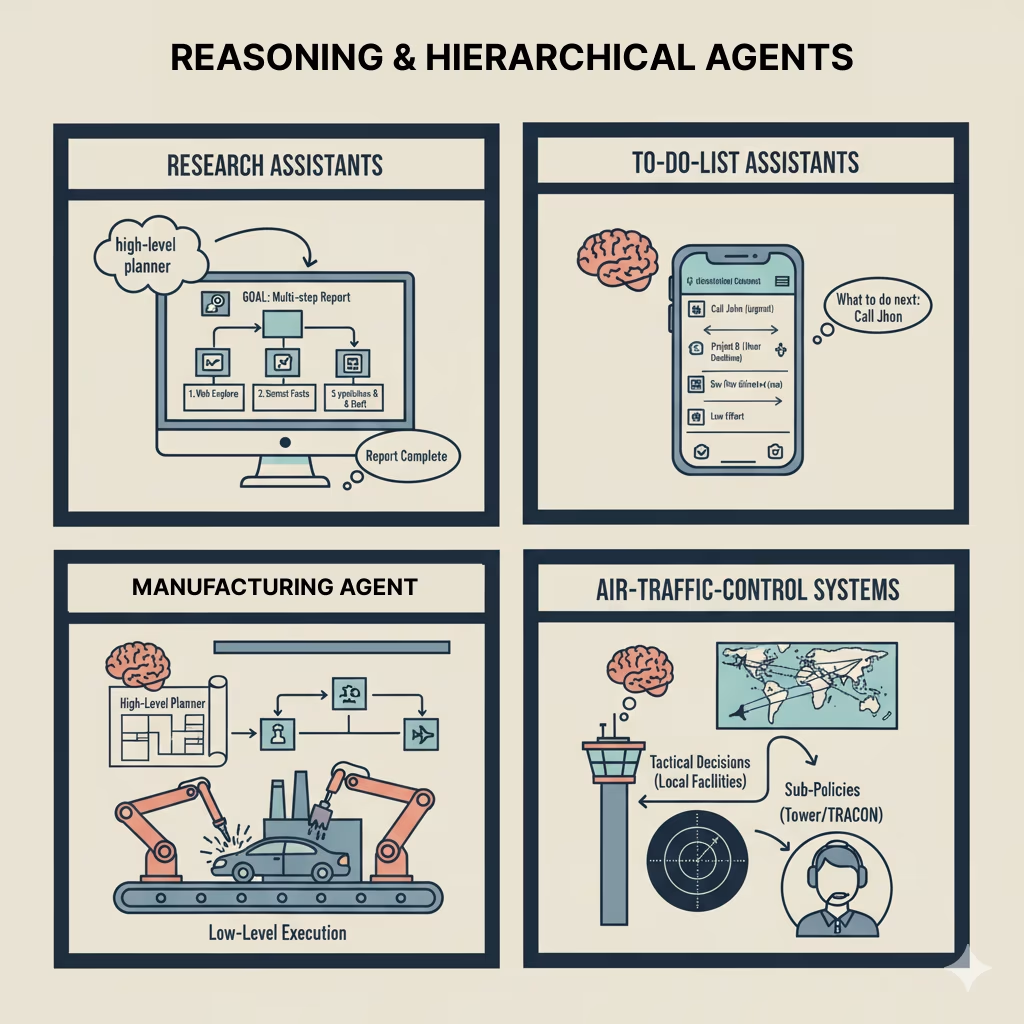
Reasoning & Hierarchical Agents break problems into smaller steps and plan sequences of actions, often stacking “high-level planner → low-level executor.” This layered approach lets agents reason over goals while delegating concrete moves to specialized sub-policies or controllers.
1. Research assistants compiling multi-step reports
Modern research agents explore the web, extract facts, and synthesize them into a coherent brief; explicitly decomposing the task and iterating. Gemini and OpenAI’s Deep Research agents are good examples.
2. To-do-list assistants prioritizing tasks
AI task managers reorder work by deadlines, effort, and urgency to recommend “what to do next,” not just “what’s due.” Microsoft’s CoPilot has an agent that can prioritize your tasks using this method.
3. Hierarchical manufacturing robots
Factory control stacks set goals at the top (throughput, quality), plan stations, and finally activate robots for welding/painting at the bottom. FANUC’s assembly line robots are a good example.
4. Air-traffic-control systems
Air-traffic-control systems use layered decision-making: strategic traffic-flow management across regions and tactical decisions at local facilities (tower/TRACON), coordinated up to national command centers. The Federal Aviation Administration uses these agents to make flying safer.
Robotic Agents
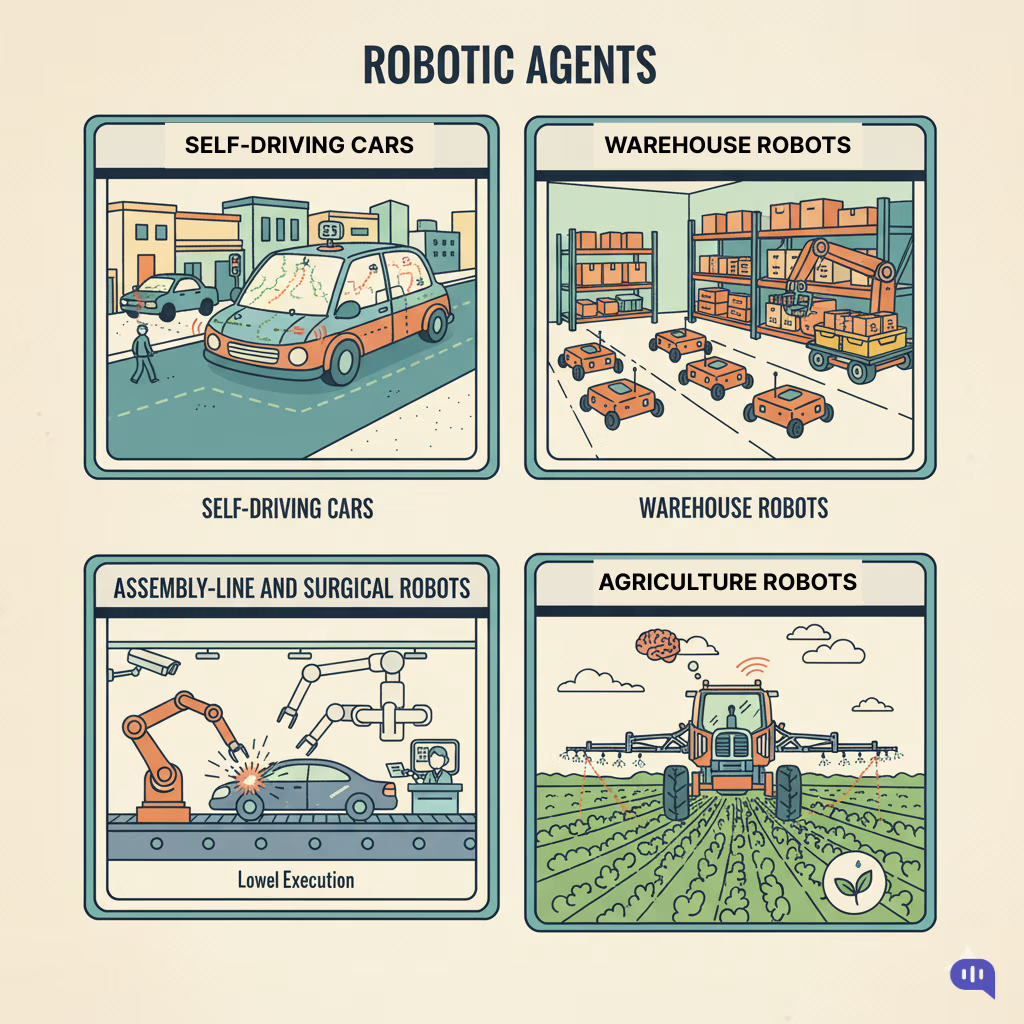
Robotic Agents sense the physical world, reason over plans, and act through motors. They appear on roads, in warehouses, in operating rooms, and on farms.
1. Self-driving cars
Autonomous vehicles perceive lanes, objects, and signals, then plan and execute safe maneuvers; you can even hail a fully driverless ride in several U.S. cities. Tesla’s FSD mode and Waymo’s driverless cabs are good examples.
2. Warehouse robots that pick and sort packages
Mobile drive units and robotic arms shuttle totes, sort items, and help fulfill orders at scale, while coordinating paths and picks in real time. Amazon has deployed these robots across its warehouses.
3. Assembly-line and surgical robots
Industrial arms deliver repeatable welding/painting/assembly on production lines, while surgical systems give clinicians precise, minimally invasive control. Intuitive’s da Vinci platform is a great example.
4. Agricultural robots for planting and harvesting.
Computer-vision sprayers and field robots identify weeds/crops, target inputs, and automate labor-intensive tasks to boost yield and cut waste. John Deere’s See & Spray is a flagship example.
Virtual and Conversational Agents
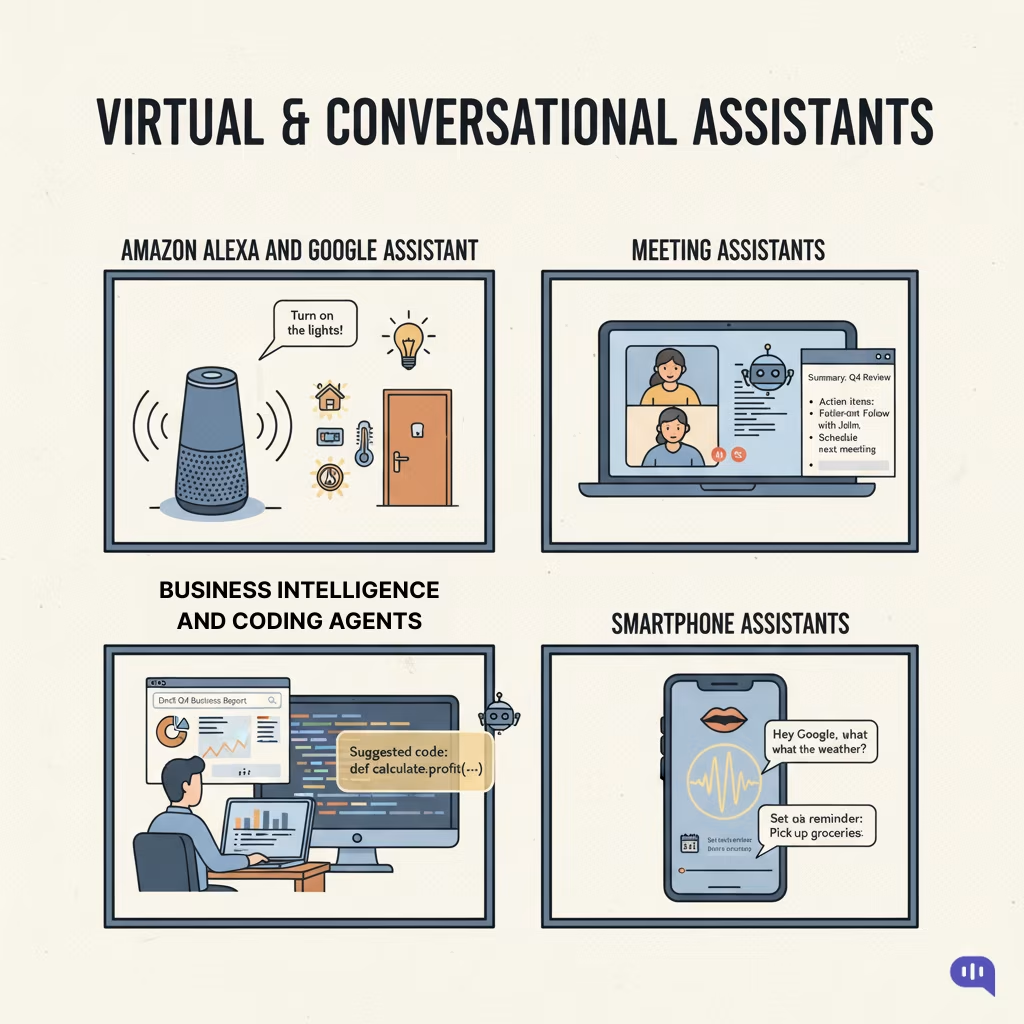
Virtual & Conversational Assistants understand natural language and execute tasks like answering questions, setting reminders, or orchestrating smart-home routines. At their best, they combine speech, context, and app integrations to get things done with a single request.
1. Amazon Alexa and Google Assistant
Alexa handles huge volumes of smart-home interactions and can even trigger automations proactively; Google Assistant offers similar voice control across phones, speakers, and cars. Explore Amazon’s latest smart-home capabilities and developer guides.
2. Meeting assistants
AI note-takers join calls, transcribe in real time, and produce summaries and action items you can search later. Fireflies, Otter, and Avoma all offer meeting assistants as a part of their offerings.
3. Business-intelligence & coding copilots
Data/BI agents help research and draft reports, while coding copilots suggest code in your IDE. We’ve written a separate article about AI coding agents.
Multi-Agent Systems and Swarm Intelligence
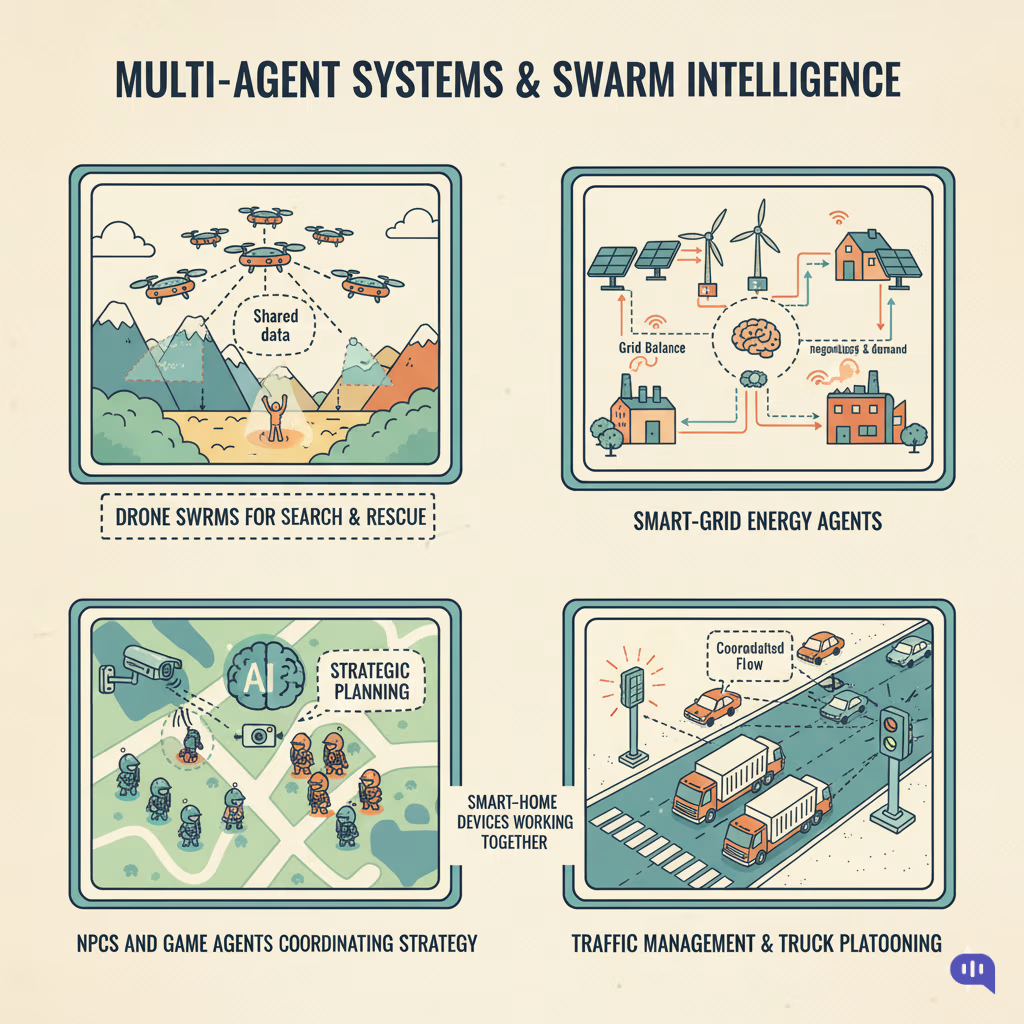
Multi-Agent Systems & Swarm Intelligence coordinate multiple agents that cooperate or compete, producing behaviors (search, routing, control) that no single agent could manage alone. They appear in drones, grids, traffic, games, and smart homes.
1. Drone swarms for search & rescue
Teams of UAVs split the map, share observations, and cover more ground to find survivors faster. Several modern drones that are used in warfare fall into this category.
2. Smart-grid energy agents
Distributed generators, batteries, and loads act as agents that negotiate supply and demand to balance the grid. You can learn more about these agents with this paper from MDPI.
3. NPCs and game agents coordinating strategy
Multi-agent RL lets non-player characters plan, cooperate, and adapt tactics against humans. Examples: OpenAI Five (team AI beats Dota-2 world champions)
4. Traffic management & truck platooning
Connected intersections and adaptive signals coordinate flows; platooning lets trucks travel in formation to save fuel. Examples: Smart signals (SURTRAC) that cut travel time.
5. Smart-home devices working together
Motion or occupancy events can trigger lights, cameras, and alarms. The AI agent devices “talk” and coordinate routines. Example: Google Home and Alexa can perform several tasks like this.
Enterprise & Domain-Specific Agents
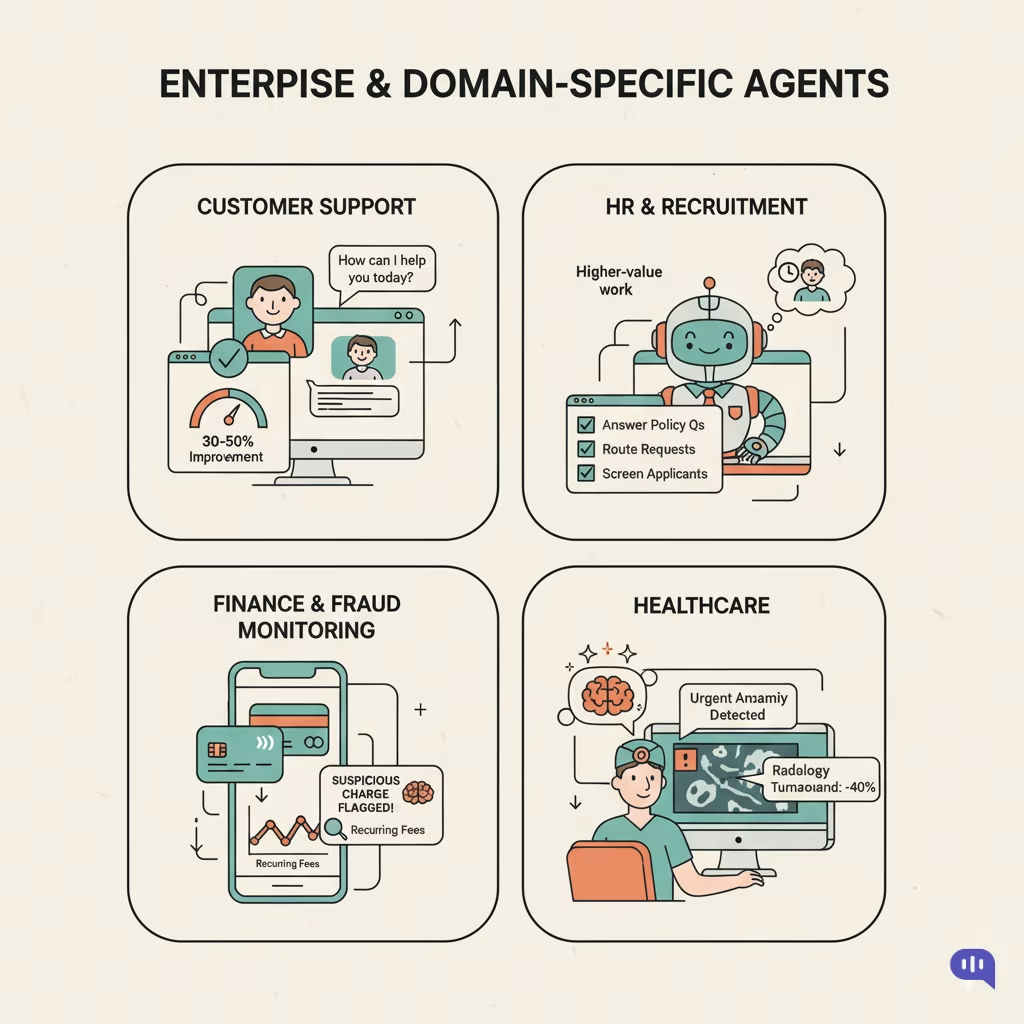
Enterprise & Domain-Specific Agents automate focused workloads (like specific workflows for support, HR, finance, sales/marketing, and healthcare teams), where integrations, compliance, and measurable KPIs matter. They’re tuned for enterprise data, processes, and outcomes.
1. Customer support
AI agents deflect standard tickets, triage, and speed replies; vendors report 30–50% improvements in response metrics in case studies. Kommunicate’s integrated customer support platform deflects L1 and L2 tickets that integrate across channels.
2. HR & recruitment
These assistants answer policy questions, route requests, and screen applicants—freeing HR teams for higher-value work.
3. Finance, fraud monitoring & forecasting
Consumer finance agents flag suspicious charges and recurring fees. Similar agents exist for B2B companies as well; they’re used to flag suspicious activities and learn about fraudulent payment patterns.
4. Sales copilots
Lead-prioritization and AI coding agents boost throughput by recommending the following actions or generating code within IDEs.
5. Healthcare
Clinical AI flags urgent images and helps reduce radiology turnaround times; digital pathology tools assist with more consistent reports.
Autonomous and Physical-System Agents
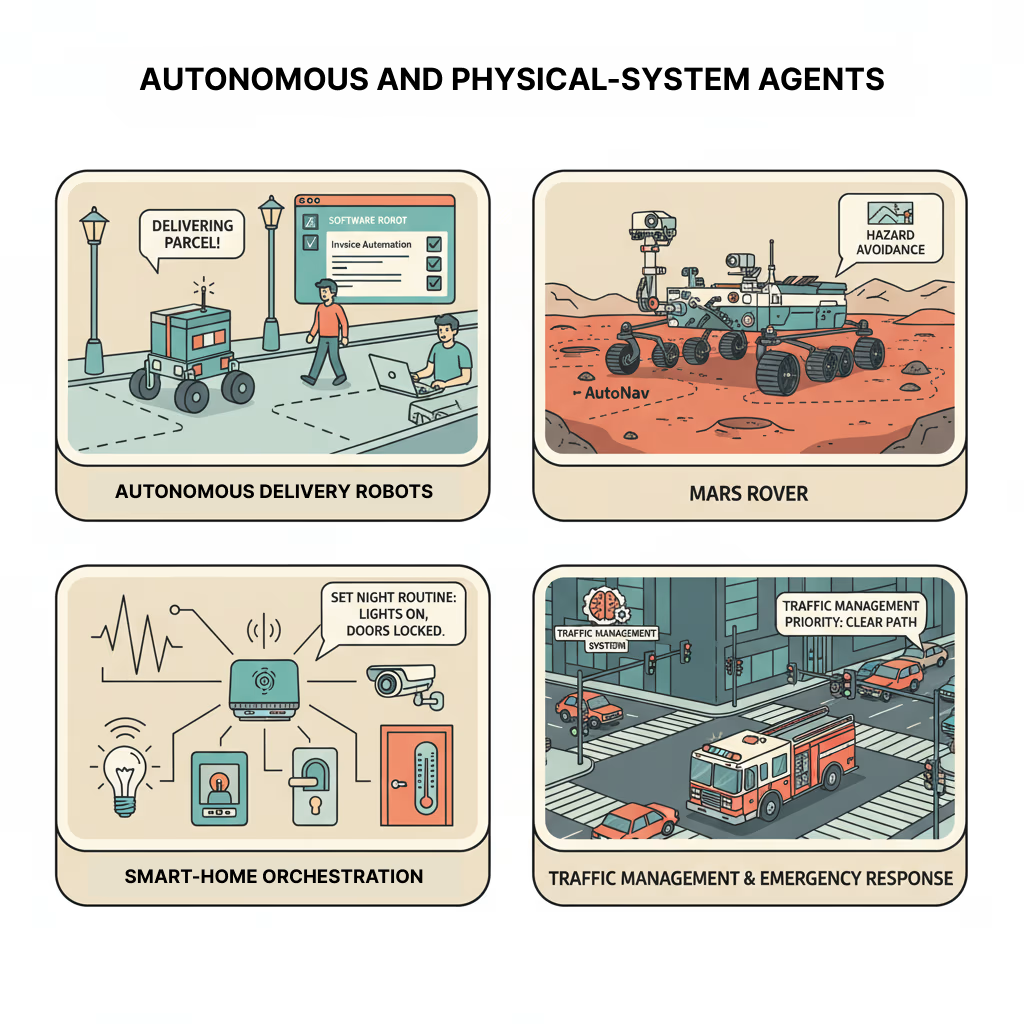
Autonomous & Physical-System Agents operate in the real world. These agents sense the world with sensors, make plans under uncertainty, and act via motors or actuators. They power delivery robots, industrial automation, space exploration, and city infrastructure.
1. Autonomous delivery robots & RPA in back offices
Sidewalk robots navigate curbs, crossings, and weather to deliver food and parcels; in finance ops, “software robots” process invoices end-to-end. UI Path’s invoice automation agent is a great example.
2. Mars rover
Perhaps the most famous AI agent in this list, NASA’s Perseverance uses AutoNav to map terrain, avoid hazards, and drive itself between science targets on Mars.
3. Smart-home & IoT orchestration
Home hubs and routines increasingly coordinate sensors, lights, cameras, and alarms with natural-language setup. You can set up an agent like a home assistant, like Google Home.
4. Traffic management & emergency response
Adaptive signal control and V2X give buses priority and clear paths for ambulances, cutting delays and idling. SURTRAC has recently demo-ed this in Pittsburgh.
Conclusion
AI agents have moved from theory to daily utility. From reflexive thermostats to enterprise copilots and city-scale traffic systems, the pattern is the same: perceiving accurately, reasoning over clear objectives, and acting reliably. The right approach depends on your context: start simple where rules suffice, introduce state and models for partial observability, bring in goals and utilities for trade-offs, and add learning and hierarchy as your environment grows complex.
If you are evaluating agents for customer support, sales, or operations, focus on three things:
- Map a single high-value workflow end-to-end
- Connect trusted data sources and enforce guardrails (authentication, PII handling, audit logs)
- Measure impact with clear KPIs like deflection rate, first response time, and CSAT
- Ship a small pilot, then expand to adjacent workflows
Kommunicate helps you do this across web, mobile, and WhatsApp with AI agents, live chat, ticketing, and a shared inbox your team already understands. You’re in the right place if you want faster resolutions, lower costs, and higher CSAT without a long build cycle.
Ready to try it?
- Sign up for Kommunicate and launch your first AI agent in minutes.
- Book a demo to see how leading teams automate L1/L2, route complex cases, and track ROI in one dashboard.