Updated on February 2, 2026

Here’s something we all know about chatbots: 80% of them make customers more frustrated than they were before clicking “Chat with us.”
You know the experience. You need to change a reservation, get a refund, or ask a simple question. The chatbot cheerfully offers five options that don’t match your problem. You try rephrasing. It suggests the same five things. You type “AGENT” in all caps. It asks how it can help you today. By the time a human finally appears, you’re ready to switch to their competitor.
Now imagine the opposite: You land on a website at midnight with an urgent question. The chatbot actually understands you on the first try. It solves your problem in 30 seconds.
After testing dozens of chatbots from different websites, we identified 10 that have cracked the code.
What makes them different? Their primary focus is on one thing: making customers feel understood.
Here’s precisely how they do it.
1. Our Methodology: How We Evaluated These Chatbot Examples
2. What Makes a Website Chatbot Truly High-Performing?
3. 10 Best Website Chatbots in Action
4. Key Takeaways: Chatbot UX Best Practices
5. How to Implement These Strategies for Your Business
Our Methodology: How We Evaluated These Chatbot Examples
To identify the best website chatbots that genuinely earn customer trust, we didn’t just look at the most prominent brands or the flashiest interfaces. We developed a rigorous evaluation framework based on what actually matters to users and businesses alike.
Our Evaluation Criteria
- User Experience Excellence: We tested each chatbot as real customers would, evaluating response accuracy, conversation flow, personality consistency, and how naturally the bot handled unexpected inputs. The best chatbot conversation design feels effortless, not forced.
- Trust-Building Mechanisms: We assessed transparency about bot capabilities, clarity in setting expectations, honest acknowledgment of limitations, and the smoothness of bot-to-agent handoff examples.
- Business Impact Metrics: We examined documented results in ticket deflection rates, customer satisfaction scores, conversion rate improvements, and average resolution time.
- Technical Implementation Quality: We analysed response time and reliability, mobile responsiveness, integration with existing systems, and data security practices. Even brilliant conversation design fails if the technology is shaky.
- Self-Service Capabilities: We evaluated how effectively each self-service chatbot enables users to resolve issues independently, reducing reliance on human agents while maintaining user satisfaction.
Data Sources
Our analysis drew on multiple sources: direct testing of each chatbot interface; published case studies and performance metrics; customer reviews and feedback; interviews with implementation teams, where available; and industry benchmarking data. We prioritized chatbots with publicly verifiable results and transparent performance data.
Why These 10?
From an initial pool of over 50 website chatbot examples, these 10 stood out for their excellence across multiple criteria: demonstrating measurable business impact, representing diverse industries and use cases, and implementing innovative solutions to common chatbot challenges. Three of our featured examples are Kommunicate clients with documented success stories that illustrate website chatbot best practices in real-world environments.
| Rank | Website Chatbot | Industry | Primary Use Case | Core Specialty | Self-Service Strength | Bot-to-Agent Handoff | How It Reduces Support Tickets |
| 1 | Brash Solutions (Kommunicate Client) | Healthcare IT | Call automation & data capture | Secure automation of high-volume, regulated interactions | Collects structured data without human involvement | Escalates sensitive or urgent cases with full context | Replaces hundreds of daily phone calls with automated chat |
| 2 | DKSH (Kommunicate Client) | Market Expansion | Lead capture & nurturing | Conversational lead qualification across global markets | Answers product and catalog queries instantly | Routes high-intent leads to sales teams | Eliminates manual email-based lead handling |
| 3 | OCCC – Professor Turing (Kommunicate Client) | Education | Student & LMS support | 24/7 judgment-free academic self-service | Resolves common LMS and login issues independently | Directs complex cases to the correct campus resources | Deflects peak-semester student support tickets |
| 4 | Domino’s – Dom | Food Delivery | Ordering & tracking | Frictionless conversational commerce | Handles reorders, tracking, and modifications end-to-end | Escalates payment or complaint issues instantly | Reduces phone orders and order-status inquiries |
| 5 | Bank of America – Erica | Banking | Account management & guidance | Proactive, personalized financial assistance | Resolves routine banking queries securely | Transfers fraud or complex cases to specialists | Deflects balance, transaction, and FAQ calls |
| 6 | IKEA Website Chatbot | Retail | Product discovery & order support | Guided shopping for complex product catalogs | Helps users compare, find, and support products | Routes planning services to human experts | Reduces delivery, returns, and assembly questions |
| 7 | Lyft Customer Support Bot | Ride-sharing | Ride issues & dispute resolution | Real-time issue triage with context awareness | Instantly resolves common ride and billing issues | Prioritizes urgent cases with full ride context | Cuts resolution time from hours to minutes |
| 8 | Duolingo Practice Bot | EdTech | Language learning | Conversational learning as the product itself | Enables unlimited self-guided practice | Rarely requires human escalation | Reduces learning-support queries entirely |
| 9 | Whole Foods Recipe Bot | Grocery Retail | Recipe discovery & shopping | Inspiration-to-purchase conversational journeys | Creates recipes and shopping lists automatically | Minimal handoff required | Prevents basic product and recipe inquiries |
| 10 | Amtrak – Julie | Transportation | Booking & travel information | Long-form conversational trip planning | Handles schedules, fares, and modifications | Transfers complex itineraries seamlessly | Automates millions of annual travel queries |
What Makes a Website Chatbot Truly High-Performing?
Before we dive into specific chatbot examples, let’s establish what separates the exceptional from the merely functional. High-performing chatbots share several critical characteristics that work together to build customer trust and deliver business value.
1) Intelligent Conversation Design
The foundation of any great chatbot is conversation design that feels natural and purposeful. This means understanding user intent even when it’s expressed imperfectly, maintaining context throughout multi-turn conversations, using personality that aligns with brand voice without being gimmicky, and providing clear, concise answers without overwhelming users with options.
2) Seamless Human Handoff
Even the most intelligent bot has limits. The best website chatbots recognize these boundaries and execute smooth bot-to-agent handoffs that preserve conversation context, transfer at the right moment without frustrating users, provide agents with the full conversation history, and set clear expectations about wait times and next steps.
3) Proactive Problem Prevention
Rather than just reacting to questions, high-performing chatbots anticipate needs by offering relevant suggestions based on user behaviour, providing information before users have to ask, identifying and addressing potential friction points, and guiding users toward optimal outcomes.
4) Continuous Learning and Optimization
The best chatbot examples aren’t static. They evolve through regular analysis of conversation logs, A/B testing of different responses and flows, incorporating user feedback, and expanding knowledge bases based on emerging questions.
5) Measurable Business Impact
Ultimately, a high-performing chatbot must deliver results. The best ones demonstrably reduce support tickets with chatbot automation, improve customer satisfaction scores, increase conversion rates, reduce average handling time, and provide clear ROI on implementation costs.
10 Best Website Chatbots in Action
Now, let’s examine the website chatbot examples that exemplify these principles.
1. Brash Solutions: Automating Healthcare IT Support
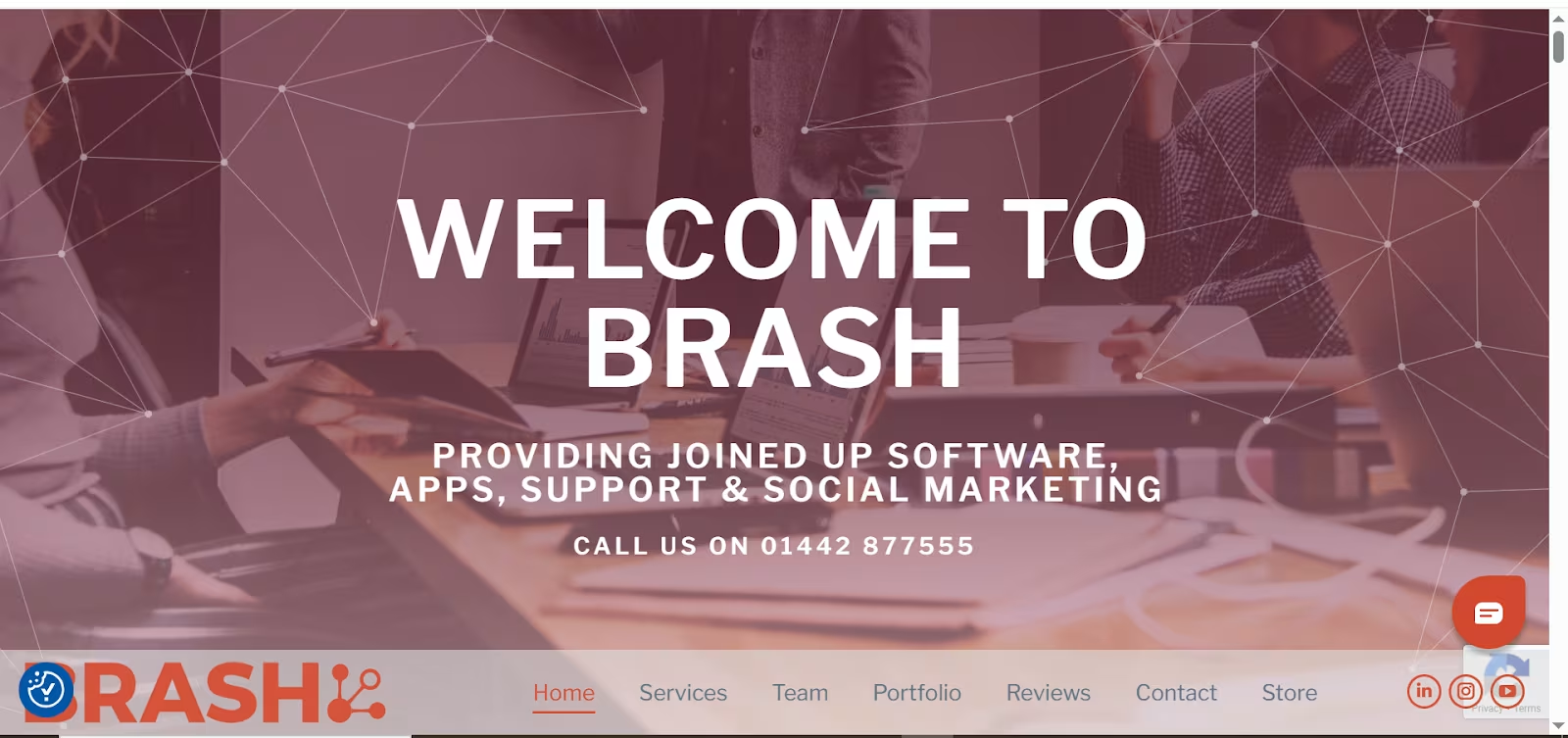
Industry: IT Solutions for Healthcare
Primary Use Case: Service provider call automation and data collection
Brash Solutions, a UK-based IT provider with over 20 years of experience, faced a unique challenge with one of its healthcare clients. The client, a fast-growing provider with over 500 staff, was drowning in daily phone calls from service providers that needed to be handled, recorded, and transformed into actionable reports.
What Makes It Exceptional
Brash Solutions implemented Kommunicate’s chatbot to tackle what seemed impossible: replacing hundreds of phone calls with an automated, secure, and compliant digital system. The chatbot now processes over 500 daily interactions, capturing critical information that previously required manual phone handling.
What’s particularly impressive is how Brash Solutions integrated the chatbot into their custom-developed staff engagement app. The implementation was rapid and seamless, leveraging basic HTML injection techniques that their development team already understood from previous integrations. This technical familiarity accelerated deployment, enabling them to see results almost immediately.
The chatbot handles routine interactions automatically while maintaining the strict security and compliance standards critical to healthcare operations. It captures structured data, routes urgent issues appropriately, and generates reports—all without human intervention for standard queries.
Trust-Building Approach
In healthcare, data security and compliance are non-negotiable. The Kommunicate platform met these stringent requirements while remaining user-friendly for both the development team and end users. When integration challenges arose, Kommunicate’s support team worked directly with Brash’s developers to resolve issues quickly, ensuring minimal disruption.
The chatbot was designed to recognize when situations required human oversight, seamlessly escalating sensitive matters while maintaining full context and compliance with healthcare data regulations.
Measurable Results
The implementation delivered tangible business impact, including more than 500 automated daily interactions that previously required phone calls; a significant reduction in staff time spent on repetitive inquiries; improved data security and compliance for sensitive healthcare information; seamless integration without operational disruption; and consistent service quality through standardized automated responses.
Key Takeaway: Even in highly regulated industries such as healthcare, chatbots can successfully automate complex, high-volume operations when built with robust security, compliance, and integration capabilities.
2. DKSH
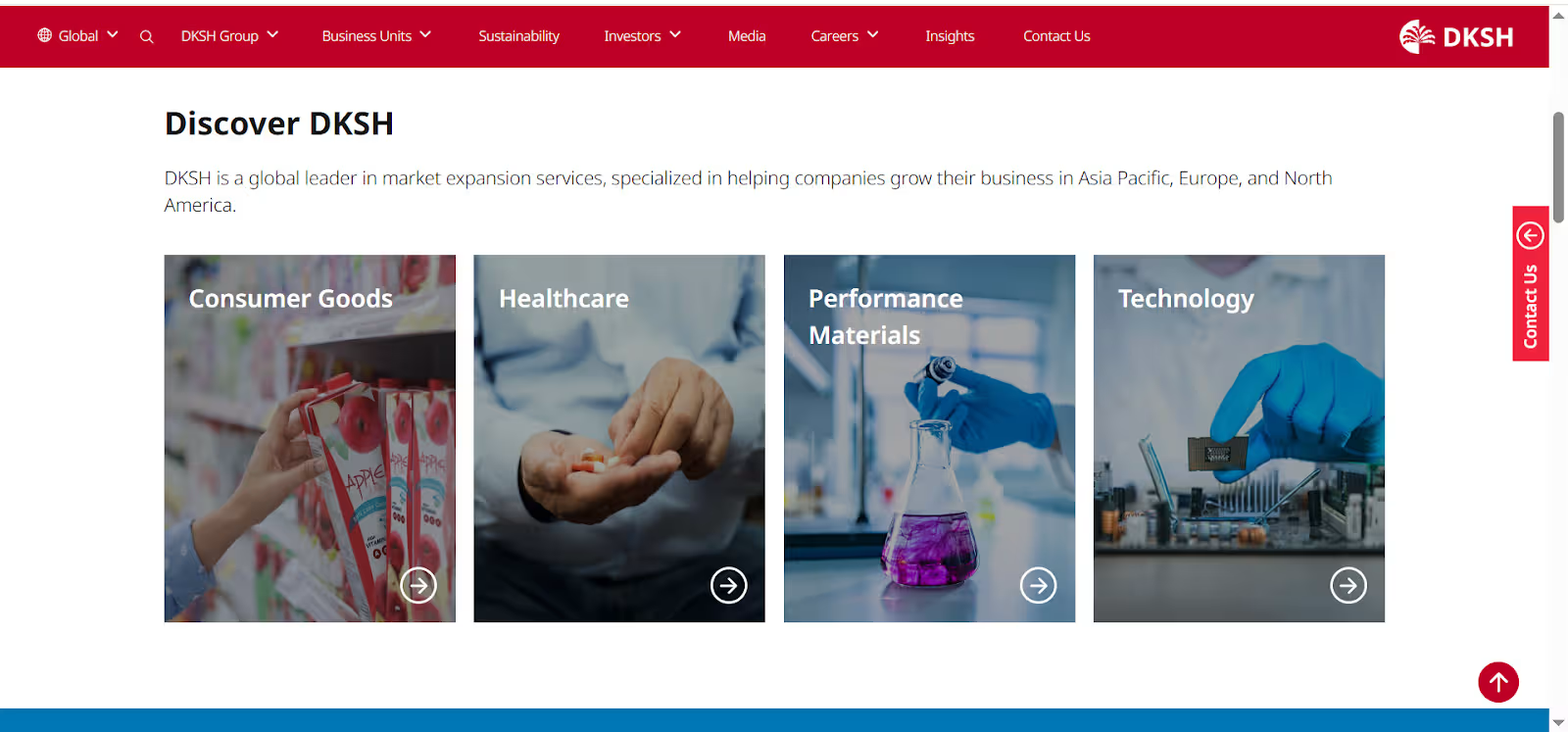
Industry: Market Expansion Services
Primary Use Case: Lead capture and nurturing across multiple markets
DKSH, a global market expansion services provider founded in 1865 with $13.16 billion in revenue and 32,000 employees, faced a significant challenge: capturing and converting leads across 34 markets with over 3,000 products. Their traditional email-based inquiry process was causing them to lose valuable prospective customers.
What Makes It Exceptional
DKSH found that customers in markets such as Indonesia and Malaysia preferred chatting with a chatbot to emailing, as they felt more connected when they could chat directly with a company representative. The Kommunicate chatbot transformed their lead generation process from a slow, email-dependent system to an instant, conversational experience.
The chatbot’s evolution is particularly noteworthy. Starting with basic lead collection on their Malaysia website in 2018, DKSH was so impressed with the results that they expanded to six local websites across Singapore, Australia, Indonesia, Vietnam, and Thailand. The chatbot’s functionality grew from simple data capture to a comprehensive information provider covering brands, products, and catalogs.
What sets this implementation apart is the seamless integration with Salesforce. Pre-qualified leads collected through the chatbot are automatically synced to the CRM for nurturing, creating a seamless pipeline from initial inquiry to sales conversion. The bot also handles the complexity of guiding customers through thousands of product options, helping them find specific information quickly rather than forcing them to navigate massive catalogs manually.
Trust-Building Approach
DKSH built trust by recognizing cultural preferences in different markets and adapting its approach accordingly. In regions where instant communication was preferred, the chatbot provided that immediacy. When queries required deeper expertise or personal attention, the seamless transfer to live agents ensured visitors felt supported rather than stuck in automation.
The ease of setup allowed DKSH’s team to handle implementation themselves, reducing dependency and building internal confidence in the technology. As Armie Baizura Abu Bakar, Sales Operations Executive at DKSH, noted, customers feel more connected when their queries are instantly resolved.
Measurable Results
The impact has been substantial and measurable: a significant increase in leads captured compared to email-only channels, higher conversion rates for chatbot leads versus other acquisition channels, ROI that significantly exceeded the chatbot’s cost, successful expansion from one website to six across multiple countries, and reduced time-to-contact for prospective customers from hours or days to seconds.
DKSH continuously analyzes chat transcripts from all six chatbots to better understand customer needs and optimize conversation flows, demonstrating its commitment to continuous improvement.
Key Takeaway: A successful self-service chatbot implementation can start small and scale organically once it demonstrates ROI, eventually becoming a critical component of a multi-market lead-generation strategy.
3. Oklahoma City Community College
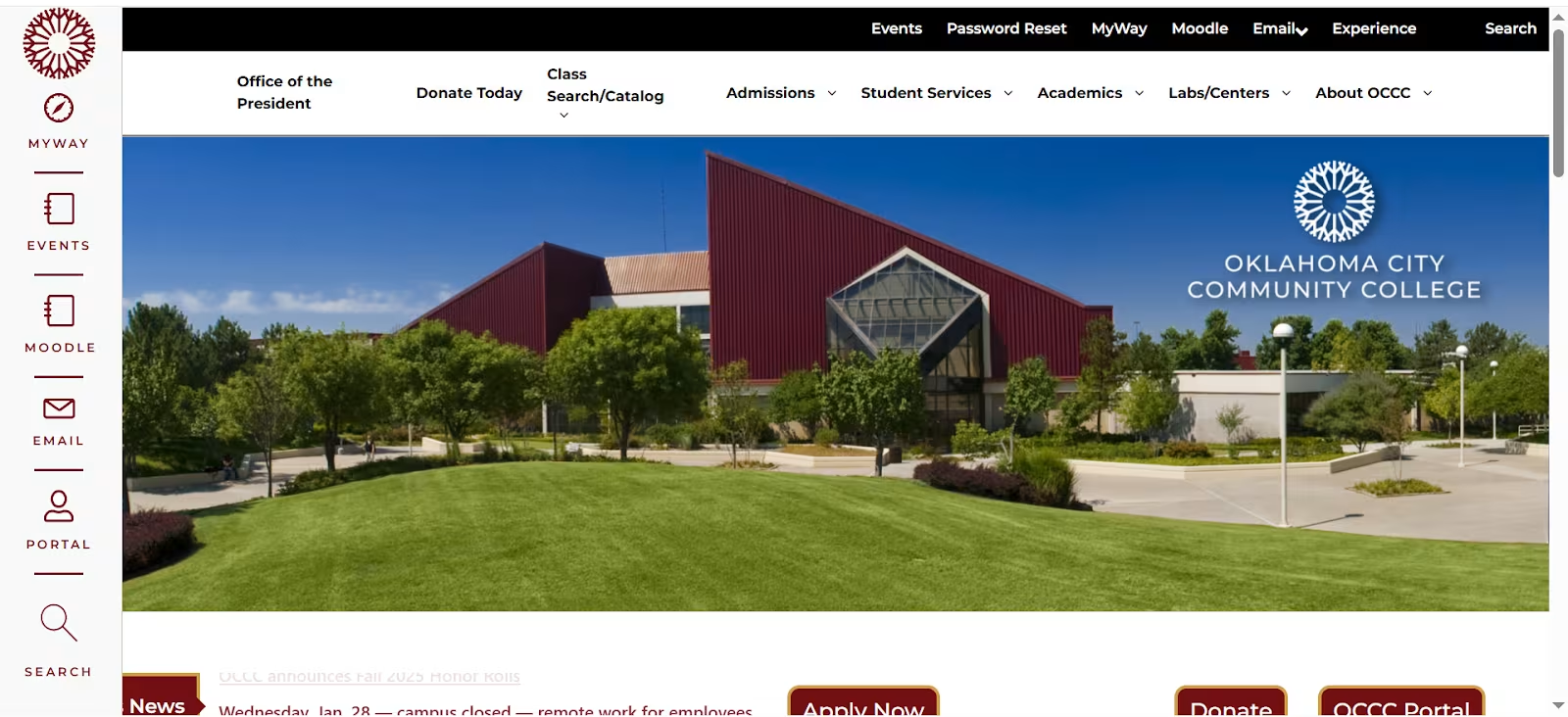
Industry: Higher Education
Primary Use Case: Student support and LMS assistance
Oklahoma City Community College (OCCC), Oklahoma’s fourth-largest higher education provider serving approximately 19,000 students, faced a crisis every semester. During the first weeks of each term, their five-person support team was overwhelmed with hundreds of repetitive student inquiries about passwords, course navigation, and technical issues with their Moodle learning management system.
What Makes It Exceptional
OCCC’s implementation of “Professor Turing” (named after Alan Turing) represents chatbot excellence in educational technology. The bot was designed to integrate with Moodle LMS and address the unique challenges of learning management systems.
What makes Professor Turing exceptional is its understanding of the student experience. The chatbot handles password resets, course navigation, assignment submission problems, textbook platform guidance, and proctoring support for online exams—the exact pain points that flood support channels during peak periods. More importantly, it recognizes when students need human intervention and seamlessly guides them to the appropriate campus resources, providing complete contact information and booking links.
The implementation strategy was brilliant: Joshua Moore, the LMS Administrator, chose Kommunicate for its easy-to-understand interface and straightforward HTML injection integration—something the team already understood from integrating other platforms, such as McGraw-Hill, with Moodle. This technical compatibility ensured rapid deployment without disrupting existing infrastructure.
Trust-Building Approach
OCCC built student trust by creating a safe, judgment-free support channel. As the team noted, some students feel anxious about reaching out for support, so the chatbot provides an alternative channel to get help without fear of judgment. The 24/7 availability was crucial—one student shared how the chatbot was “honestly a lifesaver” when they got kicked out of an exam late at night and needed immediate assistance due to a deadline.
The chatbot’s ability to provide instant help while maintaining the option to escalate to human support created a support system that felt comprehensive rather than limiting. Director Lindsey Baker emphasized that their mission was to remove barriers to learning, and the chatbot accomplished exactly that.
Measurable Results
The results exceeded expectations: over 3,000 student conversations since launch in June 2024, 459 conversations in just the first few months of 2025, peak usage of 38 conversations on January 21 (spring semester start), an impressive customer satisfaction score of 8.33 out of 10, and significant time savings for the support team to focus on complex issues requiring human expertise.
The success sparked innovation across the institution, with the marketing team and the library exploring chatbot implementations to meet their respective needs.
Key Takeaway: In education, chatbots succeed by reducing student anxiety and providing judgment-free, 24/7 access to support, while intelligently routing complex issues to human experts for specialized assistance.
4. Domino’s Dom
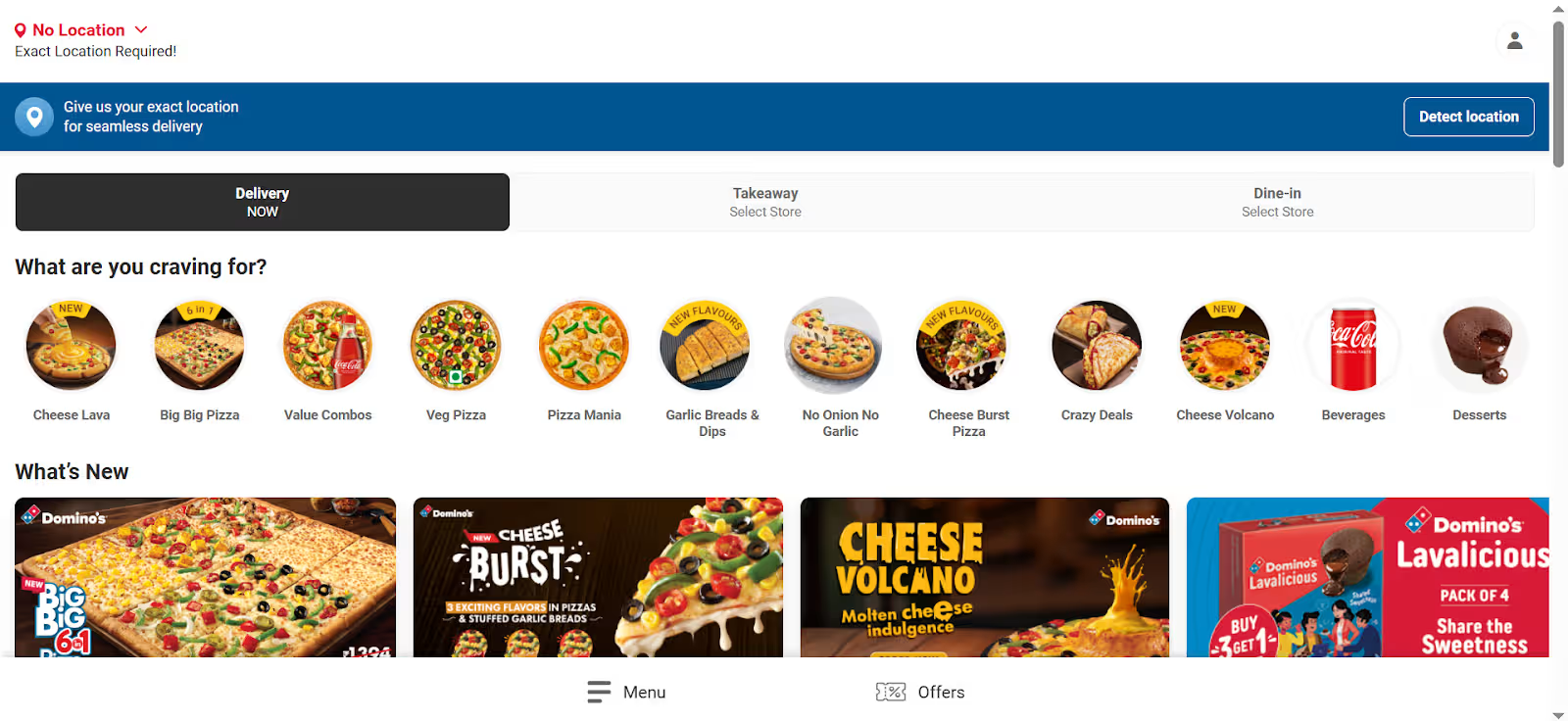
Industry: Food Delivery
Primary Use Case: Order placement and tracking
Domino’s chatbot, affectionately named Dom, has become one of the most successful examples of chatbot commerce, allowing customers to order pizza through multiple channels, including Facebook Messenger, Amazon Alexa, and the Domino’s website.
What Makes It Exceptional
Dom makes ordering ridiculously easy by remembering your previous orders, offering one-click reordering, accepting casual language like “my usual” or “surprise me,” and providing real-time order tracking with estimated delivery times. The bot works across platforms, so you can start an order on Facebook and finish it on the website seamlessly.
What’s particularly clever is how Dom handles customization. Rather than overwhelming users with every possible topping combination, the bot asks smart, progressive questions that naturally narrow choices, making the process feel simple despite the complexity behind the scenes.
Trust-Building Approach
Dom builds trust through reliability and transparency. The bot provides clear order confirmations with all details, sends proactive updates at each stage (order received, being prepared, out for delivery), makes it easy to modify or cancel orders, and handles complaints with immediate escalation to human support when needed.
Measurable Results
Domino’s chatbot has delivered remarkable results: over 65% of orders now come through digital channels, including the chatbot; higher customer retention among chatbot users; reduced phone ordering volumes, freeing up staff; and increased order frequency due to reduced friction.
Key Takeaway: For transactional use cases, simplicity wins. The best chatbot examples make complex processes feel effortless through smart defaults and progressive disclosure.
5. Bank of America’s Erica
Industry: Banking
Primary Use Case: Account management and financial guidance
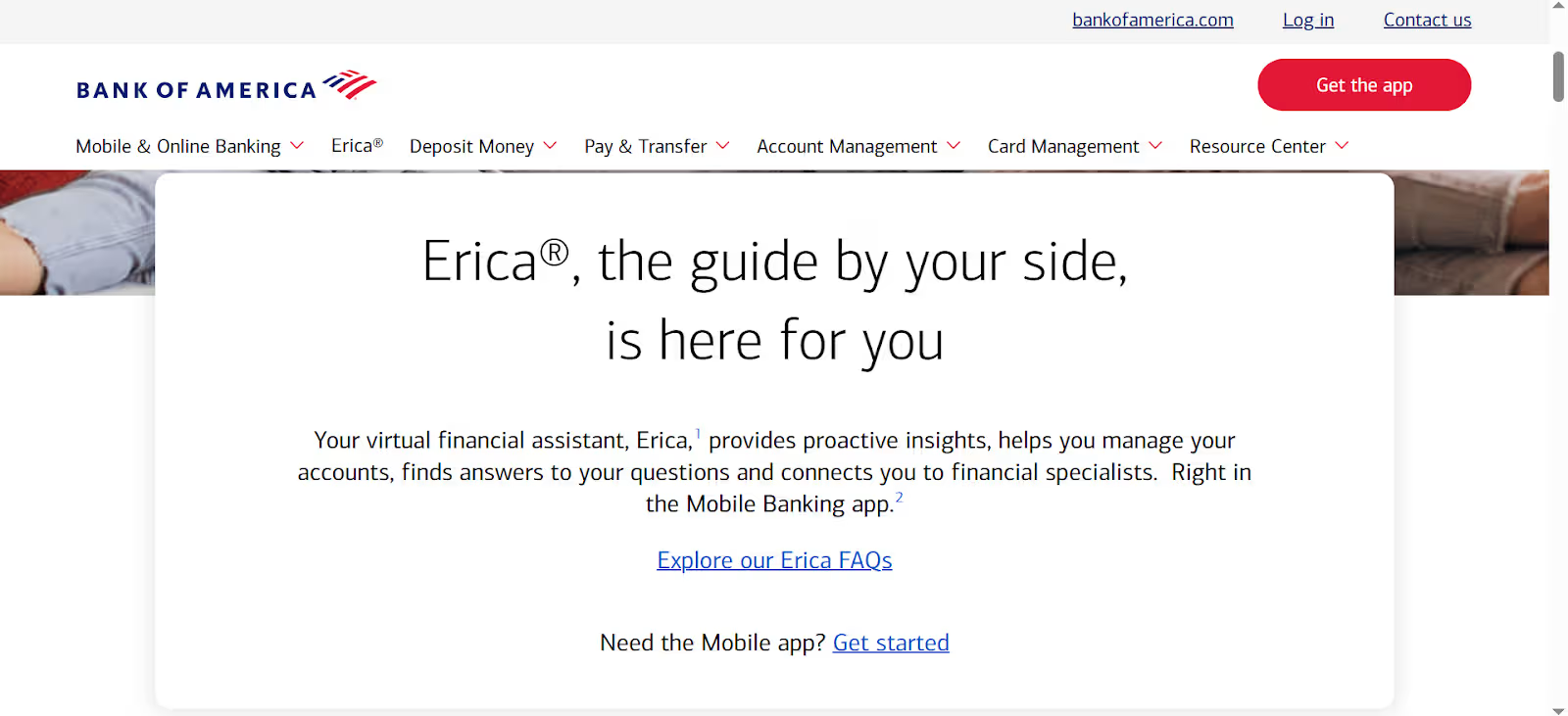
Erica is Bank of America’s virtual financial assistant, helping millions of customers with account questions, transaction searches, bill payments, and personalized financial insights.
What Makes It Exceptional
Erica goes beyond basic account inquiries to provide proactive financial guidance. The bot monitors spending patterns and sends alerts about unusual charges, suggests ways to save based on spending habits, provides credit score updates and improvement tips, and helps customers understand complex transactions with simple explanations.
Natural language processing is robust and can understand questions such as “How much did I spend on restaurants last month?” or “Show me my largest recurring charges.” This reduces support tickets with chatbot automation by handling queries that would otherwise require human agent interpretation.
Trust-Building Approach
In banking, security is non-negotiable. Erica builds trust by using multiple authentication factors before displaying sensitive information, never asking for full passwords or PINs in chat, clearly explaining security measures, and immediately escalating potential fraud to human specialists.
Measurable Results
Erica has achieved impressive scale: over 2 billion customer interactions handled, 95% customer satisfaction rating, a significant reduction in call center volume for routine inquiries, and increased engagement with financial wellness features.
Key Takeaway: Proactive assistance that anticipates customer needs creates far more value than reactive question-answering.
6. IKEA’s Website Chatbot
Industry: Home Furnishing & Retail
Primary Use Case: Product discovery, order support, and self-service customer assistance
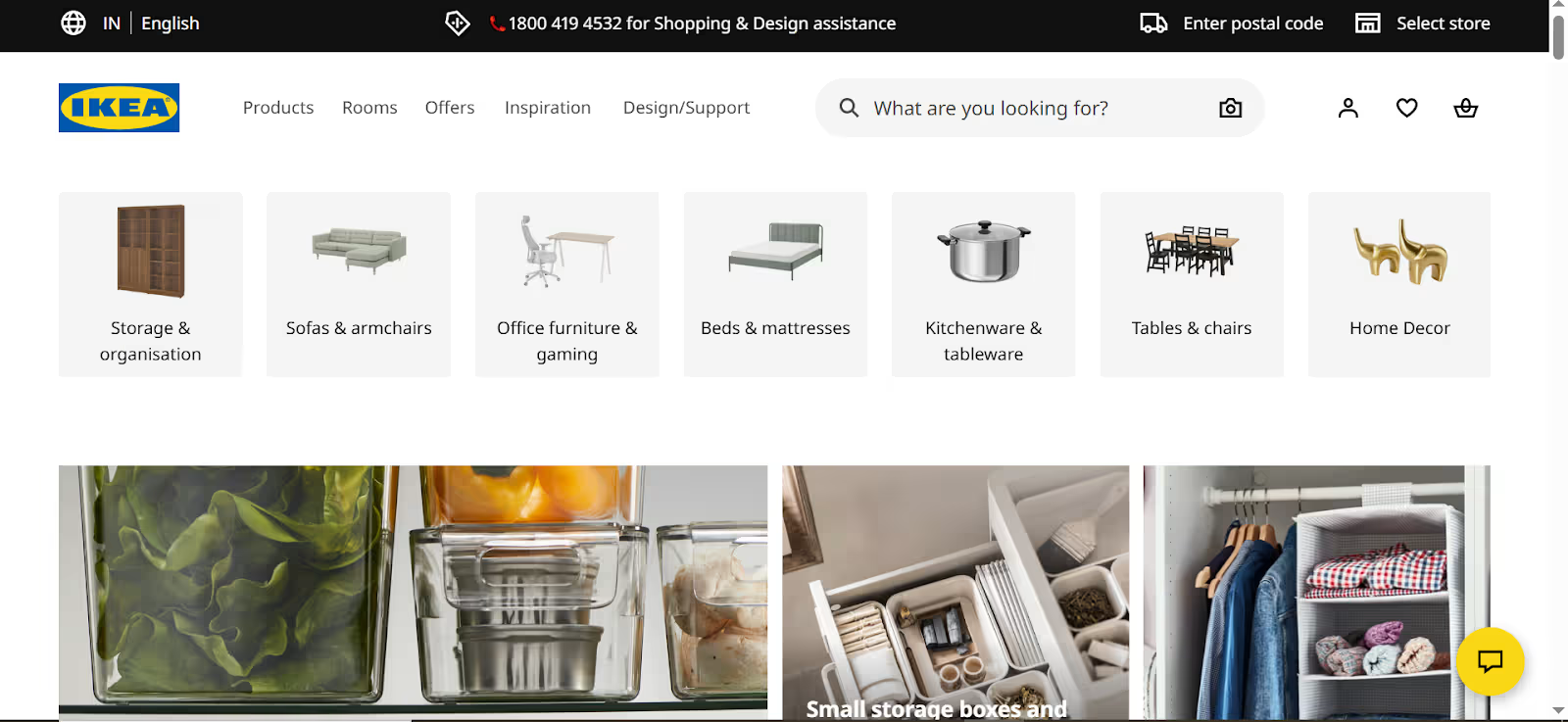
Among modern website chatbot examples, IKEA’s chatbot stands out for how effectively it simplifies complex shopping decisions at a massive scale. With thousands of products, modular furniture systems, delivery constraints, and assembly requirements, IKEA faces a level of customer complexity that most chatbots struggle to handle.
Instead of adding friction, IKEA’s chatbot reduces it—making this one of the best website chatbots in retail today.
What Makes It Exceptional
IKEA’s chatbot demonstrates strong chatbot conversation design by guiding users through decisions rather than overwhelming them with options. Customers can start with a vague intent, such as “I need storage for a small bedroom,” and the bot intelligently narrows down relevant products through clarifying questions.
This approach reflects core chatbot UX best practices:
- Progressive disclosure instead of information overload
- Context-aware follow-up questions
- Clear, scannable responses optimized for mobile
The chatbot supports multiple stages of the customer journey—from discovery and availability checks to delivery timelines and post-purchase support, such as assembly instructions and missing parts. This end-to-end functionality positions it as a highly effective self-service chatbot, reducing the need for human intervention in routine scenarios.
Trust-Building Approach
IKEA’s chatbot earns customer trust by setting clear expectations and avoiding false promises. It’s transparent about what it can and cannot do, a hallmark of strong website chatbot best practices.
When requests exceed automation—such as kitchen or wardrobe planning—the chatbot provides clear bot-to-agent handoff examples, directing users to human specialists or booking tools while preserving conversation context. This prevents frustration and reinforces trust rather than breaking it.
Crucially, the chatbot explains why it recommends certain products, highlighting trade-offs around size, price, and functionality. This consultative tone makes users feel supported rather than sold to.
Measurable Results
While IKEA does not publish all internal metrics, performance indicators, and industry benchmarks show a clear impact:
- Ability to reduce support tickets with chatbot automation by handling high-volume questions around orders, returns, and assembly
- Faster product discovery for mobile and first-time shoppers
- Improved conversion rates for users who engage with the chatbot during browsing
- Higher customer satisfaction driven by frictionless self-service
- More efficient allocation of human agents to complex, high-value interactions
By deflecting repetitive inquiries, IKEA’s chatbot significantly improves operational efficiency without sacrificing user experience.
Key Takeaway:
IKEA’s chatbot proves that the most effective chatbot examples prioritize clarity over cleverness. By applying proven chatbot UX best practices, enabling seamless human escalation, and empowering customers through self-service, IKEA delivers one of the strongest examples of website chatbot use in large-scale retail—turning complexity into confidence at every step of the journey.
7. Lyft’s Customer Support Bot
Industry: Ride-sharing
Primary Use Case: Ride support and issue resolution
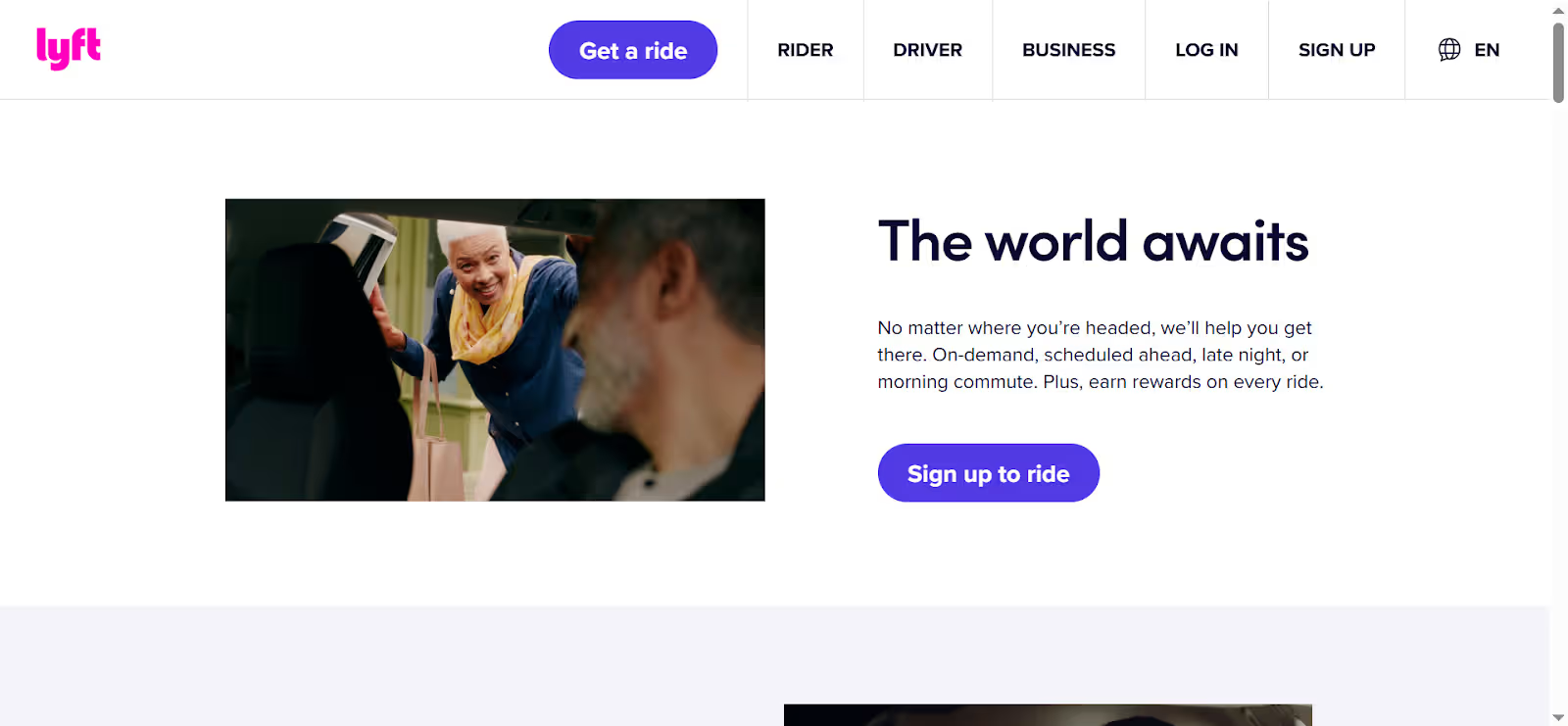
Lyft’s support chatbot handles urgent, real-time issues in ride-sharing, including lost items, payment issues, ride quality concerns, and driver-passenger disputes.
What Makes It Exceptional
Lyft’s bot excels at context awareness, automatically pulling in ride details when users report issues, understanding the urgency of different situations (lost phone vs. billing question), and prioritizing time-sensitive problems for immediate human handoff.
The bot can resolve many common issues instantly, such as adjusting fares due to poor route selection, issuing ride credits for service issues, helping locate lost items with driver contact information, and explaining charges and providing receipt details.
Trust-Building Approach
When users are frustrated or upset, empathy matters. Lyft’s bot uses acknowledgment phrases that validate concerns, avoids robotic corporate speak, takes responsibility rather than deflecting blame, and follows up to ensure resolution satisfaction.
The bot-to-agent handoff examples are particularly smooth, with urgent issues escalated immediately and full context provided to human agents.
Measurable Results
Lyft has achieved significant support efficiency gains: 50%+ of support tickets are resolved entirely by chatbot; average resolution time for common issues has been reduced from hours to minutes; CSAT scores for chatbot-resolved issues are higher than historical averages; and substantial cost savings in support operations.
Key Takeaway: For time-sensitive customer service, intelligent triage and instant resolution of common issues create disproportionate value.
8. Duolingo’s Practice Bot
Industry: Education Technology
Primary Use Case: Language practice and learning reinforcement
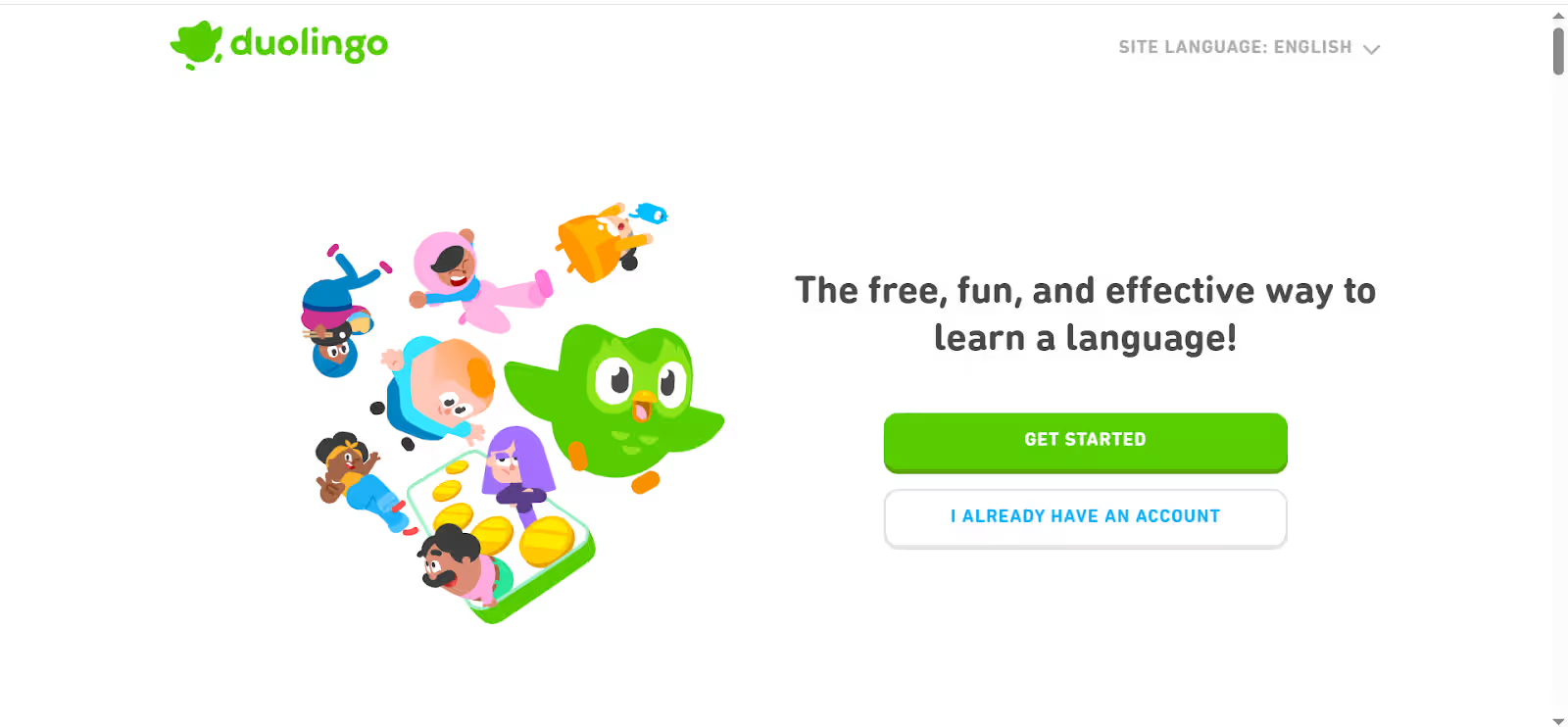
Duolingo’s chatbot takes a unique approach: it is the product itself—a conversational AI that helps users practice new languages in realistic scenarios.
What Makes It Exceptional
Rather than answering questions about the service, Duolingo’s bot engages users in conversations that reinforce learning. The bot role-plays scenarios such as ordering at a restaurant, asking for directions, or making small talk, adapting the difficulty based on the user’s proficiency level, providing instant corrections with explanations, and celebrating progress to maintain motivation.
This represents chatbot conversation design at its finest—the interface itself is the educational experience, making practice accessible anytime without the pressure of speaking to a real person.
Trust-Building Approach
Duolingo’s bot creates a safe learning environment by never harshly judging mistakes, providing helpful corrections without discouraging learners, adjusting difficulty to prevent overwhelming learners, and tracking progress to show improvement over time.
Measurable Results
The practice bot has driven engagement: increased daily active users among bot-interacting users, longer average session times, improved learning outcomes measured by proficiency tests, and higher retention rates than lesson-only learners.
Key Takeaway: Chatbots don’t have to be support tools—they can be the core product experience when designed around user needs.
9. Whole Foods’ Recipe Bot
Industry: Grocery Retail
Primary Use Case: Recipe suggestions and shopping list creation
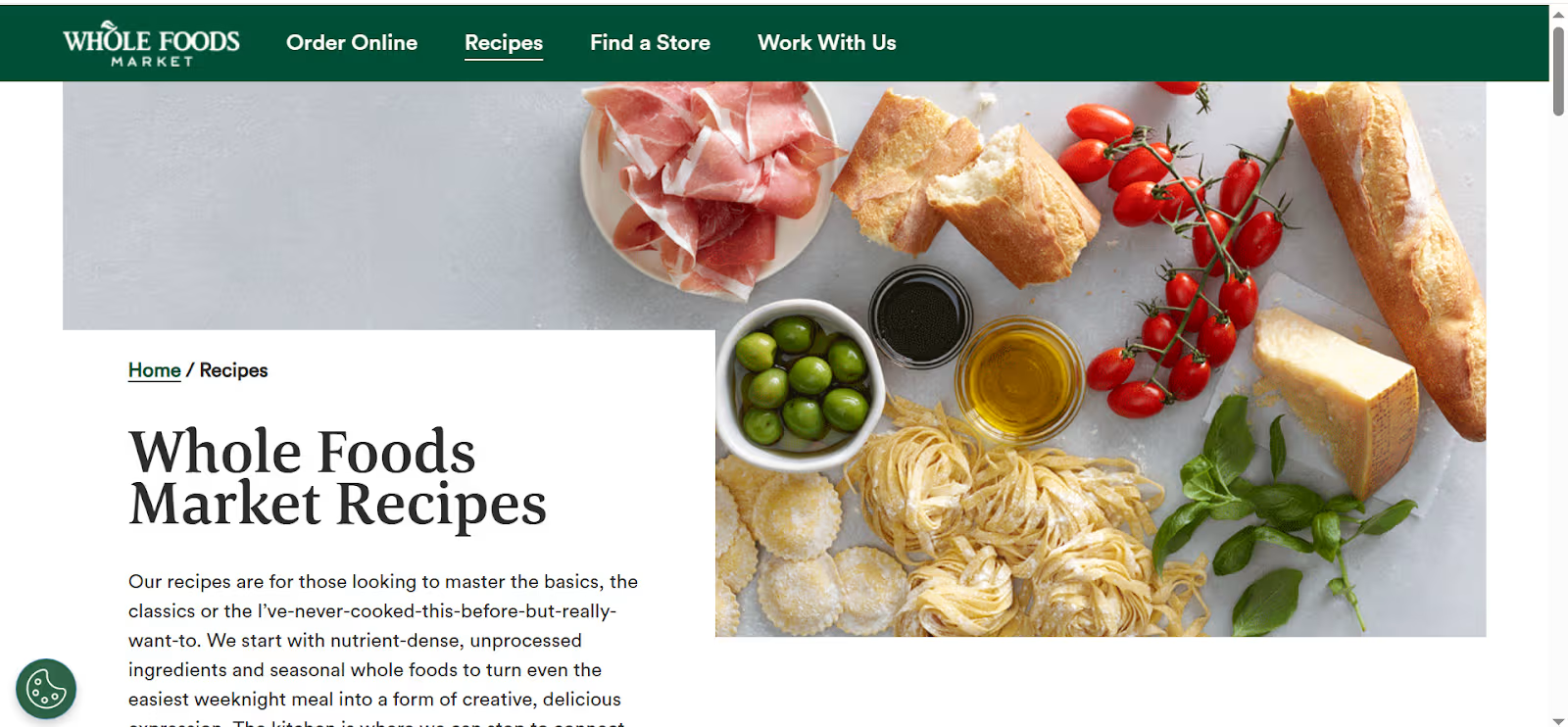
Whole Foods’ chatbot helps customers discover recipes based on dietary preferences and ingredients, then automatically creates shopping lists that can be ordered for delivery or pickup.
What Makes It Exceptional
Whole Foods’ bot beautifully bridges inspiration and action. Users can search by ingredient (“I have chicken breast”), dietary restriction (“vegan dinner recipes”), or cuisine type (“authentic Thai recipes”). The bot suggests recipes with photos, provides cooking instructions, displays nutritional information, and generates shopping lists with one click.
The integration between recipe discovery and grocery ordering is seamless: the bot identifies which ingredients users likely already have and which need to be purchased, suggests substitutions for out-of-stock items, and remembers dietary restrictions for future suggestions.
Trust-Building Approach
Whole Foods builds trust by providing comprehensive information upfront, including customer ratings and reviews for recipes, transparent nutritional data, clear allergen warnings, and realistic cooking time estimates.
Measurable Results
The recipe bot has driven both engagement and commerce: increased basket sizes from suggested ingredient purchases, higher customer retention through regular recipe engagement, growth in delivery and pickup orders, and positive brand perception as a helpful resource.
Key Takeaway: The best self-service chatbots create value by connecting related activities (recipe browsing + grocery shopping) into one seamless experience.
10. Amtrak’s Julie
Industry: Transportation
Primary Use Case: Train booking and travel information
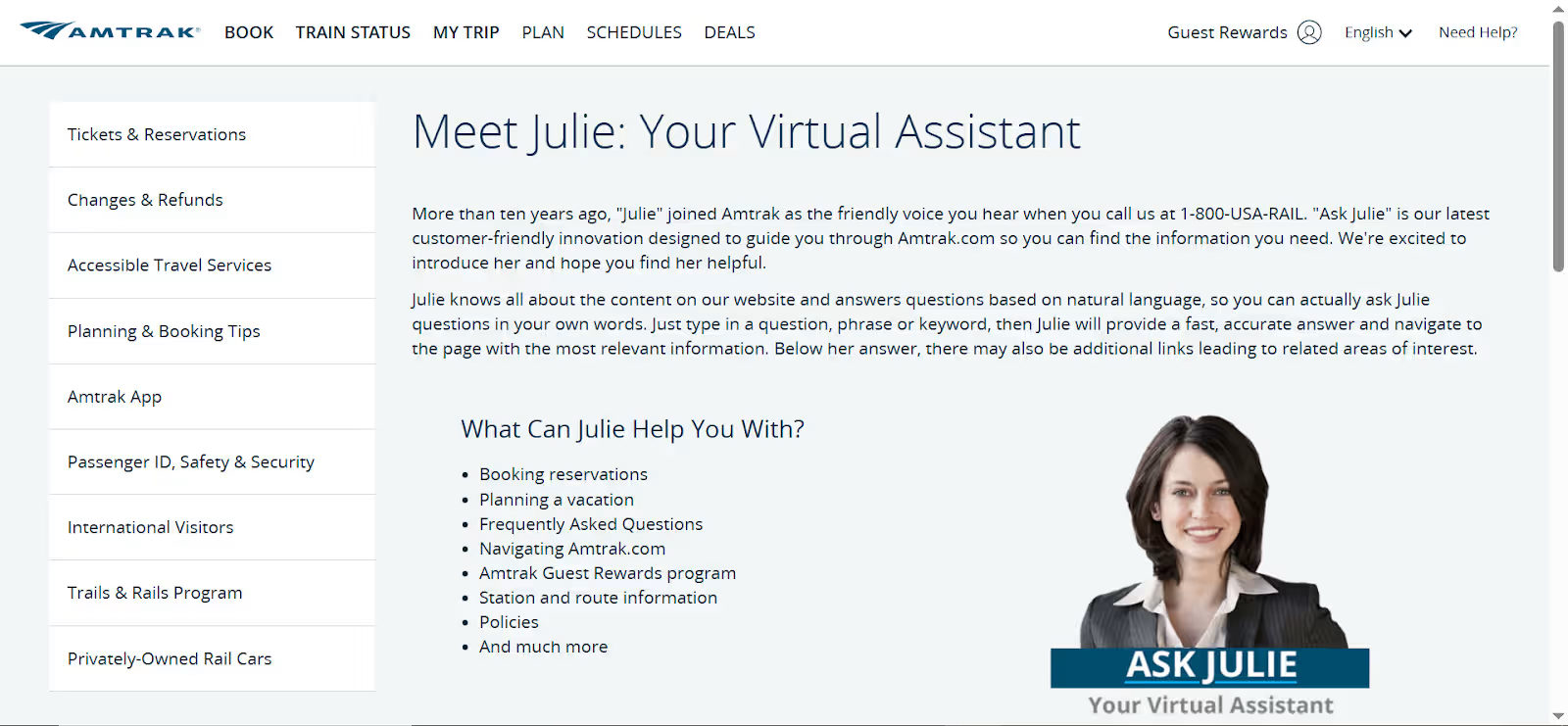
Amtrak’s virtual assistant Julie has been helping travelers for over a decade, making her one of the longest-running and most refined chatbot examples in the transportation industry.
What Makes It Exceptional
Julie handles the complexity of rail travel with remarkable sophistication. She understands natural queries like “I need to get from Boston to DC next Friday afternoon” and translates them into actionable booking options. The bot manages multi-city trips, explains fare differences, provides real-time train status updates, and helps travelers modify existing reservations.
What sets Julie apart is her conversational memory. If you ask about trains to Chicago, ask, “What about next week instead?” She remembers the destination and other preferences without making you start over. This context retention makes complex, multi-turn conversations feel natural rather than frustrating.
Julie also excels at accessibility. She’s available via phone, web, and mobile app with consistent experience across channels. For customers who prefer speaking to typing, the voice interface works seamlessly, recognizing natural speech patterns and accents.
Trust-Building Approach
Amtrak builds trust through consistency and reliability. Julie provides accurate, real-time information that matches what human agents would say, clearly distinguishes between different fare types and their restrictions, proactively warns about potential delays or service changes, and makes it easy to connect with human agents for complex itineraries or special needs.
Measurable Results
Julie has proven her value over years of service: handles over 5 million interactions annually, maintains an 80%+ automation success rate for common queries, reduces average booking time compared to traditional methods, and consistently receives positive feedback for ease of use and accuracy.
Key Takeaway: Longevity in chatbot success comes from continuous refinement and deep integration with backend systems to provide consistently accurate information.
Key Takeaways: Chatbot UX Best Practices
After analysing these website chatbot examples, several universal principles emerge that any business can apply when implementing or optimizing their own chatbot.
1. Design for Conversation, Not Just Transactions
The best chatbot examples prioritize natural dialogue over rigid scripts. Use conversational language that matches your brand voice. Anticipate follow-up questions and keep context. Allow for tangents and course corrections. Make the bot feel helpful, not robotic.
2. Know When to Hand Off
Even the smartest bot has limitations. Implement clear bot-to-agent handoff examples by recognizing complex scenarios that require human judgment, detecting user frustration and escalating proactively, preserving full conversation context for agents, and setting realistic expectations about wait times.
3. Be Transparent About Capabilities
Trust erodes when chatbots overpromise and underdeliver. Build credibility by clearly identifying bot versus human interactions, honestly acknowledging limitations, explaining what the bot can and cannot do, and setting appropriate expectations upfront.
4. Measure What Matters
Track metrics that reflect actual business value: ticket deflection rate and resolution rate, customer satisfaction scores for bot interactions, conversation completion rate, average handling time, conversion rate for commercial bots, and cost per resolution compared to human support.
5. Iterate Based on Real Usage
Launch isn’t the finish line—it’s the starting point. Continuously improve by analyzing conversation logs for pain points, identifying questions the bot can’t answer, A/B testing different conversation flows, expanding the knowledge base based on new questions, and gathering user feedback systematically.
6. Design for Mobile First
Most chatbot interactions happen on mobile devices. Ensure your website chatbot best practices include keeping messages concise and scannable, using buttons and quick replies for easy tapping, optimizing media for mobile viewing, thoroughly testing across various screen sizes, and minimizing typing with innovative suggestions.
7. Personalize the Experience
Generic chatbots feel robotic. Create a connection by using customer names and remembering preferences, referencing past interactions and purchases, adapting tone to user sentiment, and providing recommendations based on behavior.
8. Make Error Recovery Graceful
Users will ask unexpected questions and phrase things oddly. Handle this by acknowledging when you don’t understand, offering suggestions to get back on track, making it easy to start over or switch topics, and learning from misunderstandings to improve.
How to Implement These Strategies for Your Business?
Understanding what makes great chatbots work is only half the battle. Here’s how to apply these lessons to your own implementation.
Start with Clear Objectives
Before building anything, define success by identifying your top 10 most common support questions, setting specific goals (e.g., reduce tickets by X% and improve CSAT by Y points), determining which user journeys would benefit most from automation, and establishing measurement criteria upfront.
Map Your Conversation Flows
Great chatbot conversation design requires planning. Create user journey maps for key scenarios; identify decision points and potential paths; plan for happy paths and error states; determine when human handoff makes sense; and script natural language variations for intents.
Choose the Right Technology
Select a chatbot platform that supports your use cases through natural language processing capabilities appropriate for your complexity, integration with existing systems (CRM, knowledge base, etc.), multi-channel deployment if needed, analytics and reporting tools, and scalability for future growth.
Kommunicate offers a comprehensive platform that powers the three client examples we highlighted, providing robust NLP, seamless integrations, intelligent routing, and detailed analytics.
Build Incrementally
Don’t try to automate everything at once. Start with your top five most common queries; launch to a limited audience for testing; gather feedback and iterate; expand coverage gradually; and continuously optimize based on real usage.
Prepare Your Team
Successful chatbot implementation requires organizational change. Train support agents on how to work with chatbot escalations, establish processes for updating bot knowledge, assign ownership for bot performance and optimization, and create feedback loops between bot performance and team learning.
Monitor and Optimize Continuously
Launch is just the beginning. Establish ongoing improvement processes by reviewing conversation logs weekly, tracking key performance metrics, conducting monthly performance reviews, testing new conversation flows, and updating content based on seasonal needs or product changes.
Don’t Forget the Human Element
The best website chatbots enhance human support rather than replacing it. Ensure you maintain easy access to human agents for complex issues; empower agents with conversation history and context; celebrate successes from both bot and human interactions; and use bot insights to improve overall support operations.
Conclusion
The website chatbot examples we’ve explored demonstrate that, when done right, chatbots not only save companies money but also genuinely improve customer experiences. From Vistara Airlines handling complex flight bookings to Bank of America’s Erica providing proactive financial guidance, these high-performing chatbots share common threads: exceptional conversation design, transparent limitations, seamless human handoff, and continuous focus on user needs.
The difference between chatbots customers tolerate, and those they trust comes down to implementation quality. The best chatbot examples don’t try to be everything to everyone. They focus on solving specific problems exceptionally well, know when to step aside for human expertise, and continuously learn from real-world interactions.
The future belongs to businesses that view chatbots not as cost-cutting tools but as trust-building opportunities. The examples we’ve examined show this isn’t just possible, it’s happening right now, one conversation at a time.

A Content Marketing Manager at Kommunicate, Uttiya brings in 11+ years of experience across journalism, D2C and B2B tech. He’s excited by the evolution of AI technologies and is interested in how it influences the future of existing industries.