Updated on April 30, 2026
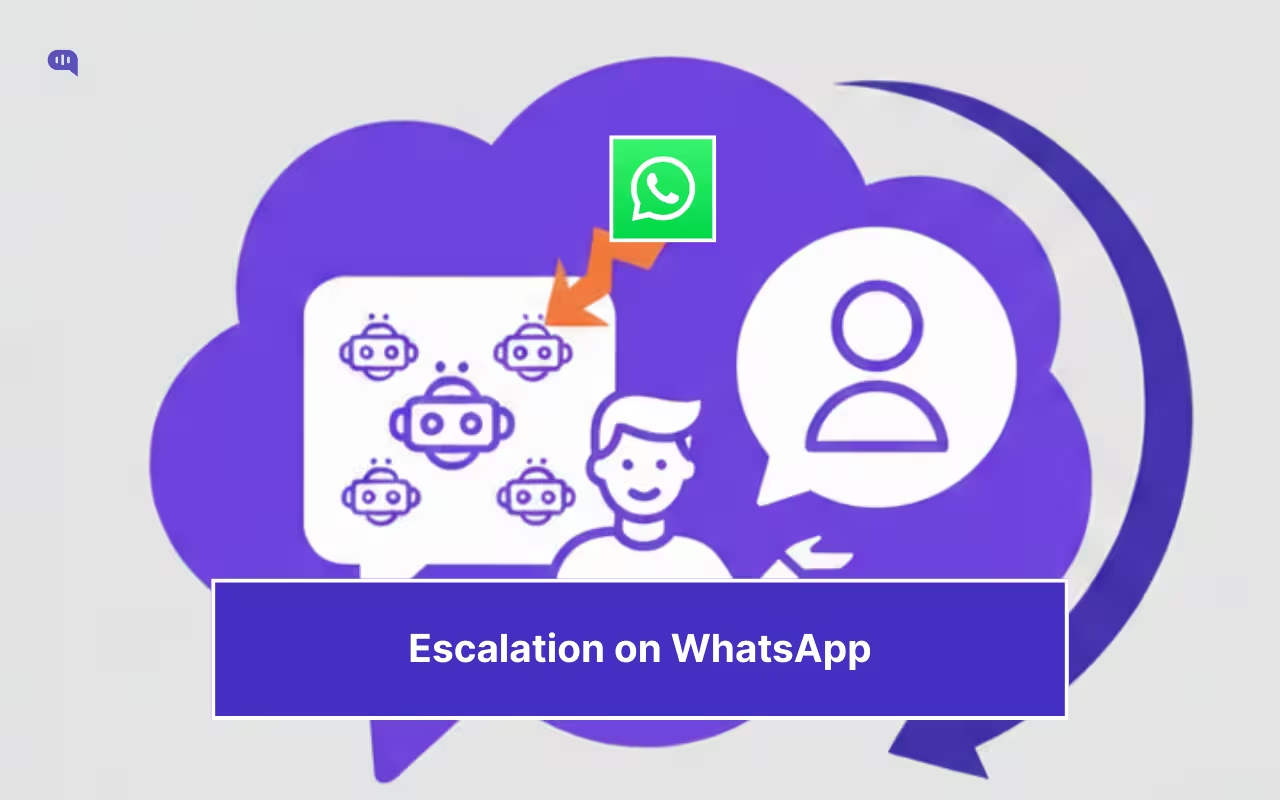
WhatsApp is customer service’s most intimate battleground. It shares screen real estate with family group chats and best friend conversations, yet enterprises treat it as a high-volume automation pipeline. That’s the central tension: to the user, it’s a living room; to the business, it’s a conveyor belt.
When a chatbot stumbles on a website, the user sighs and scrolls. When it fails inside WhatsApp, it feels like a stranger wandered into their kitchen and forgot why they came. Call it the Intimacy Tax: the deeper you embed into a customer’s private digital life, the more jarring a robotic “I don’t understand” becomes.
Escalation here is architecture. It requires treating the handoff not as ticket routing, but as memory transfer: the human agent must inherit the bot’s context, the conversation’s emotional weight, and the user’s history without forcing them to repeat a single syllable. The objective is not zero human contact, but zero wasted human contact.
To honour this, businesses must abandon the blunt instrument of “talk to an agent” buttons and adopt surgical trigger mechanisms. This piece examines two such architectures: Keyword-Based escalation, which captures intent signals and emergency syntax in real time, and Segmentation-Based routing, which weighs user value, query complexity, and contextual risk before the first message is sent.
Executed well, the transition doesn’t feel like escaping a broken machine. It feels like the bot is quietly stepping aside to introduce a specialist who already read the room.
We’ll cover the following topics:
1. What Is Context in WhatsApp?
2. How Do Keywords in WhatsApp Chats Signal True Escalation?
3. Which Users Need Immediate Human Routing?
4. What Enables Zero-Loss Context Transfer?
5. Who Owns the Resolution Outcome?
6. What Advanced Patterns Prevent Escalation Fatigue?
7. What Is the Phased Implementation Roadmap?
8. Why Is Escalation Actually Trust Design?
9. Conclusion
What Is Context in WhatsApp?
On most channels, context is a transcript. On WhatsApp, it is a ticking clock.
The WhatsApp Business API enforces a strict 24-hour session window: once a user goes silent, the thread locks. Agents cannot reply freely; they must use pre-approved templates that feel sterile and templated. This means context cannot be passive—it must be packaged for resurrection.
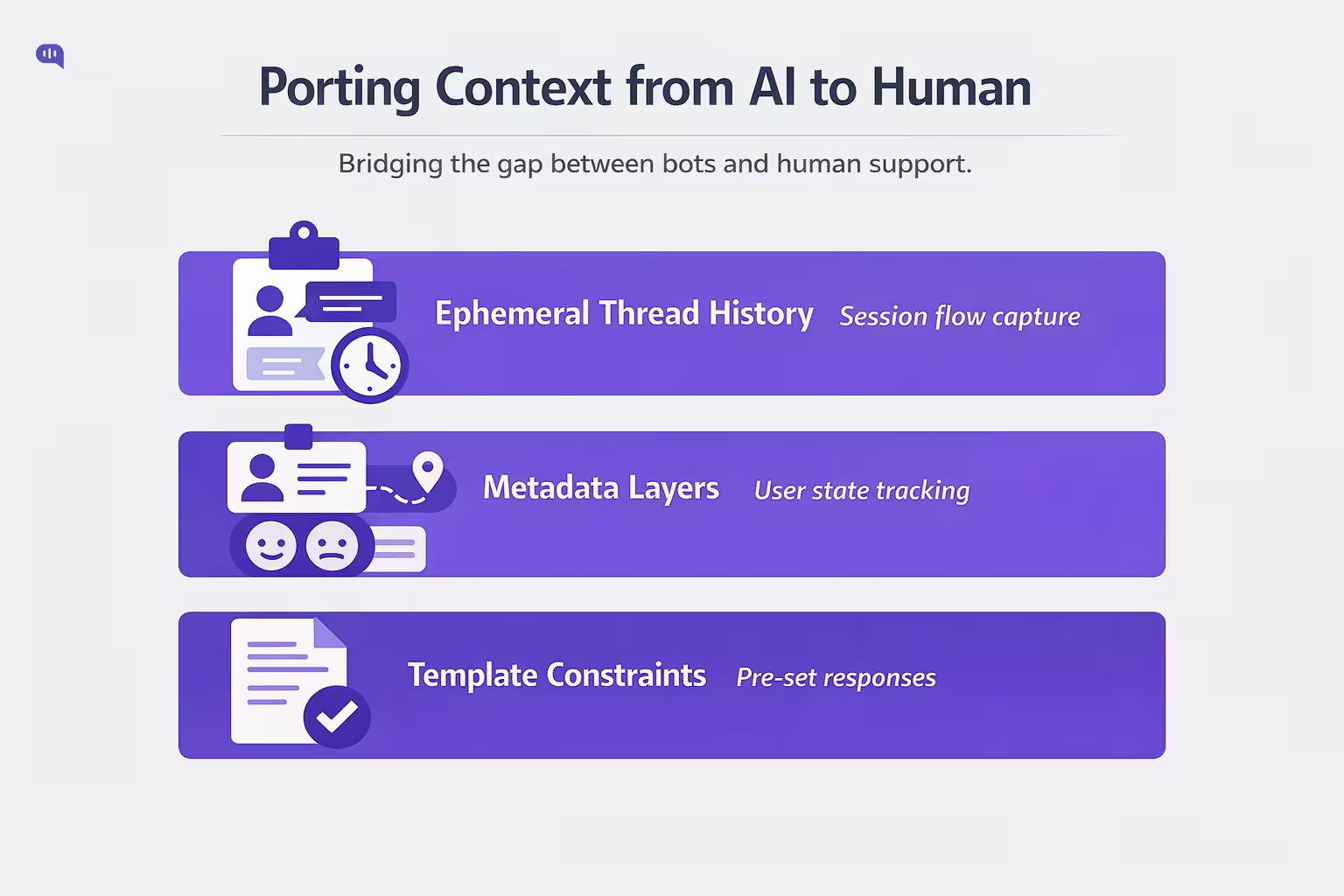
When you transfer context from an AI agent to a human, you must do it in three distinct layers:
1. Ephemeral Thread History
Unlike web chat, WhatsApp threads can vanish or lock without warning. Context here requires active capture of the session state—not just what was said, but also the user’s position in the resolution flow when the 24-hour timer expired.
2. Metadata Layers
True context includes identity verification (has this user authenticated?), journey stage (are they mid-onboarding or mid-cancellation?), and sentiment trajectory (are they escalating toward anger or cooling toward relief?). These signals reside outside the message bubble but still determine routing priority.
3. Template Constraints
When a human takes over after the window closes, they must use “Message Templates”—rigid, pre-approved formats that strip away conversational warmth. Preserving context means compensating for this structural coldness: the agent must know the room’s emotional temperature before sending that clinical template.
In short, the WhatsApp context is portable memory. It is the difference between an agent asking “Can you explain your issue?” (reset) and “I see the bot couldn’t process your refund for Order #2847—let me fix that now” (continuity).
While WhatsApp doesn’t allow native context transfer, customer service software built over the WhatsApp API does. Kommunicate, for example, transfers these three layers of context to the human agent via the dashboard’s summarization feature.
So, when should context transfer take place? Let’s talk about how you can use keyword-based triggers to drive escalations and context transfer.
How Do Keywords in WhatsApp Chats Signal True Escalation?
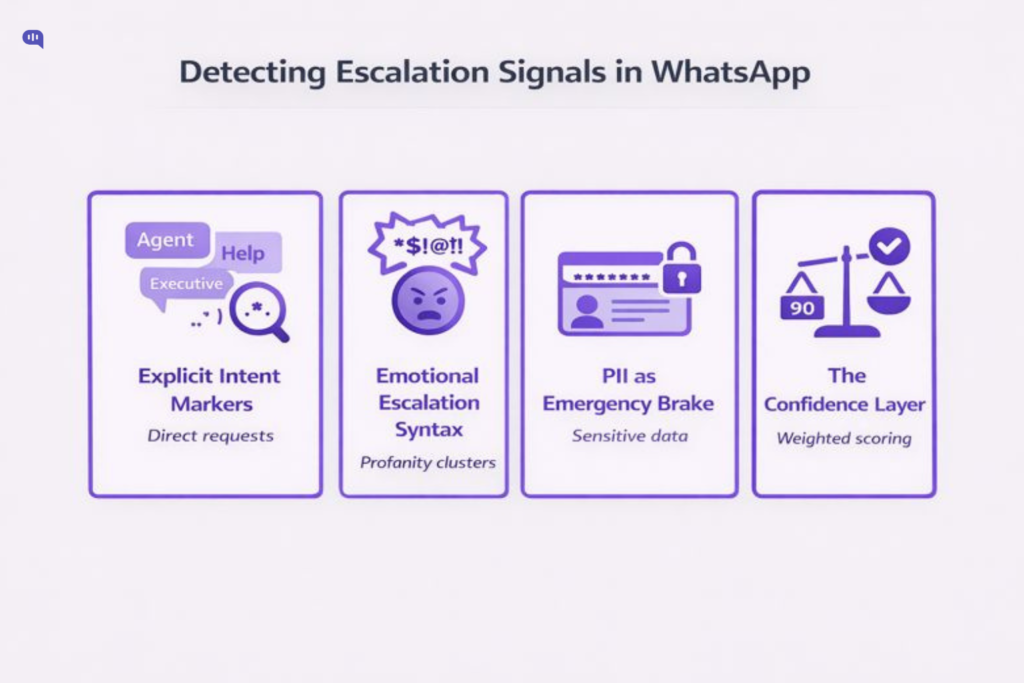
WhatsApp conversations bleed into life. Users type “u” instead of “you,” drop voice notes when they’re driving, and reply with 😤 when they’re furious. Keyword detection here must account for informality that would break traditional support ticket parsers.
True escalation signals on WhatsApp operate across three distinct frequencies:
Explicit Intent Markers
These are direct requests for human intervention: “agent,” “representative,” “human,” or localized variants (“operador” in Mexico, “executive” in India). But precision matters. The word “agent” might appear in “I’m a real estate agent” or “my secret agent movie”—false positives that waste human capacity. Regex patterns must demand sentence boundaries or imperative grammar (“talk to an agent” vs. “an agent”).
Emotional Escalation Syntax
WhatsApp intimacy amplifies frustration through specific linguistic patterns:
- Repetition trauma: “Hello??” “Hello??” “HELLO” (escalating capitalization and punctuation)
- Profanity clusters: Even mild expletives carry a higher weight in this private channel than in public social media
- Negative sentiment density: Three consecutive negative phrases (“this is useless,” “worst service,” “never again”) often outperform single keywords
PII as Emergency Brake
Certain data points should trigger immediate human handoff regardless of intent: credit card numbers, government IDs, and medical record references. On WhatsApp, where users feel private, they overshare. A regex detecting 16-digit sequences or national ID formats should bypass bot logic entirely—both for security compliance and because financial/medical anxiety demands human reassurance.
The Confidence Layer
Raw keyword matching isn’t efficient. Smart systems implement strike rules: one keyword suggests monitoring, two confirm escalation. Weighted scoring distinguishes between “I want to cancel my subscription” (retention risk—human now) and “cancel that last message” (edit request—bot handles).
Most critically, people have quick chats on WhatsApp, so messages sent after a point are more critical. A user saying “fine” after a long silence is capitulation; “fine” mid-argument is a fuse burning. Context-aware keyword detection measures not only what was said but also when in the session arc it appeared.
However, alongside keyword-based escalations, you should also enable immediate human routing for critical customers.
Which Users Need Immediate Human Routing?
Not every WhatsApp ping deserves a human. But some demand one instantly. Smart segmentation moves beyond the democratic queue and creates fast lanes for conversations where delay equals damage.
| Segment | Identification Criteria | Routing Priority | Why They Skip the Line |
| Revenue VIP | Enterprise tier, $50K+ ACV, sales-qualified leads | Immediate | 5x higher conversion when humans respond within 5 minutes; high CLV at stake |
| Compliance Risk | Keywords such as “GDPR,” “breach,” “lawsuit,” “hacked,” or PII shared | Immediate | Legal liability exposure; AI cannot improvise on regulatory matters |
| Churn Imminent | 3+ visits to cancel page, payment failures, or “cancel subscription” intent | High | Retention specialist intervention required; ~25% higher save rate with instant human touch |
| Mission Critical | System-down alerts, security incidents, or medical emergencies | Immediate | Requires senior technical authority and incident documentation |
| Friction Saturated | 3+ failed bot resolutions or repeated “agent/human” requests | High | The user is already in “bot hell”; continued automation risks churn and negative reviews. |
The Revenue-At-Risk VIP
When an enterprise customer or high-LTV account enters the chat, automation should bow out immediately. These users bypass bot triage entirely. On WhatsApp, where enterprise clients message their account managers directly, forcing them through a password-reset bot signals indifference. Immediate handoff preserves both the deal and the relationship.
The Behavioral Exit Risk
Intent is revealed in patterns, not just vocabulary. Users who’ve visited the cancellation page three times, failed payment attempts, or repeated “cancel subscription” aren’t troubleshooting.
These at-risk behavioral segments should be routed directly to retention specialists, not to general agents. WhatsApp’s intimacy accelerates churn decisions; a frustrated user staring at a typing indicator while a bot offers irrelevant FAQs is already mentally switched to your competitor. Immediate human interception is the only recovery path.
The Zero-Tolerance Emergency
Keywords like “hacked,” “GDPR,” or “lawsuit” mandate escalation.
The Air Canada precedent established that companies own their AI’s mistakes; on WhatsApp, where users feel safe oversharing, a bot that improvises privacy advice or a bereavement policy creates liability in real time. These conversations require human judgment, compliance oversight, and documentation before the first response is sent.
As noted earlier, when routing a conversation to customer service agents, you must enable zero-loss context transfer. So, how does the tech behind that work?
What Enables Zero-Loss Context Transfer?
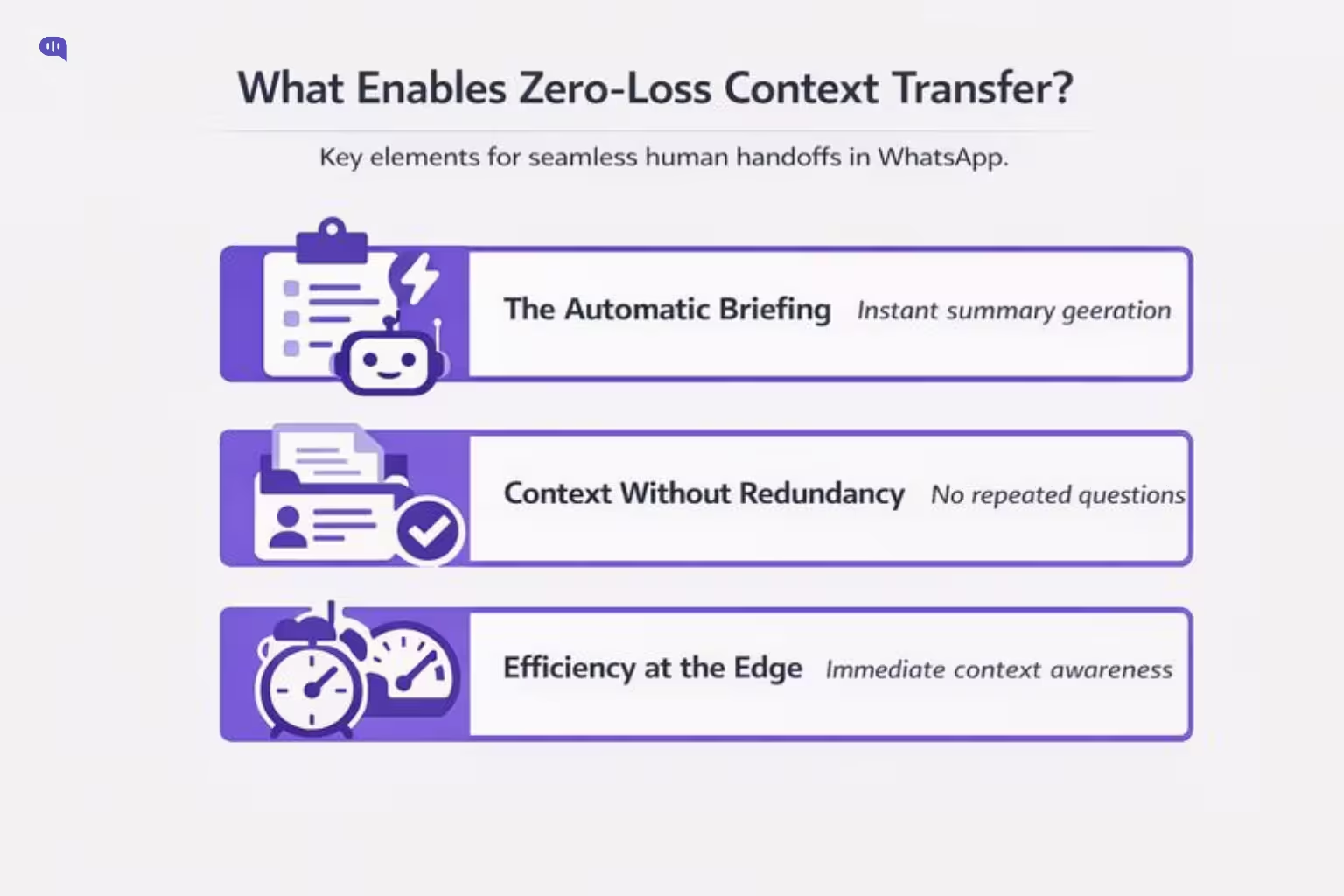
On WhatsApp, the 24-hour window intensifies the cost of context loss. When a human finally enters the thread, every second spent scrolling through bot history burns precious time and customer patience. Zero-loss transfer relies on automatic conversation summarization that condenses the entire bot-customer dialogue into an actionable briefing delivered at handoff.
For truly zero-loss context transfer, three things must be in place:
1. The Automatic Briefing
When escalation triggers, the system generates an instant summary of the interaction—no manual logging, no scrolling required. The agent receives a concise snapshot capturing the essential details already exchanged: order numbers, delivery dates, troubleshooting steps attempted, and the specific issue that stumped the bot. This transforms the handoff from a cold start into a warm continuation where the agent already knows why the customer is there.
2. Context Without Redundancy
The summary ensures the agent never asks for information that the user already provided to the bot. If a customer shared their account details, described a payment failure, or walked through diagnostic steps with the automated system, all of it appears in the briefing. This eliminates the repetition that kills WhatsApp’s conversational intimacy—agents can acknowledge the specific frustration (“I see the bot couldn’t resolve the delivery delay for Order #2847”) rather than forcing the user to reconstruct their story from scratch.
3. Efficiency at the Edge
Because the summary is automatically generated and instantly available, agents bypass the review phase entirely. They enter the conversation fully informed, reducing both their prep time and the customer’s wait time. On a channel where the session window is literally ticking down, this immediate context awareness is the difference between resolution and abandonment.
This summarization capability should be enabled for all your WhatsApp customer service agents to ensure that every handoff includes the full context of the preceding conversation.
If you connect this summary with the right person on your team, you will get the best possible customer service experience.
Who Owns the Resolution Outcome?
Ownership begins with routing. In sophisticated support ecosystems, skill-based routing directs GDPR queries to compliance officers, churn threats to retention specialists, and technical outages to senior engineers. Intent-based routing reads the conversation summary and matches complexity to capability before the agent even sees the screen. Tier-based routing ensures high-value accounts bypass the general queue entirely.
How Does Smart Routing Work?
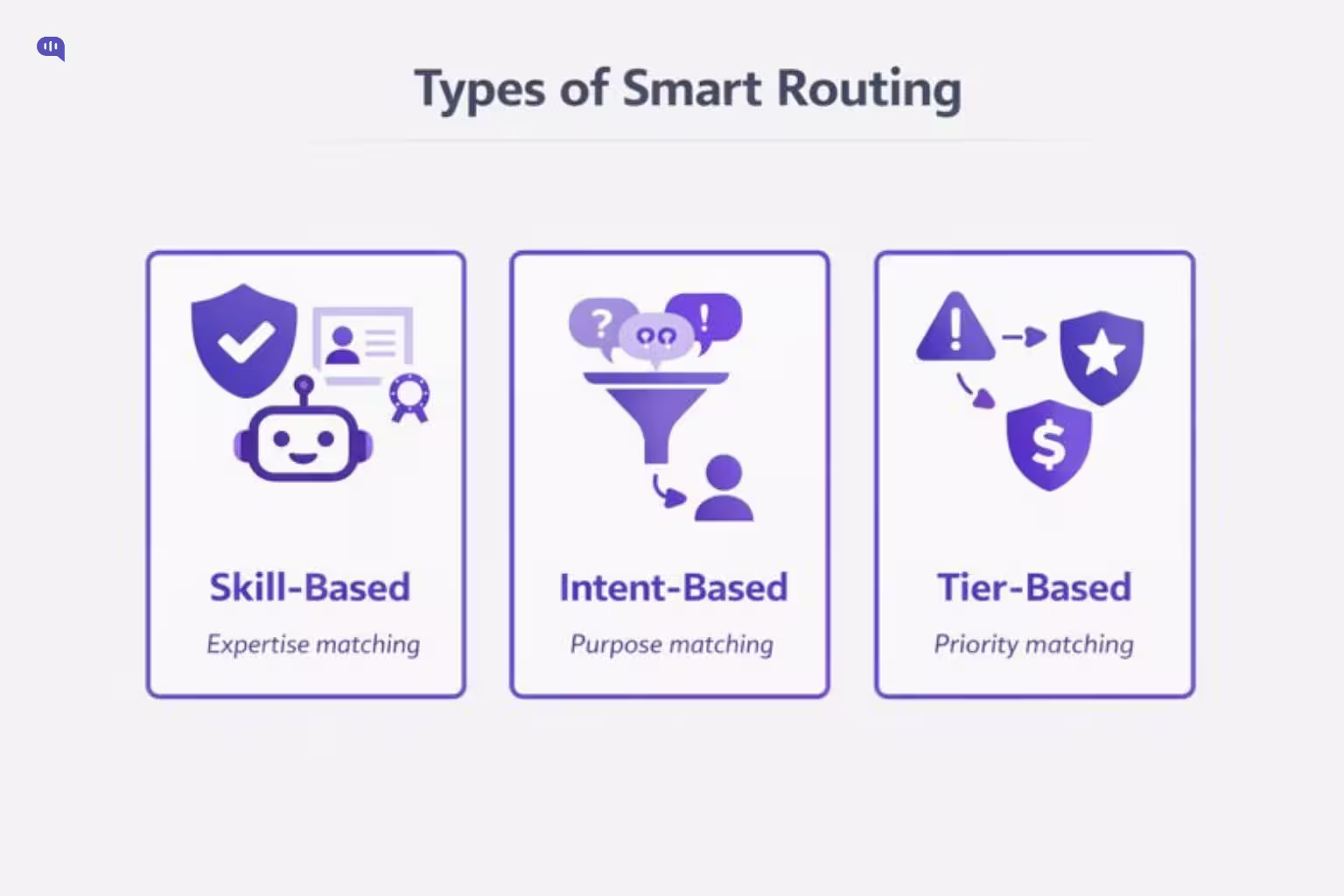
Skill-based routing assigns conversations to agents based on their expertise profiles. When a customer mentions “data breach,” the system checks for agents with “security” or “compliance” certifications; when they mention “API error,” it routes the request to the technical integration team. The agent’s capability determines assignment, not their availability.
Intent-based routing interprets the conversation’s purpose in real time. By analyzing the summarization data and keyword triggers discussed earlier, it distinguishes between “I want to cancel my account” (retention team) and “I want to cancel my order” (fulfillment team). It
reads the context captured during the bot interaction and routes accordingly.
Tier-based routing adds a commercial layer. Enterprise accounts, high-LTV customers, or those flagged “at-risk” in the CRM skip the general pool entirely and land directly with senior agents or dedicated account managers who own the relationship history.
But routing architecture dictates accountability. When the system assigns conversations intelligently, the receiving agent owns the resolution end-to-end. When the assignment is arbitrary, ownership becomes ambiguous, and ambiguity kills WhatsApp’s intimate SLA expectations.
Kommunicate provides two routing mechanisms: Round-Robin (distributing conversations sequentially to the next available agent) and Alert All (notifying all agents simultaneously, allowing the first to claim the conversation). Neither maps complexity to capability. In Round-Robin, a junior agent might receive a legal compliance query simply because they were next in sequence. In Alert All, ownership goes to the fastest clicker, not the most qualified specialist.
Accountability Through Protocol
If your customer service app doesn’t have smart routing, ownership must be enforced through manual triage.
When Round-Robin delivers a GDPR query to a generalist, that agent must recognize the mismatch and immediately escalate.
When Alert All fires for a churn threat, the first responder must honestly assess: “Do I have the discount authority and relationship context to save this account?” If not, they must cede the conversation to a retention specialist rather than attempt improvisation.
The summary feature becomes critical here. Because agents see the conversation context instantly, they can spot mismatches before responding: a technical query hitting a billing agent, or a legal threat landing on a tier-one generalist. The agent who claims the conversation must immediately acknowledge ownership or risk assuming liability for a resolution they cannot deliver.
When routing lacks intelligence, the manager bears responsibility, not the algorithm. Every conversation requires a moment of human judgment: Is this the right agent, or just the available one? On WhatsApp, where response speed and accuracy are inseparable, that judgment call must happen within seconds of the handoff, or the intimacy tax compounds into churn or legal exposure.
This should give you a pretty good overview of how WhatsApp escalation works. However, if a query passes through the hands of several AI agents and customer service agents, your customers would justifiably feel frustrated. Let’s talk about how we can avoid this frustration.
What Advanced Patterns Prevent Escalation Fatigue?
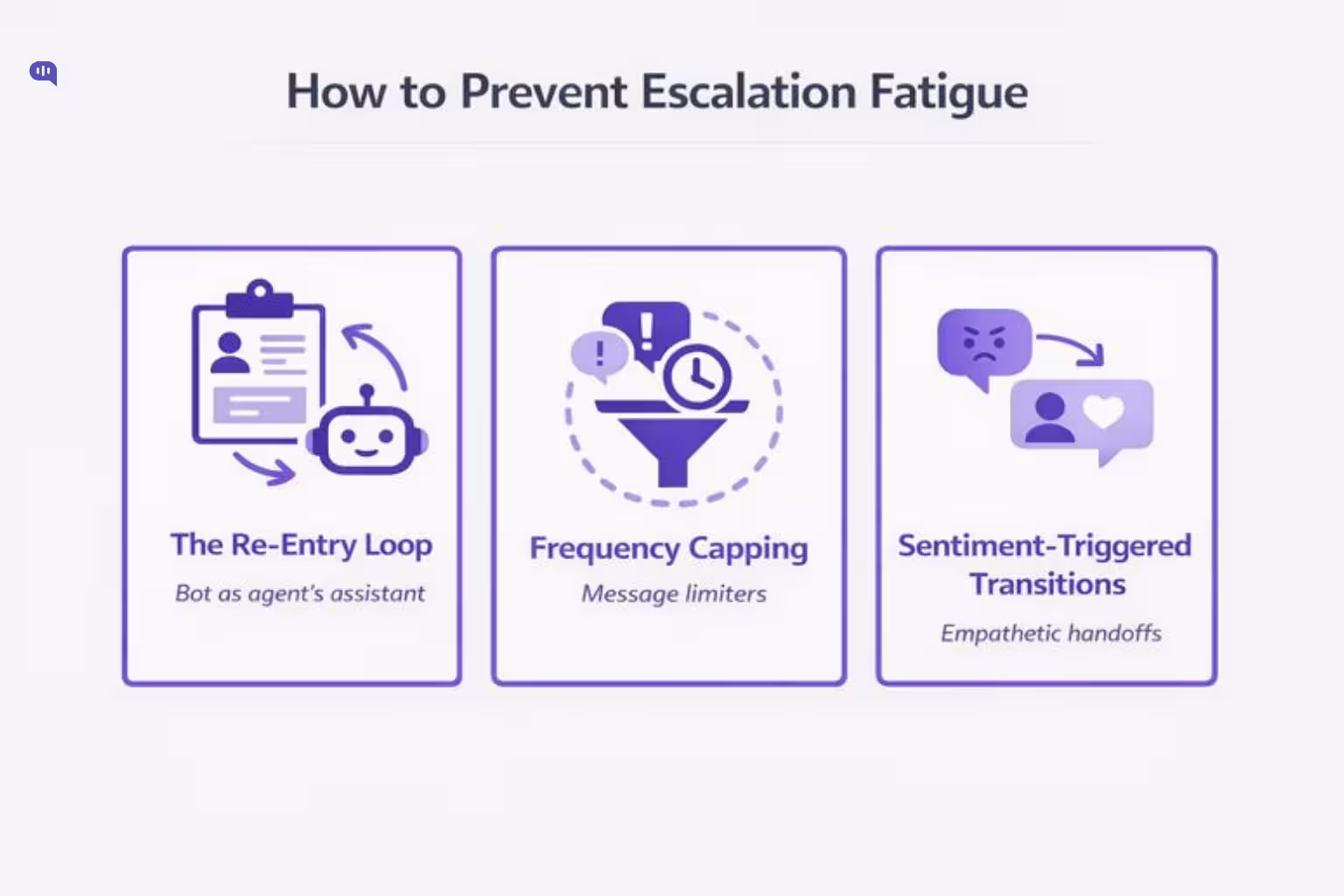
Escalation fatigue occurs when the “Intimacy Tax” becomes too expensive. On WhatsApp, this is characterized by repetition trauma: the moment a user realizes they are stuck in a loop or forced to restate their problem to a third person. To prevent this, the architecture must shift from a linear “bot then human” path to a non-linear support web.
This can work if you implement some steps:
1. The Re-Entry Loop (Bot as Agent’s Assistant)
Advanced architectures don’t just hand off from bot to human; they allow the human to hand back to the bot for structured tasks. If a specialist resolves a complex billing issue, they shouldn’t spend five minutes collecting a new shipping address. By triggering a micro-bot flow for data collection mid-conversation, the agent stays focused on high-value empathy while the bot handles the form-filling. This ensures the handoff happens at least twice: the bot starts, the human resolves, and the bot follows up to collect feedback or structured data.
2. Frequency Capping and Cool-Down Periods
To avoid “over-messaging” fatigue, systems should implement frequency capping. If a user has already been escalated once within a 24-hour window, the bot should be suppressed for any subsequent pings in that session.
Instead, the thread remains permanently assigned to a human “anchor.” This ensures the user feels a single person is walking with them through their crisis. WhatsApp’s 2025 pricing changes incentivize this: utility messages within the 24-hour window are often free or bundled, rewarding businesses that resolve issues in a single session.
3. Sentiment-Triggered Warm Transitions
Instead of a cold “Connecting you now,” use sentiment-aware bridge messages. If the AI detects high frustration, the transition message must pivot. Detecting these negative sentiment signals allows the system to prioritize the chat in the agent’s queue and send an empathetic bridge: “I can see this has been frustrating. I’m bringing in our lead specialist, Sarah, right now, so you don’t have to troubleshoot this alone.”
Now that you have an actionable plan to perform escalations and to prevent escalation fatigue, let’s start mapping out a small implementation roadmap.
What Is the Phased Implementation Roadmap?
Building a world-class WhatsApp escalation engine is a marathon. Enterprises should follow this 2026-standard three-phase approach:
| Phase | Timeline | Focus | Key Deliverables | WhatsApp-Specific Milestones | Success Metrics |
| Phase 1: Infrastructure | Weeks 1–4 | Visibility | • Shared inbox deployment• Manual “Talk to Agent” buttons • Agent mobile app access • Basic round-robin or alert-all routing | • Template message library approved (utility and authentication)• 24-hour session monitoring active• Fallback to template-enabled handoff tested | • <2 min average pick-up time• 0% orphaned escalations (every handoff claimed) |
| Phase 2: Context Layer | Weeks 5–12 | Intelligence | • Keyword trigger library (revenue, legal, churn) • AI summarization activated • 3-strike fallback rules • Basic VIP segmentation lists | • Context preservation rate tracked• Cold transfers eliminated (summary always attached) • Session extension protocols for active human chats | • 40% automated resolution • 60% escalations with zero repeated questions • <10% re-escalation rate |
| Phase 3: Routing Logic | Months 4–6 | Optimization | • Sentiment analysis integration • Skill-based routing rules (even if manual) • Frequency capping (1 escalation per 24h) • Re-entry loop workflows | • Warm transition templates approved • Queue-depth awareness (suppress non-urgent handoffs when capacity <20%) • Behavioral trigger deployment (page visit + chat correlation) | • 80% first-response resolution (FRR) • 25% reduction in time to resolution • 90% positive CSAT on handoff experience |
| Phase 4: Predictive | Months 6–12 | Refinement | • ML-based intent prediction • Proactive escalation (agent whispers) • Dynamic segmentation updates • Closed-loop learning (agent feedback retriggers) | • Proactive message templates approved • Pre-emptive human assignment for high-risk segments • Full conversation continuity across 24-hour window breaks | • 85% automated resolution • <5% escalation-fatigue incidents • 95% context preservation rate |
The Implementation Rhythm
Each phase includes a mandatory validation gate before progression.
1. Phase 1 requires agents to report, “I never feel blind when picking up a WhatsApp thread.”
2. Phase 2 requires customers to stop saying, “I already told the bot this.”
3. Phase 3 validates that the right agentowns the outcome.
Only when these human-centric benchmarks stabilize should technical complexity increase.
This roadmap recognizes that on WhatsApp, you cannot iterate your way out of a trust violation. The channel’s intimacy means Phase 1 must be bulletproof before Phase 2 launches, because a single “bot trap” during the foundation phase can drive churn that no amount of Phase 4 machine learning can recover.
By Month 12, the architecture should feel invisible: customers experience seamless continuity, agents feel equipped rather than surprised, and the business maintains full audit trails of who owned what, when. At that point, escalation has matured from a technical workaround into the trust architecture itself.
Why Is Escalation Actually Trust Design?
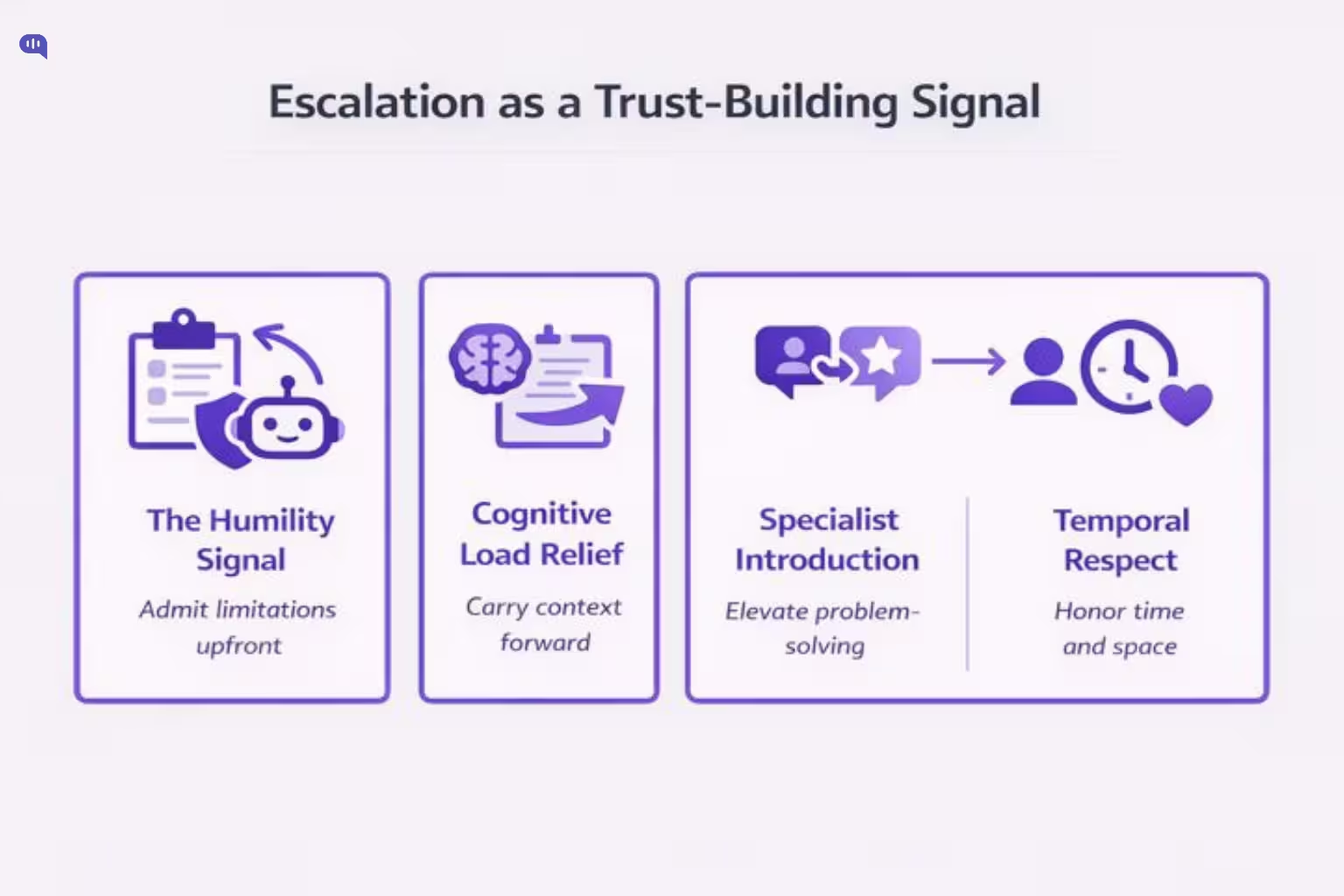
Escalation is traditionally viewed as a system failure. But on WhatsApp, where users invite businesses into the same space reserved for family and friends, the handoff becomes something more profound: a demonstration of institutional humility and respect.
When designed correctly, escalation doesn’t erode trust in the brand; it becomes the primary mechanism for building it.
1. The Humility Signal: Acknowledging limitations upfront—”This needs a specialist”—demonstrates competence through restraint. Users trust organizations that know what they don’t know more than those that bluff through ambiguity or trap them in infinite loops.
2. Cognitive Load Relief: By treating the handoff as memory transfer (carrying context forward) rather than ticket transfer (resetting the conversation), you signal that you value the user’s mental energy. Nothing destroys trust faster than forced repetition in an intimate channel.
3. The Specialist Introduction: A well-architected escalation feels like “Let me get my colleague who handles this specifically,” not “You broke the machine, try this human instead.” This frames the human as an upgrade, not a fix for bot incompetence.
4. Accountability Visibility: Clear routing and ownership—knowing exactly who has the ball and when—eliminates the anxiety of abandonment. Trust requires certainty that someone is stewarding the resolution, not bouncing it between opaque systems.
5. Temporal Respect: Honoring the 24-hour window and frequency capping shows you understand the rhythm of their life, not just your operational metrics. Trust is built when you stop messaging before they feel spammed, even if the session is technically still open.
Ultimately, trust design is about continuity of care. When a bot steps aside gracefully, it transforms WhatsApp from a high-volume conveyor belt back into the digital living room it was meant to be. The businesses that master this don’t just solve support tickets; they earn the permission to keep the conversation going.
Conclusion
Mastering the art of WhatsApp escalation requires a fundamental shift in perspective: viewing the handoff not as a technical fallback, but as a strategic bridge. By moving away from generic “talk to agent” prompts and embracing surgical keyword triggers, intelligent segmentation, and zero-loss context transfer, businesses can navigate the channel’s inherent “Intimacy Tax.” When a human agent enters a conversation already briefed on the customer’s history and emotional temperature, the transition feels like a seamless introduction rather than a system failure. This architectural approach ensures that every interaction respects the user’s time and digital “living room,” effectively turning automation into a tool for deeper human connection.
Ultimately, building a robust escalation framework is about designing for long-term trust. As the 24-hour session window ticks down and conversational patterns evolve, the ability to maintain continuity across AI and human touchpoints becomes the ultimate competitive advantage. Enterprises that implement a phased roadmap will find that their WhatsApp presence matures from a simple support channel into a reliable relationship engine. In a world where customer loyalty is fragile, the most successful brands will be those that use their bots to listen and their humans to lead, ensuring no customer ever has to repeat themselves in the kitchen of their digital life.
Ready to transform your customer experience with seamless human-bot handoffs? Book a 15-minute consultation with our experts today to build your custom WhatsApp escalation roadmap.

Devashish Mamgain is the CEO & Co-Founder of Kommunicate, with 15+ years of experience in building exceptional AI and chat-based products. He believes the future is human and bot working together and complementing each other.