Updated on June 23, 2026
Estimated reading time: 16 minutes
Patient experience software is a digital solution that enables healthcare organizations—such as hospitals, clinics, insurance providers, and dental practices—to manage and optimize every patient interaction. This includes processes ranging from appointment scheduling and rescheduling to payment processing and feedback collection, with the goal of delivering a seamless and high-quality patient experience. Slow response times are one of the most preventable root causes of poor patient experience; understanding their impact is the first step toward fixing them.
Choosing the right patient experience software can significantly impact both operational efficiency and the overall patient journey. With a wide range of platforms available, options vary from simple feedback tools to comprehensive, AI-powered solutions that handle everything from appointment scheduling to post-visit follow-ups.
This article reviews the 10 best patient experience software platforms for healthcare in 2026, highlighting their key features, pricing, ideal use cases, and real customer feedback. Whether you operate a dental clinic, a large hospital network, or a multi-specialty practice, this guide will help you identify the solution that best aligns with your organization’s goals, budget, and technical requirements.
TL;DR: Table comparing best patient experience softwares of 2026
| Software | Best known For | Pricing | Key strengths | Best for |
| Kommunicate | Automating patient experience with AI | $34/month | Omnichannel AI, EHR integration (Epic), HIPAA compliant, live chat escalation | All-in-one AI |
| Luma Health | Flexible EHR integrations | Contact Sales | Text reminders, self-scheduling, digital intake, reduces no-shows | Scheduling & access |
| NexHealth | Appointment booking & Dentrix integration | Contact Sales | One-click rebooking for returning patients | Dental & hospitals |
| TeleVox | Patient management for large health systems | Contact sales | Omnichannel (text, web, email, phone), enterprise-ready, proven outcomes | Enterprise systems |
| Klara | Omnichannel patient experience | Contact sales | Text, web chat, voicemail-to-text, smart query routing to right teams | Patient communication |
| Adit | Dental clinics: scheduling, payments & texting | Contact sales | Robust reporting, scheduling, payments, streamlined marketing | Dental clinics |
| Salesforce Health Cloud | Enterprises on Salesforce CRM | $350/user/month | Agentforce AI, unified clinical + nonclinical data, personalized care | Enterprise CRM users |
| QuestionPro | Digital patient feedback collection | $99/user/month | Pre-built survey templates, QR/SMS/email delivery, multi-language support | Feedback & surveys |
| Relias | Patient experience & NPS measurement | Contact sales | Multi-touchpoint feedback, action planning, enterprise analytics | Analytics & reporting |
| mConsent | Online booking with digital forms | Contact sales | Paperless forms, pre-arrival check-in, “Quick Fill” for last-minute cancellations | Dental & front desk |
Table of Contents
1. What Is Patient Experience Software?
2. What Are the Benefits of Using Patient Experience Software?
3. The 10 Best Patient Experience Software in 2026
4. What Are The Things To Consider When Choosing a Patient Experience Platform?
What Is Patient Experience Software?
Patient experience software, also called as patient management software, is a comprehensive digital platform that manages, automates, and enhances every interaction a patient has with a healthcare provider across the entire patient journey—from discovery and appointment booking to treatment, follow-ups, and feedback.
It combines workflow automation, patient engagement tools, and communication systems into a single interface, enabling healthcare providers to streamline operations while delivering personalized, seamless, and high-quality patient experiences.
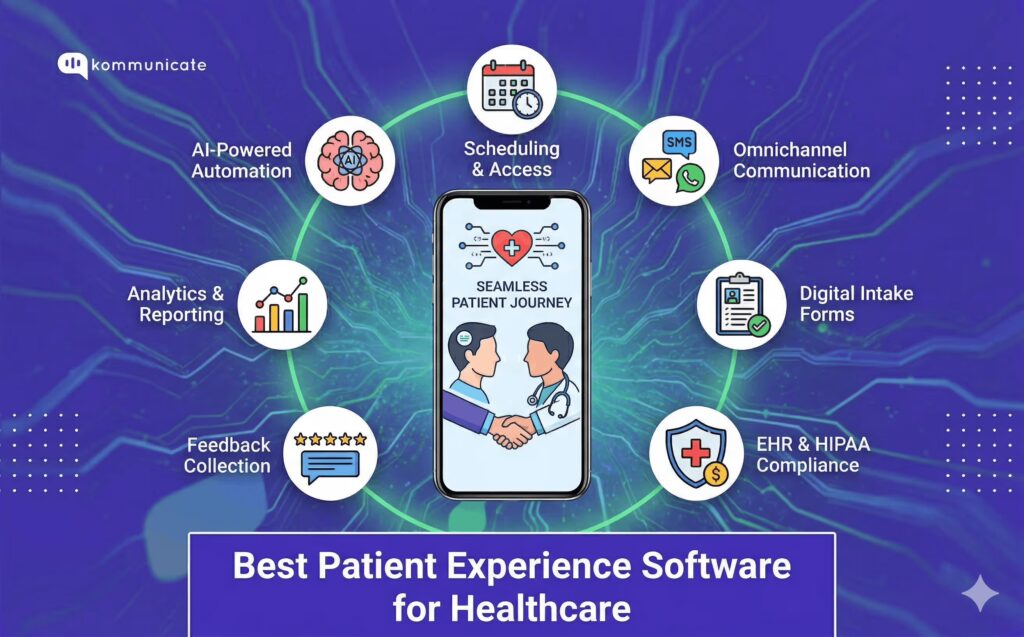
At its core, patient experience software includes capabilities such as:
- Online appointment scheduling and rescheduling
- Automated reminders and notifications
- Digital intake forms and paperwork reduction
- Real-time communication (chat, SMS, email)
- Feedback collection and reputation management
- Patient data integration with internal systems
By automating repetitive administrative tasks and centralizing patient interactions, it reduces wait times, minimizes manual effort, and improves care coordination. This leads to higher patient satisfaction, increased operational efficiency, and better outcomes such as more appointments, positive reviews, and patient retention.
What Are the Benefits of Using Patient Experience Software?
Delivering a great patient experience not only ensures that patients receive high-quality care but also builds long-term loyalty and trust in your services.
Here are some of the key benefits of using patient experience software:
- Access to Services at Patients’ Fingertips: Modern patients expect instant, on-demand access to healthcare services. Patient experience software enables them to book or reschedule appointments, order medicines, and download prescriptions or reports anytime, from anywhere.
- Reduced Manual Work for Staff: By automating repetitive administrative tasks, healthcare teams can reclaim valuable time. This allows your operations and support staff to focus on critical issues that require immediate attention and human expertise.
- Capture Honest Patient Feedback: When patients stay connected throughout their journey and can easily share feedback, they are more likely to provide honest insights. This helps you continuously improve your services and patient satisfaction.
- Automation of Daily Tasks: Digital intake forms eliminate the need for manual data entry, saving time and reducing operational overhead. Since patients enter their own information, the chances of errors are significantly lower.
- Open and Continuous Communication: Providing patients with easy access to communication channels such as WhatsApp, chat, or email encourages ongoing engagement. This accessibility strengthens relationships and improves the overall patient experience.
- Improved Patient Loyalty and Referrals: Satisfied patients are more likely to return for future care and recommend your services to others. A seamless and positive experience turns patients into long-term advocates for your brand.
Here Are The 10 Best Patient Experience Software in 2026
We have reviewed the 10 best patient experience software platforms based on their key features, usability, pricing, and user feedback.
1. Kommunicate
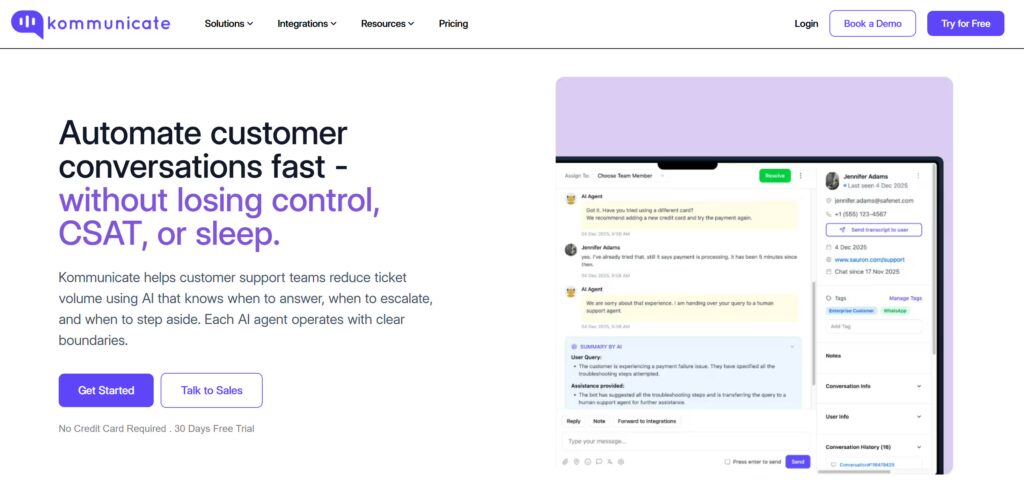
Kommunicate is the best patient experience software that integrates with EHR systems like Epic, enabling patients to book and reschedule appointments, make payments, and access information such as prescriptions and reports in real time, and gathering feedback, while remaining HIPAA compliant.
Kommunicate is an omnichannel AI-powered patient experience software that engages patients across multiple channels, including WhatsApp, email, website, and phone, helping automate repetitive tasks and improve operational efficiency ensuring higher patience satisfaction score.
Kommunicate also enables seamless escalation to human support staff when needed, allowing healthcare businesses to provide real time assistance through live chat on WhatsApp, email, and web chat.
What is Kommunicate best known for?
Kommunicate is best known for automating patient experience with AI.
What is Kommunicate’s pricing?
Kommunicate offers its solutions at $34 per month, allowing healthcare organizations to test it confidently before moving their entire operations to Kommunicate. Kommunicate also offers a full feature 30 day trial.
What Do Customers Say About Kommunicate?
Positive:
“The staff really go out of their way to help you if you need any support. Our project was quite different to anything they had seen before, but they made adjustments and supported us through the setup up which was appreciated a lot.” – Abbots Care on Trustpilot.
Negative:
“More UI customization options would be nice.” – Verified user on G2.

2. Luma Health
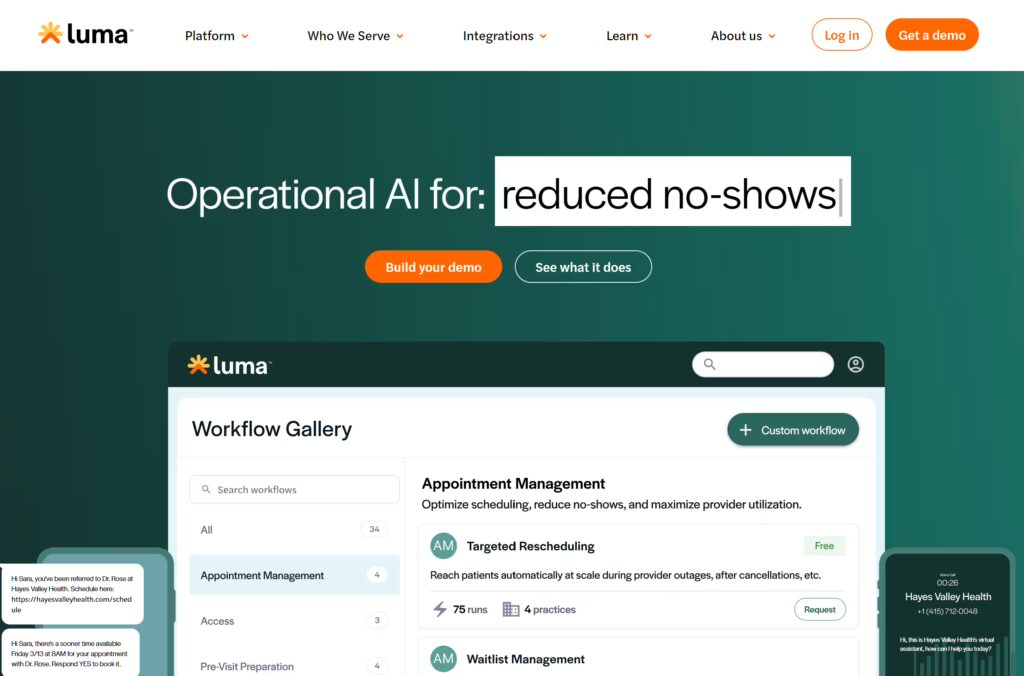
Luma Health is a comprehensive, AI-native Patient Success Platform designed to enhance patient access and engagement through the automation of communication and scheduling processes. It integrates seamlessly with electronic health record (EHR) systems to offer capabilities such as text-based appointment reminders, online self-scheduling, and digital intake. The platform is intended to reduce no-show rates and improve overall clinical efficiency.
What is Luma Health best knownknow for?
Luma Health is best known for its flexible EHR integrations.
What is Luma Health’s pricing?
Book a demo to get Luma Health’s pricing.
What Do Customers Say About Luma Health?
Positive:
“I absolutely love the ease and quickness of sending secure messages to our patients with referral/appointment information.” – Miranda on Capterra.
Negative:
“Luma is a complex IT solution that requires familiarity with products and Epic to operate successfully.” – Verified user on Capterra.
3. NexHealth
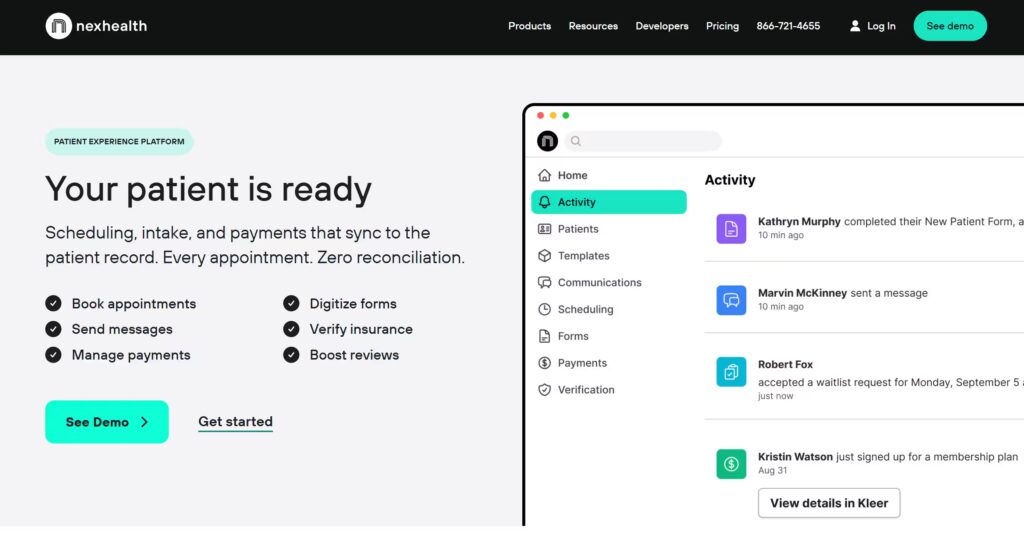
NexHealth is a patient experience software that helps hospitals and dental clinics with appointment bookings, payment links, reminders, and one-click appointments for returning customers. NexHealth is HIPAA compliant.
What is NexHealth best known for?
NexHealth is best known for its appointment booking feature and its integration with Dentrix.
What is the pricing for NexHealth?
Get in contact with the NexHealth sales team to find out about their pricing.
What Do Customers Say About NexHealth?
Positive:
“NexHealth seamlessly integrates with Dentrix (and other legacy systems, I thinki think). It provides an intuitive, user-friendly interface that vastly improves our scheduling and management processes.” – Amir Naderi on Trustpilot.
Negative:
“This service worked for about 2 months after I bought it. Then I noticed I was getting no more online referrals from it because it was not functioning. I cancelled my service last month and they keep billing me.” – Wayne Miles on Trustpilot.
4. TeleVox
TeleVox simplifies the entire patient journey, including discovery, scheduling, and follow-ups, while reducing the workload on staff. Its omnichannel approach allows patients to connect through text, web chat, email, or phone.
TeleVox is designed for enterprise-level healthcare systems that manage complex patient populations and care programs. It is a comprehensive, ready-to-use solution supported by proven outcomes.
What is TeleVox best known for?
TeleVox is best known for its patient management platform for large healthcare systems.
What is the pricing for TeleVox?
Organizations will need to contact the TeleVox sales team to get a pricing quote.
What Do Customers Say About TeleVox?
Positive:
“Being able to track precisely how our response rates look almost immediately after release has allowed our organization to react quickly and efficiently when changes are needed.” – Verified user on G2.
Negative:
“Patients are not using is actively, and we see no-shows often” – Verified user on G2
5. Klara
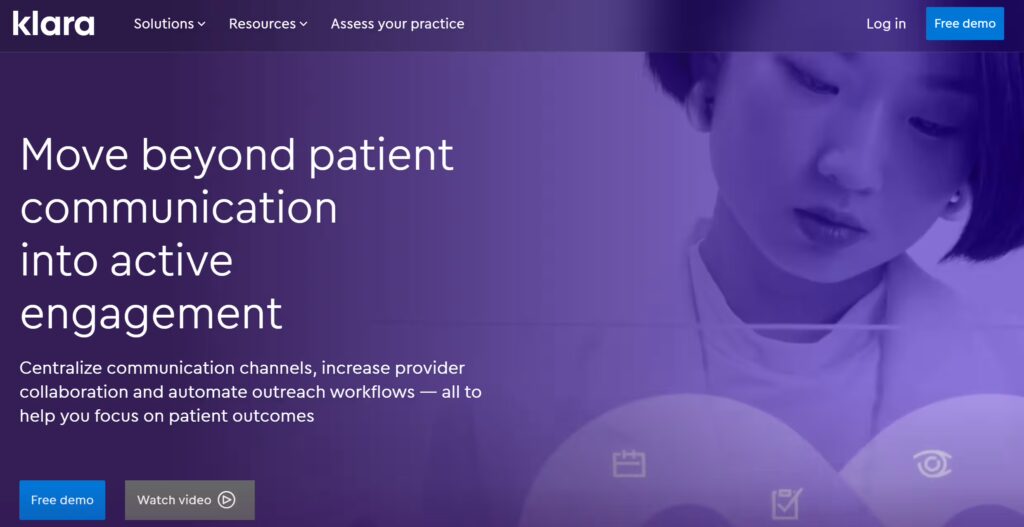
With Klara, patients can communicate with the hospitals, clinics, and insurance providers via text messaging, initiate conversations through web chat, or have voicemails automatically transcribed into text messages, enabling prompt responses from staff.
Klara routes the patient queries to the right team eliminating the back-and-forth between different teams with the healthcare organization.
What is Klara best known for?
Klara is known for its omnichannel patience experience.
What is the pricing for Klara?
Contact sales for pricing. Klara also provides a free demo upon request.
What Do Customers Say About Klara?
Positive:
“I love using Klara for communicating with patients because it really allows for fast communication. I find the ease of the setup incredibly convenient, which means my team and I can start using it without any hassle.” – Verified user on G2.
Negative:
“The customer service was lacking; it took ages to get a response, and when I finally did, it felt dismissive.” – Verified user on G2.

6. Adit
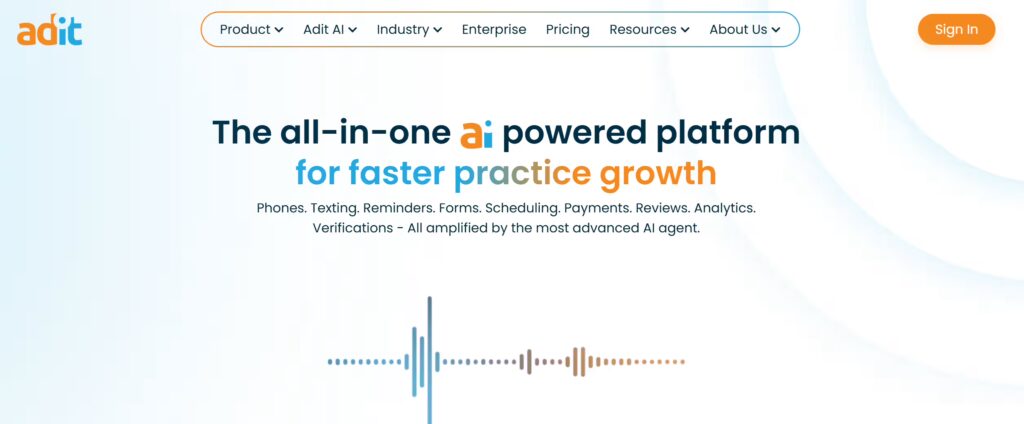
Adit is best for dental clinics where they provide tools for services like appointment scheduling, texting, forms, payments and analytics. They have a robust reporting system that helps dental clinics take informed decisions.
What is Adit best known for?
Adit is best known for dental clinics needing scheduling, payments, and texting solutions.
What is Adit’s pricing?
To find out about Adit’s pricing, you will have to book a demo with the Adit sales team.
What Do Customers Say About Adit?
Positive:
“From the moment we started using it, everything—from patient communication to scheduling and marketing—became more streamlined and efficient.” – Verified user on G2.
Negative:
“ADIT doesnot integrate well with Softdent at all, it has created more work for us s opposed to simplifying things.” – Janet . on G2.
7. Salesforce Health Cloud
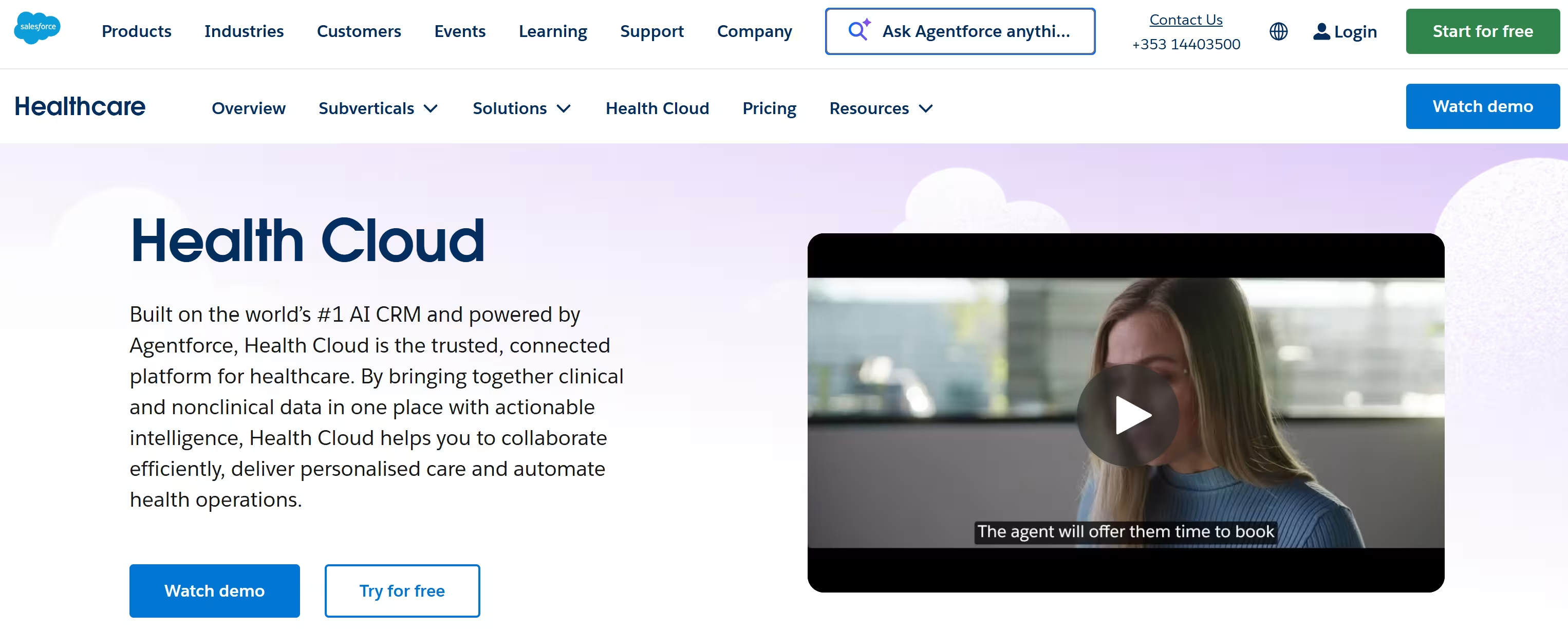
Salesforce Health Cloud brings clinical and nonclinical data in one place with actionable intelligence. Salesforce Health Cloud helps healthcare organizations to collaborate efficiently, deliver personalised care and automate health operations with its Agentforce AI agent that sits on top of its CRM.
What is Salesforce Health Cloud best known for?
Salesforce Health Cloud is best suited for enterprises already using Salesforce as their CRM.
What is Salesforce Health Cloud’s pricing?
Salesforce Health Cloud’s plans start at $350/user/month which includes clinical and insurance data models, integrated care management, omnistudio, and FlexCards.
What Do Customers Say About Salesforce Health Cloud?
Positive:
“A overall package for patients profile,health records and treatment plans. Ease of using its UI.” – Vikas on G2.
Negative:
“The initial configuration is extremely complex. Mapping the clinical data from an external EHR system into the Health Cloud object model requires a lot of effort and middleware (like MuleSoft).” – Chintan S on G2.
8. QuestionsPro
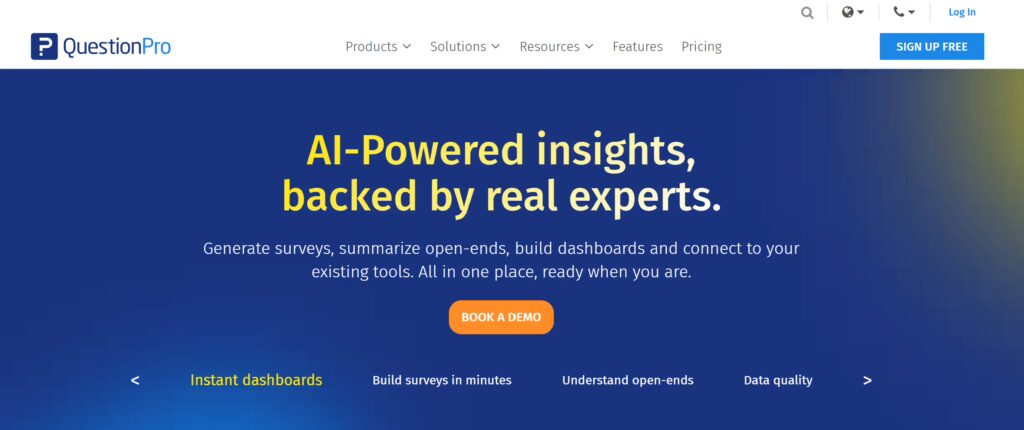
QuestionsPro is a survey platform that helps healthcare providers gather patient feedback to capture their satisfaction score. QuestionsPro comes with pre-built survey templates, making it easier for healthcare providers go live with the survey.
Healthcare providers can capture patient feedback over QR codes, SMS and email.
What is QuestionsPro best known for?
QuestionsPro is best known for gathering patient feedback digitally.
What is QuestionsPro’s pricing?
QuestionsPro survey tools begins at $99/user/month.
What Do Customers Say About QuestionsPro?
Positive
“We were able to translate into 6 languages and add an audio play option for respondents to hear each question and answer read aloud – a big plus for our multi-lingual patients.” – Mariella on Capterra.
Negative
“Interface can be unintuitive at times, making complex survey creation slower.” – Aydan on Capterra.
9. Relias
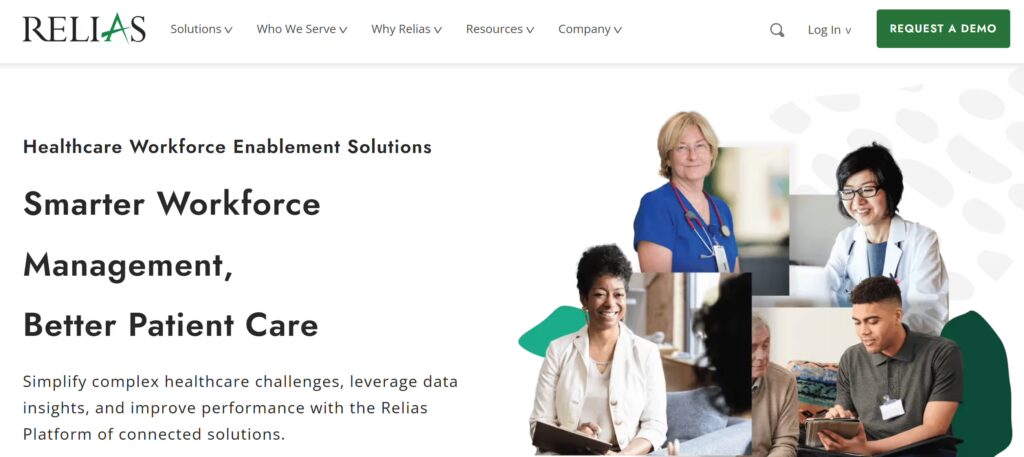
Relias specializes in capturing patient feedback across multiple touchpoints and transforming that data into actionable insights. It enables healthcare organizations to quickly identify issues and monitor the effectiveness of their improvement initiatives.
The platform is particularly well suited for enterprise level reporting and analytics. Its action planning capabilities ensure that patient feedback is systematically translated into measurable improvements in care delivery.
What is Relias best known for?
Relias is best known for measuring patient experience and NPS.
What is Relias’s pricing?
Healthcare organizations will have to request demo for Relias’s pricing.
What Do Customers Say About Relias?
Positive:
“Customer service is great. IIt would be 5 stars, but it’s a little complicated to maneuver throughout the program – too many steps to reach one simple goal” – Mia Hughey on Trustpilot
Negative:
“As an LMS, it works great for its main intended purpose of administering trainings courses and records. However, it’s very limited in functionality.” – Rashid Abuelmaali on Trustpilot.
10. mConsent
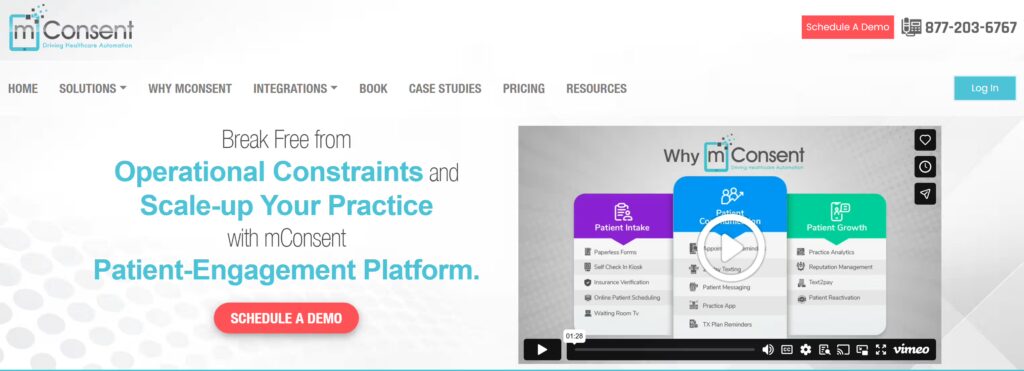
The mConsent patient experience software helps healthcare providers save time by automating routine tasks that eat up front desk staff’s time like filling up forms and checking insurance.
Patients can complete forms before arrival, book their own appointments, and verify insurance online. The “Quick Fill” feature is especially effective, automatically messaging up to 100 patients to fill last minute cancellations.
What is mConsent best known for?
mConsent is best known for online booking with digital forms.
What is mConsent’s pricing?
To find out about mConsent’s pricing contact sales on their website.
What Do Customers Say About mConsent?
Positive:
“mConsent has been an amazing addition to our dental office. It’s helped us go paperless for forms and automated appointment reminders and patient recalls.” – Mysmile Crescent on Trustpilot.
Negative:
“Sometime online consent are not so prove worthy as the offline mean of consent is. Although the both have different benefits. It takes very short of time to process.” – Verified user on G2.
What Are The Things To Consider When Choosing a Patient Experience Platform?
Define Your Objectives
Begin by identifying your primary goals. Are you aiming to increase appointment bookings, capture patient feedback, streamline payment collection, or automate reminders? Your choice of patient experience platform should align closely with your organization’s strategic priorities.
Data Security and Compliance
Ensure that the patient experience platform adheres to industry standards for data protection and compliance. Verify whether the solution is compliant with regulations such as HIPAA and SOC 2, and confirm that the vendor can provide valid certification documentation.
Integration Capabilities
Assess whether the patient experience platform integrates seamlessly with your existing Electronic Health Record (EHR) systems. Look for support for APIs and webhooks to enable real-time data exchange. For example, platforms like Kommunicate offer robust API and webhook integrations, simplifying connectivity with EHR systems.
Customer Support and Onboarding
Evaluate the level of support provided by the patient experience platform you are going ahead with. This includes onboarding assistance, training resources, and the availability of 24/7 customer support to ensure smooth implementation and ongoing operations.
Pricing Transparency
Review the pricing structure carefully. Check for any hidden costs related to implementation, training, or additional features. Additionally, determine whether the platform offers a free trial to evaluate its capabilities before making a commitment.

Final Thoughts
Choosing the right patient experience software is one of the most impactful decisions a healthcare organization can make. As patient expectations continue to rise, the ability to deliver seamless, personalized, and efficient care across every touchpoint is no longer optional – it is a competitive necessity.
The ten platforms reviewed in this guide each offer distinct strengths. Kommunicate stands out for its AI-powered automation at an accessible price point. Luma Health and NexHealth excel in scheduling and EHR integration. TeleVox and Salesforce Health Cloud are designed for enterprise-scale operations. Klara and Adit perform strongly in patient communication and dental workflows. QuestionPro and Relias are well-suited for feedback collection and analytics, while mConsent streamlines front-desk operations with paperless, digital-first tools.
No single platform is universally ideal. The right choice depends on factors such as the size of your practice, your existing technology stack, compliance requirements, budget constraints, and the specific operational gaps you aim to address. Use the comparison table at the beginning of this guide as a starting point, take advantage of free trials and demonstrations where available, and always verify HIPAA compliance and integration capabilities before making a commitment.
Ultimately, the most effective patient experience software is the one that your team consistently adopts – and that your patients genuinely value.

Manab is the Head of Go-To-Market (GTM) at Kommunicate, with over 12 years of professional experience. He collaborates closely with the engineering, sales, and marketing teams to deliver and position Kommunicate’s AI solutions effectively in the market.
Prior to joining Kommunicate, he worked at Cvent, an enterprise event management software company, and Entropik, an emotion AI company that helps brands understand and interpret consumer emotions.