Updated on December 29, 2025
The traditional “App-First” lending strategy is failing to penetrate the “Bharat” segment.
While digital adoption is high, hardware constraints pose a significant barrier; research indicates that 65% of Indian smartphone users run out of storage space every three months, often forcing the deletion of utility apps to accommodate media. When NBFCs compete for limited device memory against tech giants like Amazon and Google, they face high customer acquisition costs and “app fatigue,” making proprietary applications a suboptimal vehicle for consistent financial engagement in Tier-2 and Tier-3 cities.
In response, WhatsApp has emerged as a robust, full-stack operating system for the lending lifecycle, offering an “invisible” interface that bypasses storage limitations while leveraging a user base of over 535 million. By integrating the WhatsApp Business API with Loan Management Systems, NBFCs can automate the entire journey—from lead origination to collections.
This shift from reactive support to proactive conversational commerce allows lenders to maintain high-touch engagement without the friction of a standalone app download.
Furthermore, this conversational paradigm provides a scalable framework for regulatory adherence. By synthesizing RBI’s Digital Lending Guidelines (2025) with TRAI’s directives on consent, WhatsApp automation ensures that transparency, vernacular inclusion, and data residency are baked into the user experience.
In this article, we’ll talk about how NBFCs can use these automations at scale. We’ll cover:
1. Why is the “App-First” Era Ending for Indian Digital Lending?
2. Which Digital Lending Guidelines Should NBFCs Adhere to on WhatsApp?
3. How Can You Build the Digital Lending Journey on WhatsApp?
4. What are the 7 NBFC WhatsApp Automations You Can Activate Today?
5. How Can NBFCs Use Conversation Design and User Experiences on WhatsApp?
6. How Can NBFCs Measure the Success of WhatsApp Automations?
7. How can you Implement These WhatsApp Automations for your Business?
8. Conclusion
Why is the “App-First” Era Ending for Indian Digital Lending?
For years, the playbook for Indian NBFCs was simple: build an app, spend heavily on downloads, and hope users stay.
We’re asking customers to change their behaviour, navigate complex portals, and sacrifice precious phone storage for a niche service they might only use once a month. In a market where 65% of users run out of storage every quarter, a 50MB banking app is often the first thing to be deleted to make room for a family photo. This creates a “Trust Deficit” and high friction, especially in low-bandwidth regions where downloading an app feels like a chore rather than a convenience.
This is where the shift to “Chat-First” banking changes the game. Instead of the “download and learn” hurdle, we move to a “chat and transact” reality.
By meeting the “Bharat” user on WhatsApp, you’re removing the cognitive load of formal banking.
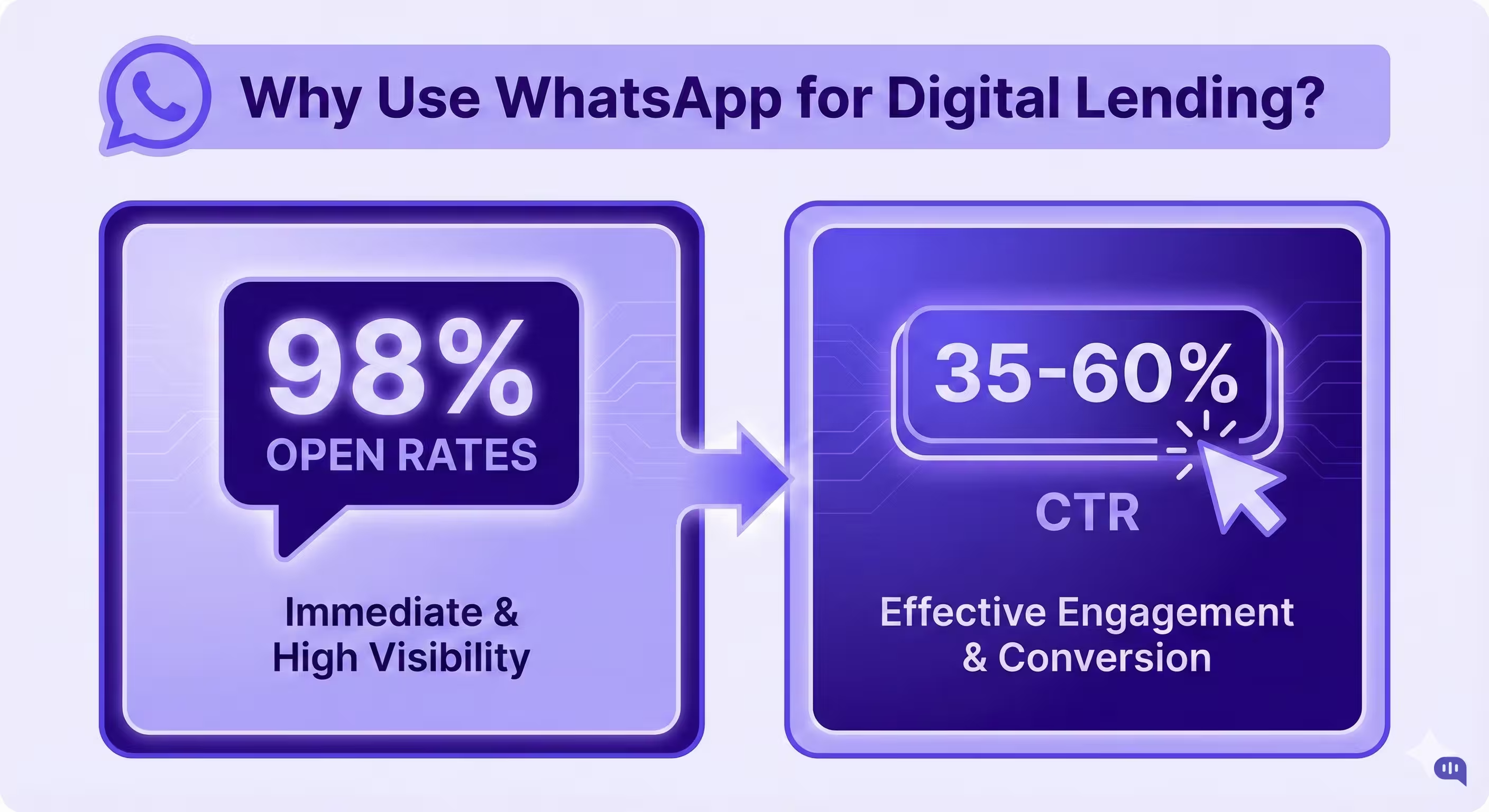
The numbers back this up:
1. WhatsApp messages see open rates as high as 98%
2. Interactive buttons drive click-through rates between 35% and 60%
It’s not just about messaging; it’s about creating a high-velocity funnel that feels like a conversation, not a transaction.
It’s Easier to Adapt Chats into Vernacular Messaging
A huge part of this shift is linguistic.
Traditional apps often feel “too English” or too formal for the next 500 million internet users. WhatsApp automation allows for seamless vernacular inclusion, using NLP to understand “code-mixed” language.
When a user asks, “Mera loan status kya hai?”, a smart bot responds in the same language. This removes the intimidation factor of traditional finance and replaces expensive physical field forces with a scalable, digital, yet deeply personal touch.
The “Chat-First” paradigm ultimately solves the storage and trust barriers that have long-hindered financial inclusion in “Bharat,” turning a simple message into a powerful tool for credit accessibility.
However, scaling this conversational approach requires more than just smart design; it demands a deep alignment with the evolving guardrails set by Indian financial authorities to ensure every digital interaction remains safe and transparent.
Which Digital Lending Guidelines Should NBFCs Adhere to on WhatsApp?
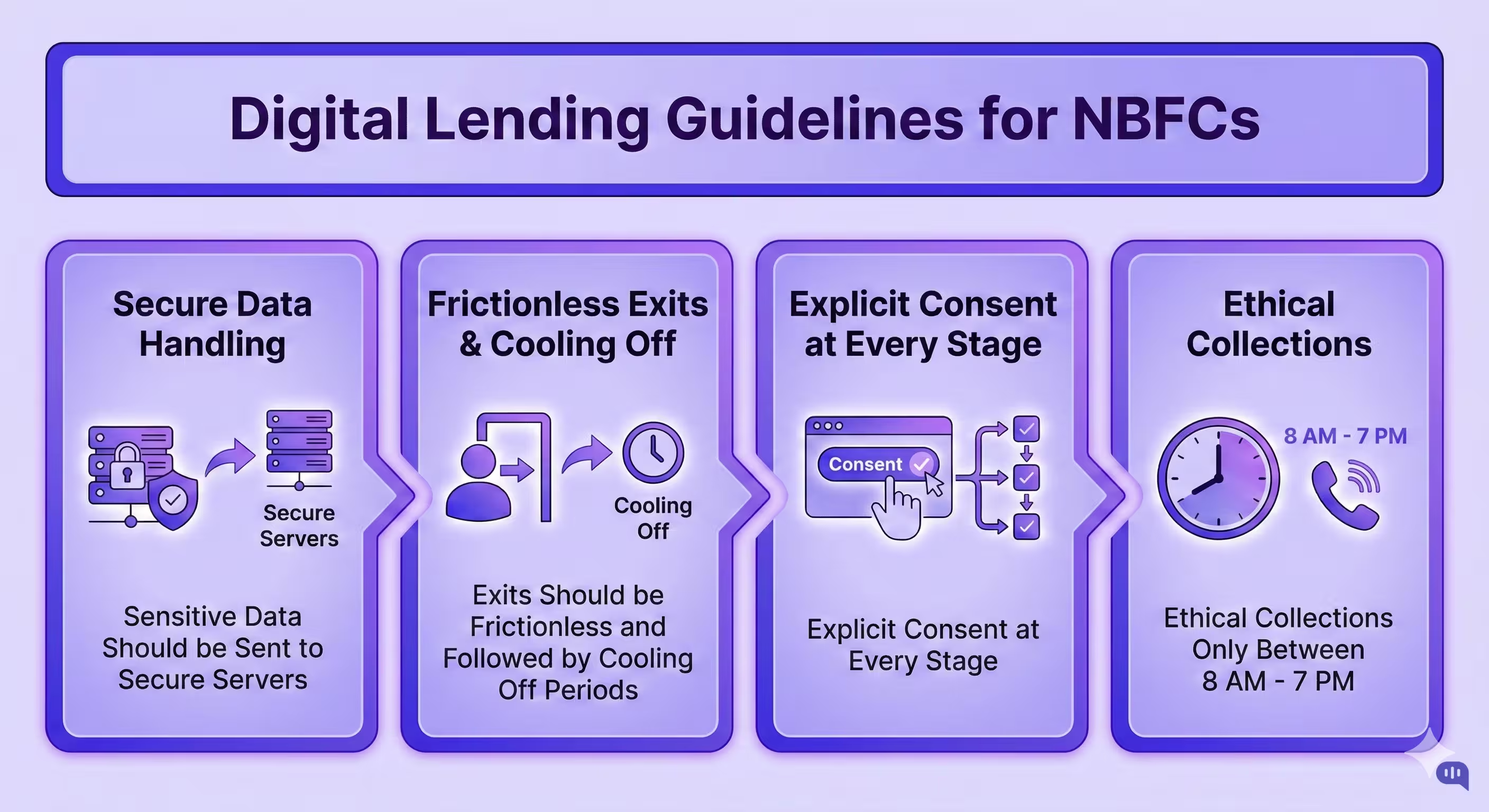
As the Reserve Bank of India (RBI) tightens its grip to prevent predatory practices and data leaks, your WhatsApp strategy must move from being “feature-rich” to “compliance-first.” In this landscape, the Digital Lending Guidelines (DLG) of 2022 and 2025 act as the ultimate rulebook for Regulated Entities (REs) and their Lending Service Providers (LSPs).
Some things that REs and LSPs need to adhere to are as follows:
1. Data Security: The “Pass-Through” Mandate
A major pillar of the RBI guidelines is Data Minimization. Digital platforms are prohibited from storing biometric data and must only collect information that is absolutely necessary.
For an NBFC on WhatsApp, this means your technical architecture must act as a “pass-through” system. Sensitive borrower data should be pushed immediately to a secure Loan Management System (LMS), with local caches on the chat server purged instantly to ensure no “residual data” remains vulnerable to breaches.
2. Frictionless Exit and Cooling-Off Periods
The RBI mandates a “cooling-off” or “look-up” period, giving borrowers a window to exit a loan agreement without penalty.
Your automation shouldn’t make this difficult. If a user types “Cancel my loan” within this window, the bot must be programmed to recognize that “exit intent” and trigger the cancellation workflow immediately.
3. The End of “Implied Consent”
The Telecom Regulatory Authority of India (TRAI) has made it clear: “implied consent” is dead.
Under the Digital Consent Framework (DCA), any promotional message on WhatsApp must be backed by explicit, verifiable consent recorded in a digital ledger. Before you send that “Pre-approved Loan” template, you must have an audit trail showing the user opted in.
Failing to do this doesn’t just annoy customers; it risks your business number being blacklisted by TRAI.
4. Ethical Collections: The “8-to-7” Rule
Perhaps the most critical area is debt collection. To prevent harassment, the RBI’s Fair Practices Code strictly prohibits contacting borrowers before 8:00 AM or after 7:00 PM.
Your WhatsApp middleware needs “Quiet Hour” logic. If your LMS triggers a repayment reminder at 9:00 PM, the system must be smart enough to queue that message and only hit “send” at 8:01 AM the following morning.
Furthermore, your message templates must be strictly informational; WhatsApp’s own template approval process helps ensure no coercive language is used, keeping you on the right side of the law.
While these regulations might seem like hurdles, they actually provide the blueprint for building a brand that customers can trust.
By automating these “guardrails,” you turn compliance from a manual burden into a competitive advantage. But how do you actually wire this into your existing bank tech? The next step is looking under the hood at the complex ecosystem of APIs and credit engines that make this seamless experience possible.
How Can You Build the Digital Lending Journey on WhatsApp?
To the user, a WhatsApp loan journey feels like a simple chat. But behind that “Hello,” there is a sophisticated “digital plumbing” system working in real-time. A robust WhatsApp strategy isn’t just about a chatbot; it’s about a four-layer technology stack that bridges the gap between a simple message and a complex core banking system.
1. The Four-Layer Tech Stack
- Presentation Layer: The WhatsApp UI, the familiar interface where the user interacts.
- Connectivity Layer: The WhatsApp Business Cloud API hosted by Meta. Most modern NBFCs have moved away from clunky on-premise Docker setups to the Cloud API for lower latency and 99.9% availability.
- Intelligence Layer: Middleware platforms (like Kommunicate) that handle Natural Language Understanding (NLU). This layer figures out if a user is asking for a loan or just complaining about an EMI bounce.
- Core Systems Layer: This is where the heavy lifting happens, connecting the chat to your Loan Origination System (LOS) and Loan Management System (LMS).
2. Making Systems Talk
The magic happens when the “Brain” talks to your core engines via RESTful APIs and Webhooks.
If a user requests a “Statement of Account,” the middleware hits a GET request to your Loan Management System, which generates the PDF and pushes it back to the user instantly. This automation ensures that data is never “stale” and that a user’s profile is updated across all systems the moment they type a change on WhatsApp.
3. Security: More Than Just Encryption
While WhatsApp provides End-to-End Encryption (E2EE) between the user and Meta, the journey doesn’t end there. To stay compliant with RBI’s strict data localization and security norms, NBFCs must implement:
- SPII Masking: Personally Identifiable Information, like Aadhaar numbers, should be masked in the middleware logs. The unmasked data must flow directly into the secure internal LMS.
- Session Timeouts: Financial conversations aren’t open-ended. If a user is inactive for five minutes during a sensitive payment flow, the session must expire, requiring a fresh OTP to resume.
Building this architecture is like laying the foundation of a house; once the “plumbing” is secure and the “electricity” (APIs) is running, you can start building the rooms. Now that we understand the technical and regulatory framework, it’s time to look at the specific tools you can actually deploy. In the next section, we’ll break down seven high-impact WhatsApp automations that you can activate today to transform your lending lifecycle from origination to collections.
What are the 7 NBFC WhatsApp Automations You Can Activate Today?
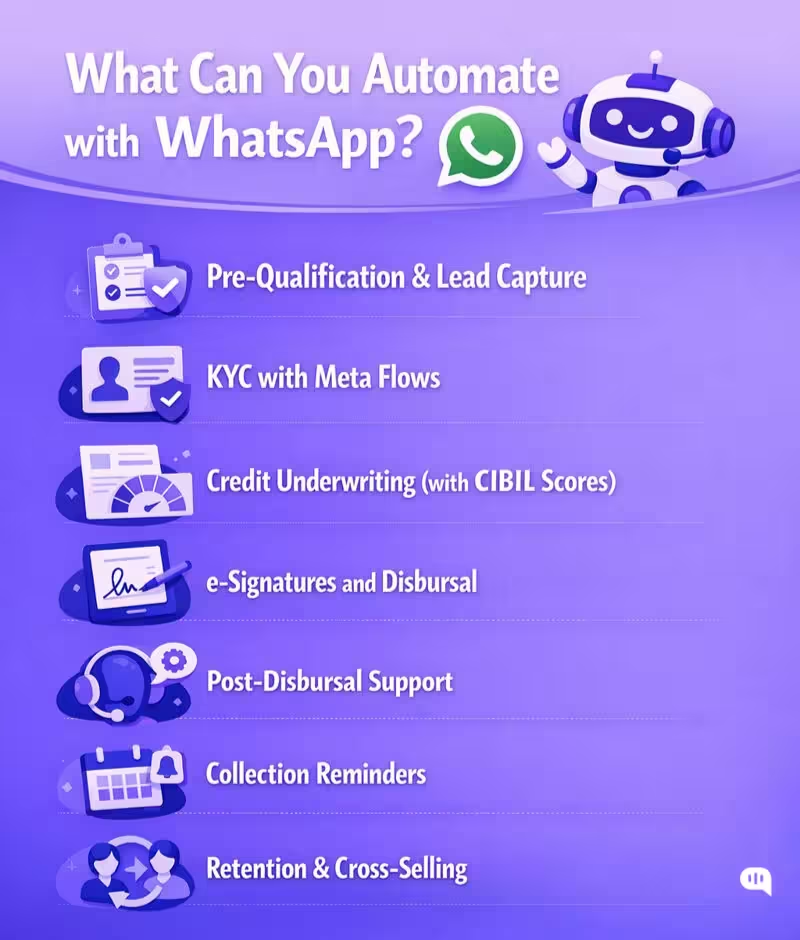
The shift from “App-First” to “Chat-First” isn’t just about a change in UI; it’s a complete overhaul of the lending lifecycle. By integrating a platform like Kommunicate, NBFCs can move from static, clunky forms to dynamic, conversational experiences that feel more like a chat with a friend than a bank application.
Journey 1: Lead Capture and Prequalification (Powered by Kommunicate)
Traditional lead generation is often “spray and pray,” but WhatsApp turns this into a high-intent inbound strategy.
Using Click-to-WhatsApp ads, you can drive users directly into a chat where sending a pre-populated message acts as a “double opt-in,” staying ahead of TRAI’s 2024 consent framework.
How Kommunicate helps: Instead of a 20-field form, Kommunicate’s AI agent initiates a “soft qualification” chat. It captures income, location, and employment status, instantly tagging “Hot Leads” in your CRM like Salesforce or Zoho. This reduces lead-to-application drop-offs by up to 60%.
Journey 2: The KYC “Flows” Revolution
The highest friction point in lending is now the easiest. With WhatsApp Flows, users fill out structured identity forms directly in the chat window, preventing app-switching fatigue (Meta for Developers, 2025).
Identity Verification: Using OCR (Optical Character Recognition), the bot extracts data from uploaded PAN or Aadhaar cards and validates it against NSDL databases in seconds.
For high-value loans, the bot automates the scheduling and link-sharing for Video KYC (V-CIP), ensuring compliance with RBI’s 2025 Digital Lending Directions.
Journey 3: Real-Time Credit Underwriting
Automation brings the “Yes” to the very front of the funnel. After capturing timestamped consent, the middleware calls Credit Bureau APIs (CIBIL/Experian).
Within minutes, a user either receives an “In-Principle Sanction” letter or, if they don’t qualify, a polite rejection with educational tips on improving their score—building long-term goodwill instead of a “dead end.”
Journey 4: Disbursal and e-Signatures
The “last mile” is secured through Aadhaar-based e-Signatures:
- The bot generates the Key Fact Statement (KFS) and the Loan Agreement as a PDF, which the user signs via OTP.
- To eliminate fraud, the system performs a “Penny Drop” verification, transferring ₹1 to the user’s account to confirm the name matches their KYC records
- The full disbursal is auto-triggered
Journey 5: Post-Disbursal Support
Servicing is where NBFCs traditionally burn the most operational cost.
How Kommunicate Helps – By training an AI agent on your FAQs and policy documents, you can resolve up to 80% of routine queries without a human agent (Kommunicate, 2025). If a query is complex (e.g., a fraud report),
Kommunicate’s Human-in-the-Loop model ensures a seamless handoff to a live agent with the full chat history intact.
Journey 6: Empathetic Collections and Recovery
Collections on WhatsApp balance efficiency with empathy. Using NPCI’s UPI integration, the bot sends personalized payment links three days before the due date, allowing one-tap payments via GPay or PhonePe.
“Promise to Pay” (PTP): If a user misses a payment, the bot triggers a PTP flow: “When can you pay?” Recording a user-selected date in the LMS suppresses further automated nudges, ensuring the NBFC follows RBI’s non-coercive recovery guidelines.
Journey 7: Retention and Hyper-Personalized Cross-Sell
The relationship shouldn’t end at the last EMI.
How Kommunicate helps: Using AI Insights, Kommunicate identifies “Promoters” (via NPS surveys) and users with flawless repayment histories. The system then triggers pre-approved top-up offers or insurance products: “Hi, you’re eligible for a ₹50,000 top-up. Reply YES to claim.”
This hyper-personalization turns a support channel into a revenue engine.
By automating these seven core journeys, NBFCs can transform the lending experience from a series of high-friction tasks into a continuous, conversational relationship. This shift not only slashes operational costs but also builds deep-seated trust with the “Bharat” demographic, ensuring that financial services are as accessible as a message to a friend.
While the technical “plumbing” and journey maps are essential, the success of a WhatsApp strategy often hinges on the quality of the interaction itself. In the next section, we explore Conversation Design and User Experience (UX) diving into how to craft intuitive, vernacular-first flows that minimize cognitive load and drive maximum engagement.
How Can NBFCs Use Conversation Design and User Experiences on WhatsApp?
Designing for a chat interface is fundamentally different from a traditional Graphical User Interface (GUI). You aren’t building a map of buttons and menus; you’re scripting a relationship. In the world of “Bharat” lending, where users prioritize “tap and trust” over complex navigation, effective conversation design is the thin line between a high-conversion funnel and a blocked business number.
1. Principles of Conversational Design: Less is More
In a chat window, every word carries weight. To keep users engaged, NBFCs must adopt a “Button-First” philosophy. Typing on mobile keyboards is prone to error and increases cognitive load; instead, use Quick Reply buttons and List Messages (up to 10 options) to standardize inputs like loan tenure or income brackets.
- Brevity is Key: Swap jargon for simplicity. Instead of asking, “Please provide your consent for the retrieval of your credit information report,” try a simple button: “Check my Credit Score”.
- Smart Fallbacks: When a user types something unexpected, a rigid bot that says “Invalid Input” destroys trust. A well-designed bot uses sentiment analysis to detect distress and instantly routes the chat to a human agent for empathetic handling.
2. Managing “Bot Fatigue” and Meta’s 2025 Rules
Over-communication is the fastest way to get your business number reported as spam. Meta’s 2025 pricing and category rules strictly separate messages into Utility, Authentication, and Marketing.
- Frequency Capping: Limit your marketing broadcasts. If a user receives three “Pre-approved loan” messages in a week without responding, your system should automatically pause future triggers to avoid a “Quality Rating” drop on the WhatsApp platform.
- Respecting Preferences: Allow users to opt-out of marketing while staying opted-in for utility alerts like EMI reminders. This distinction is crucial for long-term “channel health” and ensures your critical notifications aren’t lost in a sea of promotional noise.
Mastering the “art” of the conversation is what makes the technology feel human. But how do we know if these efforts are actually working? In our final section, we’ll look at ROI, exploring the specific metrics that prove the business value of a WhatsApp-first strategy.
How Can NBFCs Measure the Success of WhatsApp Automations?
To validate the investment in WhatsApp automation, NBFCs must look beyond vanity metrics like “message reads.” You need a rigorous measurement framework that connects conversational data to your bottom line.
1. Operational Efficiency Metrics
| KPI Category | Metric | Definition & Benchmark |
| Efficiency | Deflection Rate | Percentage of queries resolved by the bot without human intervention. Target: > 60-70%. |
| First Response Time (FRT) | Time taken to acknowledge a user query. Target: < 2 seconds. | |
| Average Handling Time (AHT) | Duration of the conversation to achieve resolution. Automation should reduce this by 50% compared to voice calls. | |
| Cost | Cost per Query | Total support cost divided by number of queries. WhatsApp automation typically reduces this by 50-70% vs. call centres. |
2. Business Outcome Metrics
| KPI Category | Metric | Definition & Benchmark |
| Conversion | Lead-to-Login Ratio | Percentage of WhatsApp leads that complete the application form. Target: 25-35% (often higher than web). |
| Disbursal Rate | Percentage of logins that result in a funded loan. | |
| Collections | Promise-to-Pay (PTP) Ratio | Percentage of overdue users who commit to a payment date via the bot. |
| Collection Efficiency | Improvement in EMI collection via WhatsApp links vs. traditional SMS. Target: +10-15% uplift. | |
| Growth | Cart Recovery | Percentage of dropped users who return after a nudge notification. Target: 15-20%. |
The financial impact of a “Chat-First” strategy is cumulative. As your bot learns from thousands of interactions, the Promise-to-Pay (PTP) Ratio improves, directly reducing your Non-Performing Assets (NPAs).
By integrating these metrics into your Monthly Operating Review (MOR), you transform WhatsApp from a “communication tool” into a strategic business unit. We will end this article with a brief implementation roadmap that you can use to start automating your processes.
How can you Implement These WhatsApp Automations for your Business?
Implementing WhatsApp automation is as much a change management challenge as it is a technical one. A “big bang” launch often leads to integration bottlenecks and user confusion. Instead, a phased approach ensures that each layer is stable, compliant, and optimized for the “Bharat” user.
The following roadmap outlines a standard 6-month journey for an NBFC to move from zero to a fully automated conversational lending engine:
| Phase | Timeline | Focus Area | Key Actions |
| Phase 1: Foundation | Weeks 1-4 | Trust & Compliance | • BSP Selection: Partner with an official Meta BSP (e.g., 360 Dialog, Twilio) that supports “Flows.” • Green Tick (OBA): Submit incorporation docs for “Official Business Account” status to build instant trust. • Template Approval: Design & scrub initial OTP and Welcome templates through the TRAI DLT process. |
| Phase 2: Use Case Rollout | Weeks 5-12 | Utility & Habit | • FAQ Automation: Launch a support bot for low-risk queries (branch locator, rates) to train the NLU. • Transaction Alerts: Enable “Payment Received” and “EMI Reminders” to habituate users to the channel. |
| Phase 3: Deep Integration | Months 3-6 | Full-Stack Lending | • End-to-End Flows: Deploy the loan journey, including KYC document capture and Bureau API triggers. • Human-in-the-Loop: Set up a “Fallback” system where agents take over if bot confidence drops below 70%. |
| Phase 4: Optimization | Month 6+ | Growth & Scale | • Drop-off Analytics: Use heatmaps to find why users stall (e.g., at PAN upload) and simplify the UX. • Vernacular Expansion: Roll out multi-language support (Hindi, Tamil, etc.) based on regional borrower data. |
Additionally, we recommend that you keep doing the following things to optimize the process:
Get Meta Verified (Green Tick)
For NBFCs, the Green Tick isn’t just a badge; it’s a security signal. In a landscape where phishing is rampant, the “Official Business Account” status ensures that the lender’s name (and not just a phone number) appears in the chat list, even if the user hasn’t saved the contact.
This has been shown to improve message open rates and repayment link clicks significantly.
Optimize Based on Insights
The final phase of optimization is where the ROI truly scales.
By analysing the “unstructured” messages users type, NBFCs can identify new pain points. If 10% of users ask about “Pre-payment penalties” in their local dialect, a new FAQ node or a specialized automation flow can be built to address this, further reducing the load on human call centres.
Conclusion
The convergence of hardware limitations, evolving consumer behaviour, and a tightening regulatory landscape has made WhatsApp automation a strategic necessity rather than a digital luxury. By moving away from the “App-First” model, NBFCs can meet their customers where they are most comfortable. This transition from reactive support to a proactive, full-stack conversational engine allows lenders to scale their operations while maintaining the personalized, high-touch engagement that is the hallmark of Indian financial services.
Ultimately, the future of digital lending in India will be defined by those who can successfully balance technical sophistication with human-centric design. Leveraging the WhatsApp Business API doesn’t just solve the storage crisis; it builds a foundation of trust through transparency and compliance. As NBFCs integrate advanced AI, real-time credit decisioning, and automated recovery into a single chat interface, they create a friction-free ecosystem that drives financial inclusion and long-term customer loyalty across the country.
Don’t let “app fatigue” or hardware barriers slow down your growth in the Indian market. Join the leading NBFCs that are already using Kommunicate to automate their entire lending lifecycle.

Devashish Mamgain is the CEO & Co-Founder of Kommunicate, with 15+ years of experience in building exceptional AI and chat-based products. He believes the future is human and bot working together and complementing each other.